
Translating Legend and Legacy: On Translating Wuxia
by May Huang
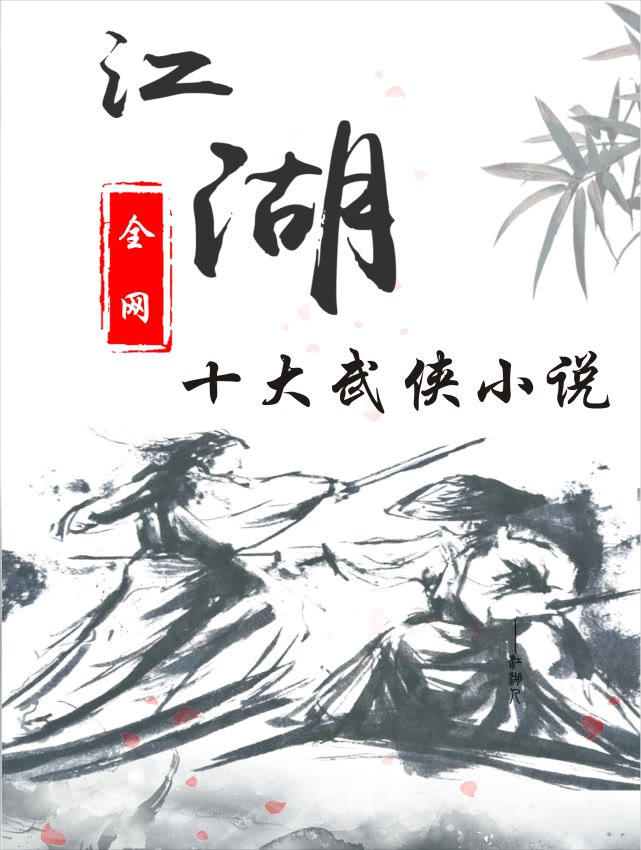
As the story continues, we eventually learn that this is a tale about not only the Great-Grandmaster, whose presence looms over his disciples, but also about the generations of martial artists who follow him. Such is how the story unfolds, linearly: we go from the Great-Grandmaster to Grandmaster to Master, and we move from the ancient and legendary to what’s contemporary and real. What problems did this pose for translation?
Every translation project gets personal. You carve out personal time for the work, research the author you’re translating, and spend intimate moments—early mornings, late nights—with a text. I once came across a metaphor that compared translations-in-progress to a jealous lover that will scorn you if you leave it alone for too long. So you put off other duties for the translation, give it your best efforts, enter its world. You let things get personal; translations can’t happen any other way.
My translation of Ma Xiaoquan’s “How the Best Masters Died,” forthcoming in Pathlight Magazine’s wuxia issue, was personal for many of these reasons, but mostly for another mentally towering factor: it was a wuxia story, and wuxia fiction (the tales of martial heroes) was my dad’s favorite genre. Growing up, I remember wuxia novels by Jin Yong neatly lining the top shelves of my dad’s bookshelf. Most of the covers were plain, except for the black calligraphy on the front, and every page was browning with age, crowded with small characters.
Some of my earliest childhood memories were of bookshelves. As a kid, I slept beside a bookshelf, such that the first things I saw when I opened my eyes in the morning were books. That bookshelf held the first book I ever read cover to cover: One Fish, Two Fish, Red Fish, Blue Fish by Dr. Seuss. Higher up on the same shelf were books that I had to stand up on my tiptoes to look at. Books my dad owned, like The Lord of the Rings and The Odyssey. Of course, I was too young to read those books then.
But I did eventually get around to reading them. I devoured LOTR in middle school and would go on to read The Odyssey in college. But what about the wuxia novels, some of my dad’s most prized possessions, which have been on his shelves for as long as I can remember and remain there now, even after he is gone?
I did end up reading a few, like 連城訣 (A Deadly Secret) and 雪山飛狐 (Flying Fox of Snowy Mountain), but never took on the major ones, like 天龍八部 (Demi-Gods and Semi-Devils) or 神雕俠侶 (The Return of the Condor Heroes). I had watched the TV adaptations with my family, but found the books too challenging; it was much easier to get lost in the world of hobbits and elves, I thought, than to decode the names of martial arts techniques. As I grew older and went on to study English literature in college, I came to the silent, regretful resolution that I’d never be able to read Chinese as well as I read English. That I’d always have a better time reading J.R.R. Tolkien than Jin Yong. That despite all the ways in which I am like my father—we share the same nose, love for puzzles, frugalness—I would never read some of his favorite books.
So three years ago, when Jeremy Tiang turned to me in the car and asked, “Do you want to translate a wuxia story for the next Pathlight issue?” I immediately responded:
“No!”
Let’s rewind a bit. In November 2018, I was in a car full of translators heading back to Chicago after ALTA41, which took place in Bloomington that year. (If you’ve never been in a car full of translators before, I’d really recommend it.) There weren’t many Chinese-English translators at ALTA that year, so for Jeremy and me to be in the same car was something I would call 緣分—yuan fen, or destiny. While he told me about his work editing Pathlight, Jeremy asked if I’d be interested in translating a piece for their upcoming wuxia issue.
“No,” I said at once. Then, soon afterwards: “I’m not qualified.”
Thankfully, instead of leaving me there, Jeremy followed up with:
“Well, who is ever ‘qualified’ to translate anything?”
So a few weeks later, I started translating Ma Xiaoquan’s “How the Best Masters Died.” It was a journey that would take a couple months, 19 pages, and plenty of self-doubt. I worked on it over Thanksgiving break on a long road trip to Alabama. I worked on it when I should have been working on my undergraduate thesis. I worked on it on the plane ride from Chicago to Hong Kong. And back again.
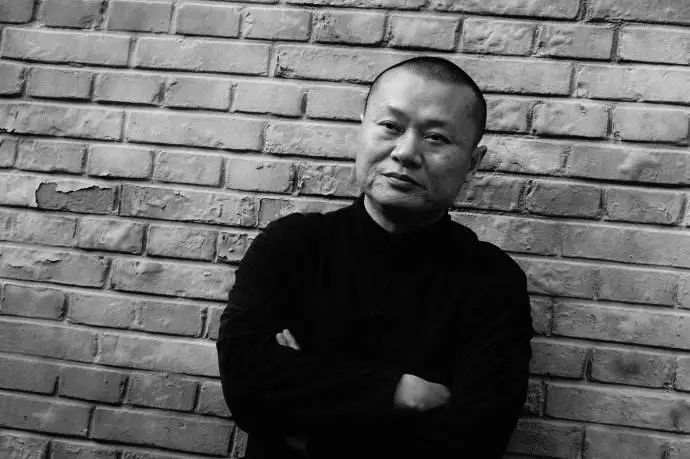
Ma Xiaoquan’s “How the Best Masters Died” was one of my first prose translation projects, and I decided early on that I wanted to translate it as I read it. In an interview with The Economist, Daniel Hahn says that translating in this fashion makes “the process of translating…also that process of discovering what’s happening.” Translating as you read is “the absolutely ideal way of faking being a writer,” because you are “starting from nothing and writing right through to the end without any doubt.” What mattered more to me, however, was the former: the process of “discovering what’s happening.” Of being a reader. And if I was faking anything, I was faking being a reader of wuxia stories, a genre I had not revisited in years. I browsed wuxiaworld.com, and even checked out Anna Holmwood’s translation of The Legend of the Condor Heroes for inspiration. But ultimately, there was nothing to do but start translating.
“How the Best Masters Died” is a story about the ways in which tradition is upheld and ruptured over time. The first character we meet is the “Great-Grandmaster,” a man who looks like a “short, scrawny country bumpkin” but turns out to be a badass Kungfu master (of course). We learn that he “was born and trained in the turbulent center of martial arts, where even children in small braids and sashaying maidens in the bloom of their youth could be skilled martial artists.”
Then, around four pages in, the story turns meta. “The memoir composed by one of my Grand Uncle-Masters in the Great-Grandmaster’s later years praised the Great-Grandmaster for his superior skill and noble character,” says our narrator. Wait, what? So now there’s a “Grand Uncle-Master,” who seems to be related to the narrator, whom I had assumed bore no relation to the Great-Grandmaster? As the story continues, we eventually learn that this is a tale about not only the Great-Grandmaster, whose presence looms over his disciples, but also about the generations of martial artists who follow him. Such is how the story unfolds, linearly: we go from the Great-Grandmaster to Grandmaster to Master, and we move from the ancient and legendary to what’s contemporary and real.
What problems did this pose for translation?
One of my first challenges was figuring out how to render the different variations of “master” in English. Some of the terms I had to differentiate between were: 太師祖, 師叔祖, 師祖, and 師傅. I translated them as Great-Grandmaster, Grand Uncle-Master, Grandmaster, and Master. The titles should (hopefully) come across as intuitive (the Grand Uncle-Master is the Grandmaster’s martial brother). But another challenge remained: which articles should I attach onto each title? Chinese does not have articles, but the further into the story we go, the clearer it becomes that our narrator is referring to “his” Master. As such, my translation talks about the Great-Grandmaster, my or the Grand Uncle-Master, my Grandmaster, and my Master. The story becomes more and more personal as we read on, as did my reading experience. When I was editing my first draft, I noticed that the translation became increasingly sure-footed as it progressed. No doubt, this was because the more I read and translated, the more invested I became in the story. Things got personal, and along with it, the quality of my translation improved.
The story’s main tragedy is that it begins with a martial arts hero who is near-invincible and ends with a martial artist who can hardly stand up to his local housing manager. By the end of the story, we are no longer in “the era of the Great-Grandmaster, when one could get away with killing people without having to pay for it with impunity.” This is not necessarily a bad thing; if anything, it is a sign of a more civilized justice system. But there is something pitiful about the story ending with “fierce mahjong battles,” nothing like the stealthy, hand-to-hand combat we saw in the glory days. The action-packed storytelling that fills the first half of the story is incredibly rich, and portrays the Great-Grandmaster as a living legend; he “would beat and kick a large tree, and a few wide trunked, hundred-year-old trees would gradually grow gnarled and withered under such assault.” He also “maintained a habit that shocked everyone: of chewing and swallowing chicken bones whole.” He was impossible to kill and remained rigorously healthy. So how could he die?
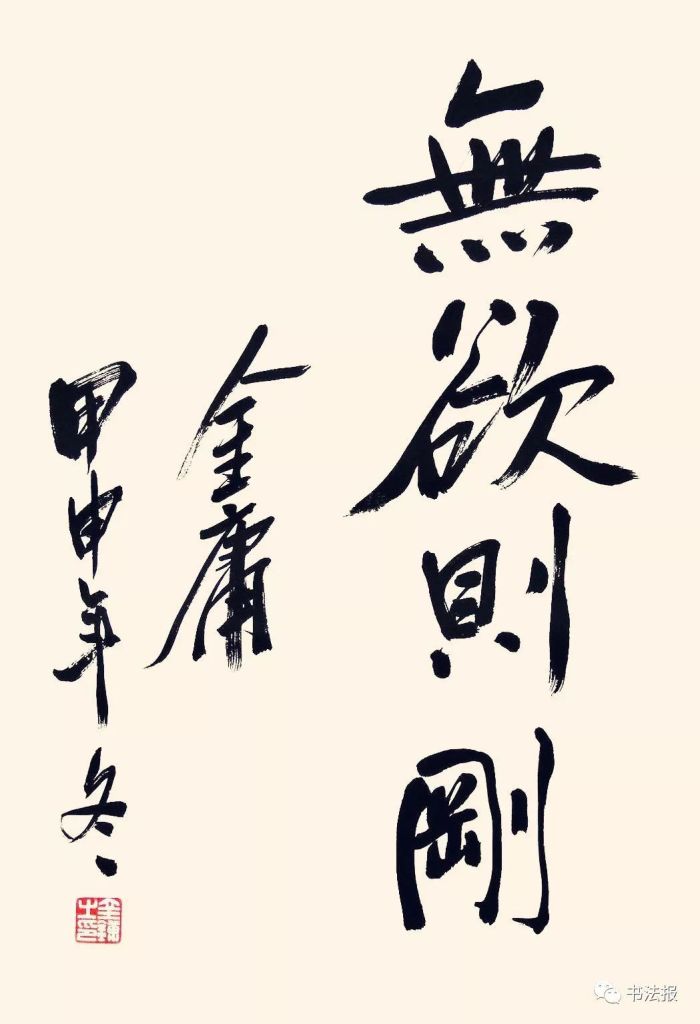
The story’s metatextuality emerges most strongly after the Great-Grandmaster’s death, which gives way to much speculation and storytelling. Different masters have varying stories about how the Great-Grandmaster died, and our narrator eventually goes down a rabbit hole to evaluate the possibility of the Great-Grandmaster taking his own life by self-inflicting a stroke—“taking off in one’s seat,” as the Zen Buddhists say (according to the story). The close-reading, imaginative, and recollective work that our narrator undergoes to construct a narrative of how the Great-Grandmaster dies is a kind of translation, one that perhaps doesn’t remain completely loyal to the original but is ultimately fascinating and compelling. On his retelling of the Great-Grandmaster’s death, the narrator says:
“My version obviously lacks an eyewitness, and this last paragraph is purely fictive. But after comparing these three versions side by side for a long time, I feel as if I’m in a trance, not knowing which version is closer to the truth, and which is full of fabrications.”
Ultimately, which version of any story is closest to the truth? At the end of the story, the narrator’s own Master passes away, “as if carried away by moonlight on the back of a crane.” A heavy smoker, the Master died for reasons that are far less mysterious than the Great-Grandmaster. He died not surrounded by his best disciples, but in a house that he didn’t own, with an unfinished lawsuit still in the works. And yet, the Master passed away without regrets; “although his achievements and influence were far lesser than those of the Great-Grandmaster or Grandmaster, he was undoubtedly their heir.”
The idea of being unable to live up to standards set before one’s time concerns each new generation of masters in this story. What if there will never be another Great-Grandmaster? And, perhaps more troublingly, what if we can never accurately tell the story of his life and legacy? In many ways, these were also my anxieties as a translator. What if I mistranslated something? Although Jeremy was a keen and careful editor, I couldn’t shake my deep-rooted anxiety of getting something wrong. What if my translation could never live up to the original text? What if I disappointed its original readers?
The Master did not spend the last days of his life engaging in combat. Instead, he dedicated his time to writing a book on martial arts, which our narrator helped edit and send off to the printers. We don’t know if the Master intended for his book to reach a wide audience, but the task of composing it was something he wanted to do for himself; a personal labor of love. While the story has an arguably pessimistic ending, I can’t help but find solace in knowing that even in its final few paragraphs, Ma Xiaoquan places such a strong emphasis on the craft of writing. It is through the participatory work of translating, reading, and writing that we sustain the legacy of words that have come before us. It is through retelling stories that we keep them alive.
Imposter syndrome befalls many translators, and there are many times when I question my “qualifications” as a translator. But when I reread my translation of “How the Best Masters Died,” even three years after I finished translating it, I tell myself that I should, like the Master, have few regrets and consider myself the heir of the wuxia translators and readers before me. In the story’s final scene, the narrator writes an elegiac couplet for his master’s mourning hall. In response to the couplet, “some visitors said it was well-written, while others looked at it for a long time without saying anything, and a few said they could not quite understand the traditional characters.” I imagine there will be different reactions to my translation, too. But what the narrator wrote for his Master was personal, and so is my translation. Why did we both decide to write or translate something for others to read? Perhaps the act of translating is what ultimately gives us the opportunity to remember those who are dear to us—and to become a part of the stories we have always wanted to read.

May Huang (黃鴻霙) is a writer and translator from Hong Kong and Taiwan. Her work has appeared in Circumference, Electric Literature, Words Without Borders, Asymptote, and elsewhere. She graduated from the University of Chicago with honors in English and Comparative Literature in 2019. You can follow her on Twitter as @mayhuangwrites.
Originally published on Hopscotch Translation
Tuesday, August 17, 2021

 hopscotchtranslation.com