Bearing Down on the Numbers: Review of Venice Requiem by Khalid Lyamlahy, translated from the French by Ros Schwartz
by Houssine Dehbi
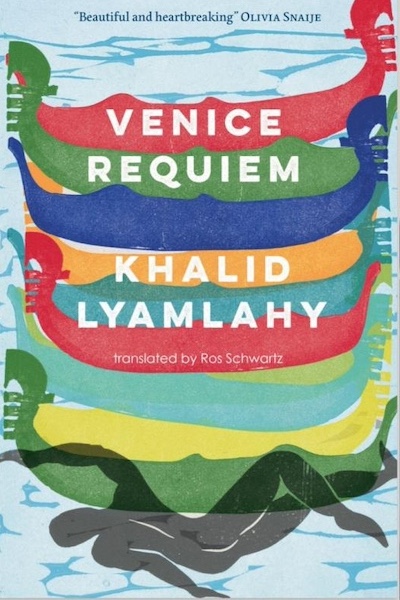
Wherever Lyamlahy uses the word ‘mémorial’ in the original, Schwartz translates it as ‘requiem’ to echo the title she has chosen—a quiet but profound act of coherence that knits the English version into itself, giving it its own internal logic. This is not translation as mere transference. It is translation as co-authorship, as architecture… READ MORE
The Faithfulness of the Original
Evariste Pimplis interviewed by Peter Constantine
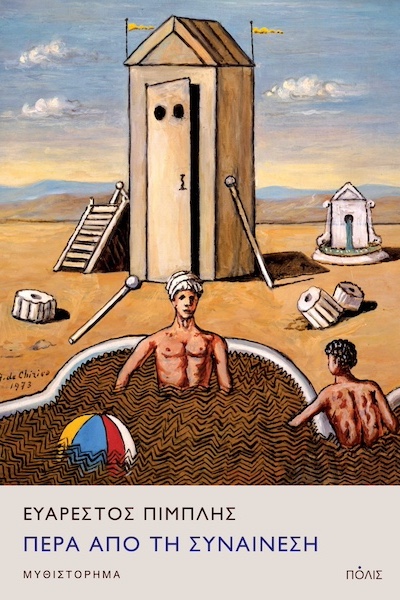
Being your own translator means you can act on what the dissection reveals. I felt a constant urge to modify certain parts, not to correct the original but to deepen it. Gradually the Greek became an original in its own right, and parts of the French, in turn, became translations of it. Little by little, neither version was quite the original anymore. In the end I might say that both versions are originals… READ MORE
The Public Privacy of the Early Turkish Republic in One Thousand and One Kisses
by Doğa Ayar
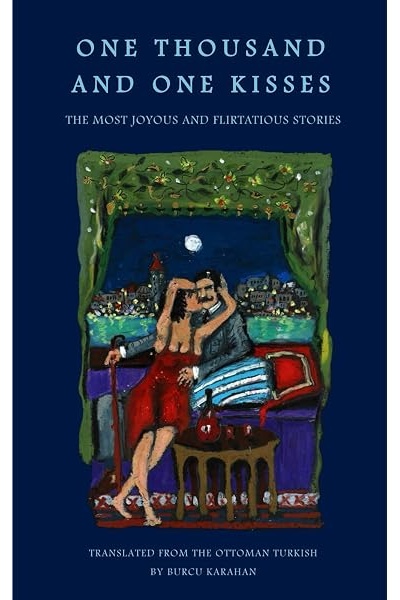
Seeing how underground interest persisted and grew despite overt reprimands, the modern Turkish translation has sought to restore historical balance. It suggests that societies do not move linearly from “repressed” to “free.” Still, to many readers, these works appeared “foreign,” while their source material was perceived as borrowed. Readers often expressed disbelief at what their predecessors at the empire’s edge engaged with, such as cuckolding, lesbianism, impotence, and nymphomania… READ MORE
Rereading Klaus Merz’s Jakob schläft as Dreaming Jack
by John Taylor

Vincenz boldly transforms “sleeping” to “dreaming” in the title that he gives to his translation, which is conceived in several of its facets as a tour de force. His interpretation can seemingly be construed in two ways. On the one hand, the narrator is dreaming of Jack (and, in the process, remembering his own childhood in the early 1950s and 1960s, the period graphically evoked in the novella) and, on the other hand, it is also perhaps Jack who, although dead, is somehow dreaming… READ MORE