
Placing “Joy at the Helm”: On Translating Charline Lambert
by John Taylor
Lambert’s writing points to the prison bars and walls, attempts to pry them apart or pull them down…
During the past two years, I have been putting together a hefty volume of the poetry of the Belgian poet Charline Lambert (b. 1989). This volume, when I find an intrepid publisher, will mark the first appearance in book form in English of her linguistically challenging poetry and will not only provide a representative selection of her work, but indeed of her first four books in their entirety. The motivation for bringing forth this substantial corpus is that the four books respond to each other, grow out of each other. They are like stages—beginning with the evocations of bewitchment, temptation, restraint, and detention besetting Ulysses, Circe, and Penelope in the poet’s first book, Hemp and Ivy—of an ongoing quest to grasp the mysteries of desire and gain insight into its innermost relationship, not only with the body, but also with language.
Lambert’s four book-length sequences of interconnected verse poems and poetic prose pieces thus spring from, and delve into, particularly heightened states of mind and body. We all experience them now and then. We suddenly become aware that we are undergoing an emotion: not just “something” moving in us, and therefore moving us, as a pure physiological fact, but the apperception that we are experiencing this “movement.” The same can be said of thinking. It can seem to take place at one remove: we become aware that we are in the process of thinking. We see ourselves from the outside as if through a microscope or a telescope, or a mirror as if we were observing our double, and at the same time this doubling phenomenon takes place within ourselves. In other words, the poet explores moments of consciousness when we find ourselves standing in the gap, as she herself phrases it, between “me and myself,” not to mention between oneself and the other person with whom one is linked by desire. “Odd, indeed,” she writes in Decarceration, her third book, “this experience of / the other, / of something almost / despite / oneself.” In fact, this other is the other and also oneself, as in Rimbaud’s famous formulation “je est un autre.”
If this sounds philosophical, it is, and deeply so. Lambert’s intense, concise writing leaves no doubts about its personal implications, but her quest can be generalized. For the poet, coming to terms with desire is a prerequisite for a human being who wishes to come to terms with him- or herself, with a personal “identity” that does not necessarily seem—feel—completely or satisfactorily “incarnated,” embodied—and I already mention these synonyms, the first one Franco-Latinate in origin, the second one based on the Old English “bodig,” to indicate one of my several cogitations about vocabulary while I was rendering Lambert’s philologically rich and resonant texts. Moreover, “incarnated” is only three letters (minus one) away from “incarcerated.” It is no paradox that this coming to terms with oneself implies raising the question of getting freed (or freeing oneself, or freeing something oppressive and burdensome from oneself) from the prison of one’s self, body, given or assigned identity, or at least getting a sense of what this extrication or disengagement might be like. This dichotomy is underscored by the key term and aforementioned title of her third book, “decarceration.” “You want to decarcerate the language from you,” she writes in that volume, “decar— // cerate these words from your plexus / and every day / you elucidate a knot.” And she adds: “You want to decarcerate the beast within you, / have mouths to feed, and how many // starving dogs // inside, waiting.”
The term in fact raises a translator’s dilemma. The French title of Lambert’s third book is Désincarcération. The English cognate “disincarceration” does not exist in any more or less accepted way; if it did, it would be clumsy to pronounce (the slow passage between “dis-” and “in-”) and unpleasant to hear, at least to my tongue and ears. The French term, which does exist, actually has the precise meaning of “vehicle extrication,” that is, the process of removing a vehicle from around a person who has been involved in a collision. The damaged vehicle excepted, but perhaps not a psychological collision, inner damage or an oppressive sense of confinement (“it wants to come out / it wants to come out // but it’s never that / which wells up from crevasses”), this image is not without pertinence to Lambert’s notion: removing something cumbersome or life-threatening from around or from within a person. The French term has the root “carcer,” which means prison. Therefore, if the term is analyzed etymologically, a human being is inserted or inserts him- or herself (the prefix “in”) into a prison (“carcer”), from which he or she is subsequently involved in a process of extrication or self-extrication (the prefix “dés”) from the prison. In English, we also have the words “incarcerate” and “incarceration,” as well as “decarcerate” and “decarceration.” After weighing the pros and cons of the neologism “disincarceration,” I have opted for “decarceration,” even if it lacks this etymological systole-diastole movement of “dés”- / “in.” Note, in addition, that we can say “disembodiment” in English. I was tempted to employ “embody,” “embodiment,” and “disembodiment” in this translation, but it was poetically important to reflect Lambert’s direct wordplay between “incarceration” and “incarnation.” Furthermore, there are Christian connotations associated in English with “incarnation”—from the Late Latin incarnatus “made flesh”—which needed to be maintained because they tie in with a few other Christian allusions in Lambert’s book. I will comment more on this aspect below.
One is incarnated, embodied, as a consequence of the joining of a spermatozoon and an ovum; after birth, one gradually becomes aware of this incarnation, of this embodiment; later, one can view this state as an incarceration, or find oneself incarcerating oneself, or being incarcerated, in various other ways. A kind of double or triple or quadruple enclosure can result. Lambert’s writing points to the prison bars and walls, attempts to pry them apart or pull them down, all the while evoking the slight redeeming values—the “fragile joys”—that nonetheless exist in our perhaps inextricably incarnated, incarcerated, human condition. She makes this explicit in a piece from Decarceration:
your remnant structure
from which you disincarn-
ate yourself, decarcer-
ate yourself, carcass
in which live, however,
fragile joys
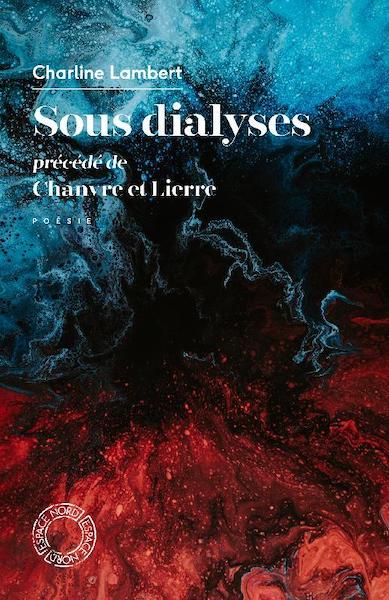
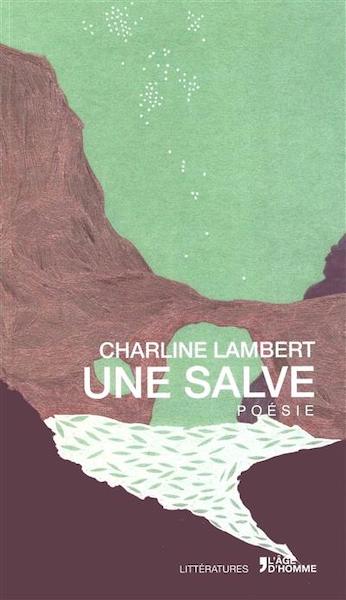
Another revealing French title is Sous dialyses. Lambert’s writing, which often appeals to scientific and medical terminology, also sets into motion a poetic and self-analyzing process of “dialysis.” It is useful to recall the definitions of the word, according to Webster’s: 1) “the separation of substances in solution by means of their unequal diffusion through semipermeable membranes” and 2) “the process of removing blood from an artery (as of a patient affected with kidney failure), purifying it by dialysis, adding vital substances, and returning it to a vein.” Taking off from these meanings, which Lambert alludes to in several pieces, one can posit that the subject of these poems is undergoing a kind of metaphorical dialysis even as one can undergo a medical treatment or a psychoanalysis; at the same time, by writing, the subject initiates such an analysis: she is “dialyzing.” She is removing an element from her body (such as an emotion like desire, or an acquired quality like language), purifying or at least analyzing it through the writing of poetry, and then returning it to this body in which she must dwell—in which she is incarnated yet, henceforth, perhaps less incarcerated. “A salvo of blood sews my name back up,” she writes in A Salvo, her fourth volume, and this is not the only reference to sewing and stitching in her writing. As with incarceration and decarceration, this dialyzing process for the subject—and the imagery of blood is also prevalent in these books—seems to represent both an active and a passive experience. The subject sets off the process and also submits herself to it.
Lambert’s unusual style, which also includes the occasional use of resonant rare words, is sometimes based on intentional syntactic and grammatical polysemy as illustrations of the struggle and the resoluteness of language to deal with complex states of feeling, thought, and perception. As I was discussing with her and pondering my word choices and occasional syntactic inversions (given the idiomatic structural differences between the two languages), I sometimes had to opt for one solution in a situation where, in French, two or more meanings can coincide. Such decisions reminded me of my quandaries when translating Jacques Dupin’s polysemic poetry in Of Flies and Monkeys (The Bitter Oleander Press, 2011), a poet whom Lambert in fact admires. To mention only one example, Lambert, like Dupin, favors the verb éclater and the noun éclat, which have multiple meanings and connotations, ranging from kinds of explosions and fragmentation to nuances of brightness. The English-language translator must choose, whereas the French-language poet can let heterogenous meanings coexist and interact. In this linguistically elaborate context (nonetheless established by very short poems and prose poems), let’s also remember Ghérasim Luca, the Romanian francophone poet who relished phonetic puns and double entendres. Lambert has in fact written an essay about him and the physicist Niels Bohr (for an interest in modern physics is another of her intellectual passions): “‘Celui qui ouvre le mot ouvre la matière’: Ghérasim Luca et Niels Bohr” (Les lettres romanes 75.3-4, 2021). It goes without saying that the title of her article defines her own poetics in these four books: “He or she who opens the word opens matter.”
We are already in the realm defined by the first verse of the Gospel of John: “In the beginning was the Word”—with the key Greek term, “logos,” being at once the poet’s tool and sometimes an adversary when it wanes ontologically and waxes rationally. The Evangelist himself knew well that, in the existential predicament in which we find ourselves incarnated, we usually have the impression of being in the opposite situation: incarcerated in our flesh and blood, with the need and the desire to come up with words to face up to them, even perhaps (for John) to transcend them, to be decarcerated. Lambert’s A Salvo delves into this dilemma with at least two passing references to Christ’s words as they are repeated during communion (see Matthew 26:26-28, Mark 14:22-24, Luke 22:19-21):
How precarious flesh is
when language
is overflooding.
Enter the sea
because this
is my blood.
*
How precarious language is
when flesh
is bare.
Inhabit the night
because this
is my blood.
Although Lambert’s writing opens onto no Christian horizon whatsoever, it is important to recall that Christian communion, at its origins, purportedly established a new “covenant” between God and his people. Perhaps the poet is seeking here, in parallel, new kinds of “covenants” between herself and nature (the sea, the night), between herself and the other, between herself and herself—the “gap” that is so difficult to bridge.
In his review of this book in Le Carnet et les Instants (Wallonia-Brussels Federation, 15 July 2020), the Belgian poet Éric Brogniet perceptively argues that “it is ultimately Flesh that is made Word and not Word that is made Flesh. This reversal of the perspective is not without importance: for where the Word made Flesh agonizes, Flesh made Word confounds its mortal condition and aims at a plenitude expressed by the acceptance of desire and the clarity, the light, the sun saving one from ‘the mud of being.’ It is then that what has been confined pours out in a vastitude with ‘joy at the helm.’”
Once again, we find Lambert’s ultimate goal of attaining, after a process of dialysis and decarceration—which can almost be equated to a poetic initiation rite designed to purify and liberate—a new state in which joy is possible or at least conceivable. And where is the “other” at the end of the process? A poem (from Decarceration) implicitly raises the question via an enjambment and offers a double answer:
Joy and the other
joy you hold out
drunk with it,
a latent
blow to the forehead
of the sky.
Underscoring the “architecture” that Lambert is building from book to book and her auscultation of the relationships between language and the body, Brogniet goes on to qualify these relationships as “both fecund and conflictual.” “Salvo, salvation, saliva: this signifying triptych,” he explains, “structures her poetic sequence, which represents, like the sea invoked in it, the place to wash oneself, to sublimate oneself, to become wind, to be freed of burdens, limits, and landmarks, the mental and physical walls that are a part of our carnal and spiritual envelope. This extirpation of the self, through a flow of language in which infinitive verbal forms, repetitions, and key images of confinement (night, blackness, evening, anguish), violently express this effort of a new birth designed to reappropriate ‘this body, this river of fire quirted by the tongue.’”

Another challenging translation issue arising now and then, and related to a “reappropriation” and perhaps even a “new birth,” is that of pronouns. The difficulty is initially due to the classic dichotomy whereby the gender of the pronoun and the possessive pronoun depends on the subject—the possessor—in English whereas in French it depends on the gender of the object. And there are two genders in French, three in English. Yet in Lambert’s writing, this well-known translation problem takes on another, overarching, thematic dimension. The poet and I went through each occurrence and, more often than not, we would ultimately settle on the neuter pronoun “it”—which opens a perspective in which a human subject is not engaged—whereas “he” would also have been grammatically conceivable and yet unduly restricted to designating another human being. To wit, where “le désir” (or a similar masculine noun) is represented by the masculine pronoun “il” and the textual context is particularly open-ended (as happens so often in Lambert’s poetry), the “il” can also sometimes be construed as “he,” not just “it.”
Moreover, some stunning puns stem directly from pronouns. In the following example, which opens Dialyzing, the word “lui” can be interpreted as the past participle of the verb luire (to gleam) but also as the pronoun “lui,” which means “him” in French, as if the final sentence could also be read, or almost so (some attenuating idiomatic arguments can be raised), as “She does not have him yet”:
Ce qu’elle veut, c’est plonger les deux mains dans ce désir comme elle le ferait à un évier, porter cette eau à son visage et se rincer avec cette lumière.
Elle n’a pas encore lui.
What she wants, is to thrust her two hands into this desire as she would into a washbasin, bring this water to her face and rinse herself with this light.
She has not yet gleamed.
Similarly, in the third to the last text of the same book, Lambert puns with both the pronoun “lui,” as above, and “aura,” the latter (as a noun) having the meaning “aura” as in English but at the same time being the third-person singular form of the verb avoir (to have) in the future tense. In such cases, Lambert’s French has gone beyond the limits of translatability and I have resorted to a bit of bricolage:
L’œil porte le désir d’un imago. Le tympan porte le désir d’un son. Le péricarde, celui d’une brûlure. L’épiderme, celui d’un enveloppement.
Elle aura lui.
The eye carries the desire of an imago. The eardrum carries the desire of a sound. The pericardium, that of a burn. The epidermis, that of an envelopment.
She, aura, will have gleamed.
Such double and triple entendres are not without another consequence: the more general question of determining, and decarcerating, one’s own “pronoun.” A pronoun naturally engages the issue of identity. Two successive poems from Decarceration highlight the seriousness of the issue:
flee, where will you flee, how
will you end up
making
an accident,
a grave pronoun
mistake
*
the crushing pronoun
makes you lonely and leaves
large internal
lesions
In A Salvo, Lambert continues her scrutiny and self-scrutiny: “Being only lips: a crime of lèse-majesté, an offense against the sovereignty of the pronoun.”
In his preface to Decarceration, Laurent Moosen graphically sums up Lambert’s language as a “poetry gasping for breath, busying with its urgency.” “[It] is doubled, however,” he adds, “by a vocabulary whose preciosity marks a pause, suspends reading like so many stones thrown onto the surface of the water, which propagates the ripples. The words borrowed
are mineral, botanical, or, most often, physiological, for the poem becomes the echo of a vibrant, breathing, spasmodic body. Lambert’s poetry lies somewhere in this tension, in this methodical, effective, intangible description of an experience at the limits of the body. At first, the words resonate inside, in their retrenchments, before seeking the support of their incarnation, as her writing endlessly avoids distinguishing, in this breakaway, the joined efforts of the mind and the ‘organs of phonation.’ Hers is a language sometimes snatched up by sound, sometimes summoned by the luxury of its definitions, but without an esoteric trap ever closing around enunciation. Words which question, in a mirror, the self and the other—these fragile agglomerated fragments, this diked-up river rushing towards the sea, this coagulated blood. Rarely will one hear as distinctly a language seek out the body which, first, must possess it in order to better lose its fondness for it, accepting a return to the flesh that gives it breath and blood only to hasten its surging forth.
Let me conclude on a personal note by adding that I first came across Lambert’s at once heady and sensual poetry as part of a Belgian poetry anthology which I am translating, a project edited by Chris Tanasescu (Margento) at the Catholic University of Louvain. Margento sent me a handful of Lambert’s poems to translate and I was immediately taken by them. As has happened to me on a few occasions in the past (I am thinking of José-Flore Tappy and Franca Mancinelli, among others), I wanted to translate more, putting urgent, commissioned work to the side for a while. I began working on Dialyzing, then on Decarceration. . . Reading her first and fourth books quickly convinced me that I needed to translate them as well, so that the complete architecture and coherence of Lambert’s project would be visible. Whence this tetralogy, with its progression of succinct striking quips, koans, cryptic allusions (to crochet and certain principles of Chinese acupuncture), queries, conjectures, lemmas, experimental results, and downright insightful observations about desire and decarceration, ever with her aim of clarifying our personal existential affairs so that joy can indeed be placed at the helm.
Chanvre et lierre, Éditions Le Taillis Pré (Châtelineau, Belgium), 2016.
Sous dialyses, L’Âge d’Homme (Lausanne, Switzerland), 2016.
Désincarcération, L’Âge d’Homme (Lausanne, Switzerland), 2017.
Une salve, L’Âge d’Homme (Lausanne, Switzerland), 2020.
New edition of Chanvre et lierre and Sous dialyses in the “Espace Nord” paperback series devoted to modern classics and published under the auspices of the Communauté française de Belgique (2023).
Many of Charline Lambert’s poems have appeared, in John Taylor’s translations, In various journals and online magazines: The Fortnightly Review, One Hand Clapping, On the Seawall, Word City Literary Journal, North of Oxford, Mayday, Red Fern Review, Eurolitkrant, Cholla Needles, AzonaL, Arlington Literary Journal, Rundelania, Ezra.

John Taylor is an American writer who lives in France. As a translator from three languages (French, Italian, Greek) and as a critic who has written books of essays about contemporary poets from all the European countries, he has long been one of the bridges between European literature and English-speaking countries. Three new translations by Taylor have recently appeared: Franca Mancinelli’s All the Eyes that I Have Opened (Black Square Editions), Elias Petropoulos’s Mirror for You: Collected Poems 1967-1999 (Cycladic Press), Jean Frémon’s Portrait Tales (Les Fugitives).
Originally published on Hopscotch Translation
Tuesday, October 24, 2023

 hopscotchtranslation.com