
The Absent Neighbor: On Critical Mexican Studies and the Translation of Mexican Criticism and Thought
by Ignacio M. Sánchez Prado
The very existence of these books is heroic, and the result of the authors’ commitment to bringing their work to the language.

In her introduction to The Restless Dead, Cristina Rivera Garza characterizes her essays as being “among the voices in a conversation that no contemporary writer can afford to ignore,” a conversation that contains “much of the transnational vocabulary that may help us interpret, as well as encourage or question, literary works that want to enunciate themselves in and with their time.” And yet, the full power of this conversation is muffled because the multilingual character of the interventions into the question of writing in the present is unmatched by the uneven and spotty landscape of translations of such texts. As Rivera Garza puts it, “Controversies now limited to English-speaking authors would only increase if all of these works were to be translated into all the languages involved here. Let us hope such translations are now under way.” This is a utopian hope, one that, from my experience as a Mexican scholar and as editor of two academic series in US university presses, requires an everyday uphill battle with the forces of parochialism and monolingualism.
Rivera Garza’s words exist in English because her position as one of the most original and brilliant writers in the Spanish language and the advocacy of translators, agents, and editors have afforded her the ability to break a language barrier insurmountable for most Mexican thinkers and critics. The Restless Dead happens to be the first volume of the Critical Mexican Studies series, which I edit for Vanderbilt University Press. Although it stems from a book first published in Spanish in 2013, Los muertos indóciles, the English version results from an act of both translation and rewriting. In collaboration with Robin Myers, one of the leading literary translators from Spanish and an exceptional poet who publishes her collections in bilingual editions, Rivera Garza reconfigured the book to address her English-language audience. I stand by it as one of the most important works of literary theory in the 21st century, although its effects have been muffled by a series of factors: its release in the first months of the pandemic, the overshadowing effect of Rivera Garza’s simultaneous publications in trade presses, and, perhaps more significantly, the fact that many English-language readers would not think to seek out a book of theory by a Mexican writer in a series devoted to Mexican thought.
To be clear, I am very honored that Rivera Garza’s book launched my series, and that Myers and she entrusted me with the project. The book embodies the key impetus that encouraged me to pitch the series to editor Gianna Mosser at Vanderbilt: the need to bring into English Mexican works of great influence, the idea of Mexico as a place from which we can think the great theoretical questions of the present, and the possibility of making Mexican and Mexicanist thought and critique accessible to English-language readers. The series is not solely devoted to translation. Of the sixteen books published and announced in the series at the time of this writing, five are translations. I consider those five books integral to the editorial goals of the series, as they accompany books by both established Mexicanists and first-time authors.
The very existence of these books is heroic, and the result of the authors’ commitment to bringing their work to the language. The reality is that the scale of Vanderbilt University Press does not at this time allow for the payment of translations. Three of my authors—Rivera Garza, Oswaldo Zavala, and Mabel Moraña—funded the translations themselves. A fourth author, Irmgard Emmelhainz, translated the book herself, with the press offering support in the form of copyediting. Finally, the forthcoming translation of Carlos Monsiváis—a gargantuan undertaking as anybody acquainted with his highly complex prose would know—will exist because the two editors and translators, Norma Klahn and Ilana Dann Luna, not only secured funding, but are also at the forefront of the fight to get critical editions of theoretical works recognized in academic reward structures.
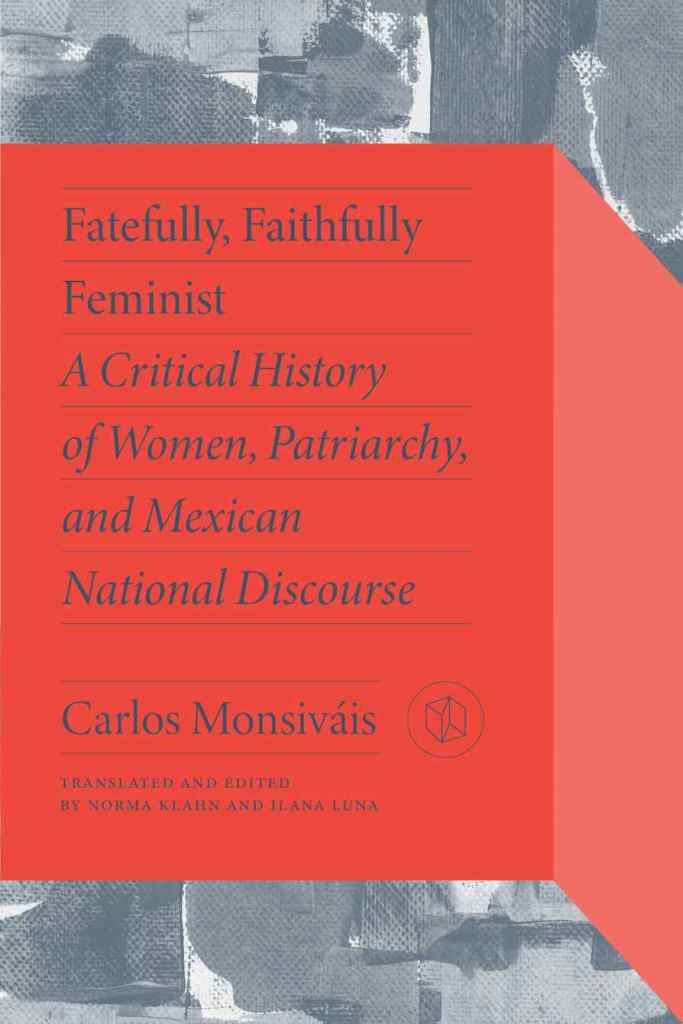

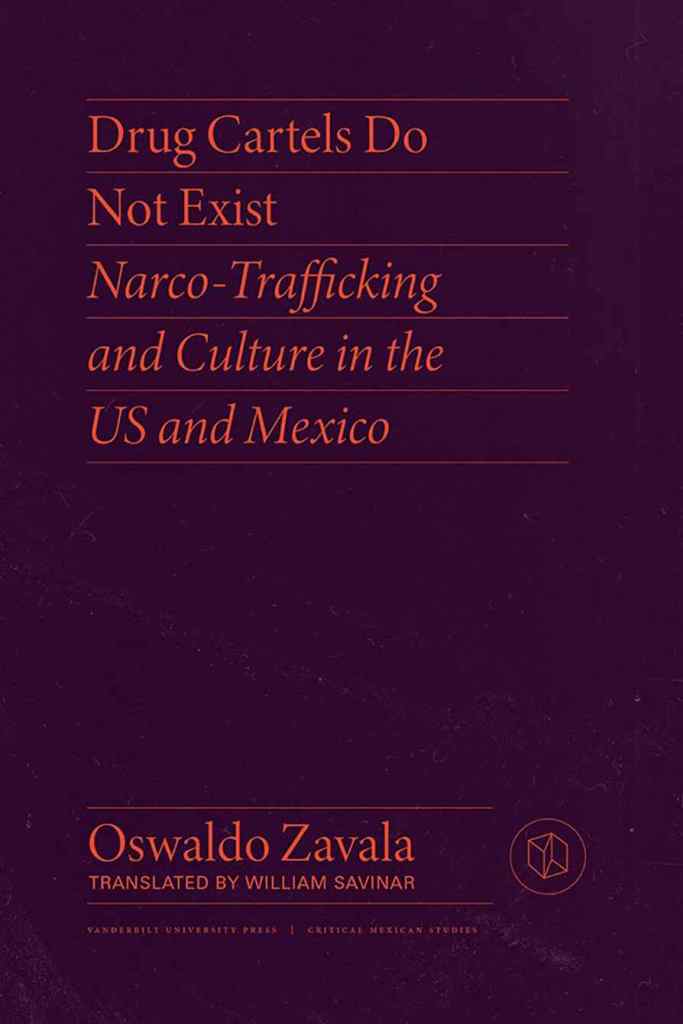
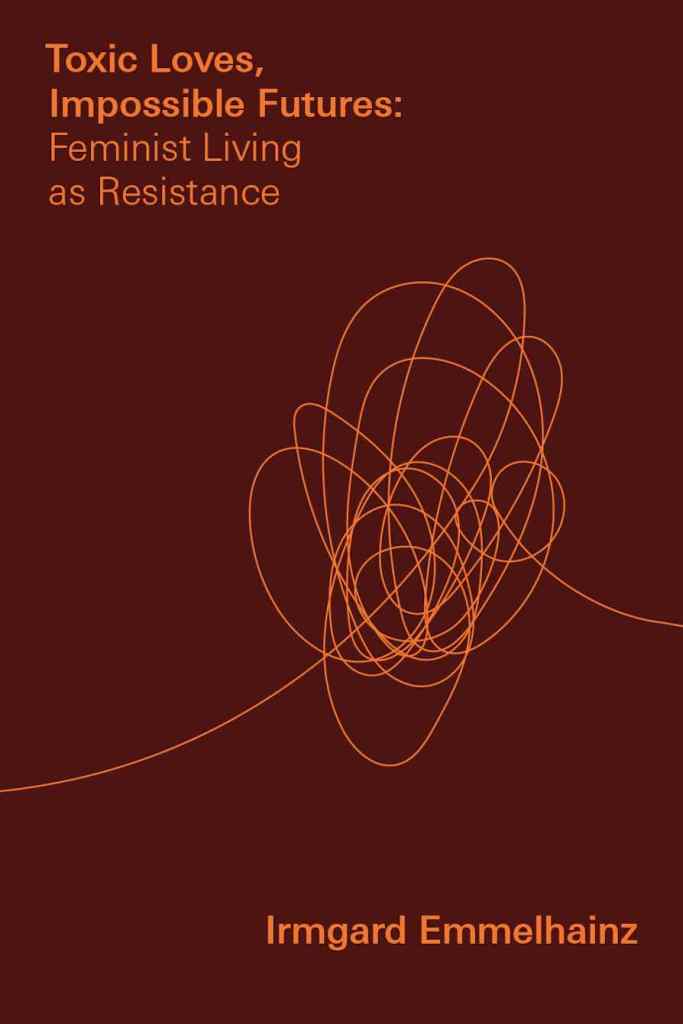
I can speak of the virtues of every single one of these books. Rivera Garza puts forward a fierce communal theory of literary writing. Oswaldo Zavala’s provocative Drug Cartels Do Not Exist, translated by William Savinar, has become an essential critique of the ways in which major literary and media texts replicate, in their representation of the Drug War, the discourse of the State, thus occluding structural aspects of the phenomenon. Irmgard Emmelhainz’s Toxic Loves, Impossible Futures is an experimental, open-ended work arguing for feminist living in a present marked by toxicity in various forms. Mabel Moraña’s We the Barbarians, translated by Stephanie Kirk, is a masterclass in literary criticism, thinking about the relationship between literary writing and the present around the work of Yuri Herrera, Fernanda Melchor, and Valeria Luiselli. And Carlos Monsiváis’s Faithfully, Fatefully Feminist, which collects essays on gender by the foremost public intellectual of turn-of-the-century Mexico, is both a historical document of great value in thinking the history of feminist struggle in Mexico and a truly exemplary work of critical and editorial scholarship by Norma Klahn and Ilana Luna. It is one of the most meaningful parts of my career today to have played a part in bringing these books to English.
And yet, in the nearly four years I have worked at the series, I have become keenly aware of various challenges. The aforementioned issue of funding constitutes a critical question. I sought a book by a fantastic freelance scholar and journalist who is a native speaker of English, and she rightfully declined because translating the book is labor that she needs to be paid for given her professional situation. I would love to bring indigenous thinkers to the series, but without funding or without someone generously offering to perform the labor themselves, it is impossible to do so under current financial circumstances. Knowing what I know about university press economics, I realize that many of these books are financially risky, particularly because the press is committed to publication in paperback to make it more affordable to readers. Adding the cost of a specialized translation is simply not viable in most cases.
The other challenge emerges from my wish to help get Mexican and Mexicanist scholarship read more widely, beyond the field of Latin American Studies. The fact is that translation is just the first step and there is a steeper hill to climb. Cosmopolitan Anglophone scholars tend to not be attentive to the theoretical production of the Global South. Mexico is a particular case because we are, after all, the country next door and the source of the largest immigrant community in the US. But you would be very hard-pressed to find an Anglophone scholar working in theory or criticism outside of Latin American Studies who could name a Mexican theorist who writes in Spanish (or maybe two, because some now register Rivera Garza).
The reasons behind this are part of a series of historical inertias. We have not moved on fully from the time in which it was symbolically difficult for many, notwithstanding decades of postcolonial and decolonial theory, to think of Latin Americans as subjects of theoretical thought. The separation of literary disciplines by language tends to keep theoretical traditions cajoled into individual language departments, and Spanish programs often struggle to be regarded as spaces for literary criticism. Contemporary cultural politics also foster the sense of obligation to speak of (and be reduced to) our own communities and identities. This, in turn, promotes forms of intellectual practice confined to parochial spaces and tendencies towards the familiar. Thus, it has proven very hard to get many readers for the series who are not Latin Americanists, the subset of scholars who are the core audiences even of our translated books. This is a financial problem too: if we cannot tap a larger readership beyond our immediate subfields, it becomes even harder to finance translations of major works, particularly in cases that may require negotiating with an agent or paying an advance.
And yet it is a fight worth fighting. My editors Gianna Mosser and Steven Rodriguez, and my former acquisitions editor Zack Gresham, have all been steadfast partners who believe in the need to give a platform to the scholars we publish. I have a couple of projects that are not public yet, but I can say that at least two major Mexican thinkers are coming to the series in the near future. But to continue this work, there is a very clear plea: we need readers, who are committed to the project of making the ideas of Mexican thinkers available, to order the books for themselves or their libraries. University Press publishing is nonprofit and centered on a mission, but there is no question that economic feasibility allows presses to invest even more in these kinds of books.
While I am discussing my series, I do not want to neglect other efforts that have brought Mexican thinking to the fore. SUNY Press has been a site for this work, particularly thanks to Rebecca Colesworthy and to the efforts of SUNY’s long-running series on Latin American thought. SUNY published another book by Emmelhainz and, along with Bloomsbury, has published the work of Carlos Alberto Sánchez, who has translated major works of Mexican philosophy into English. Fordham recently published the Mexican theorist Rosaura Martínez Ruiz, in a translation by Ramsey McGlazer. Semiotext(e) has published two key thinkers of the era of the Drug War, Sergio González Rodriguez, in translations by Joshua Neuhouser, Michael Parker-Stainback, and Marco Vera, and Sayak Valencia, translated by John Pluecker. Yet, compared to the quality and diversity of Mexican theory and criticism across disciplines, the available books barely constitute a tip of the iceberg.
Translation does not end at literary fiction, in which Mexico has fared well for the past few years. This boom sometimes obscures the fact that other forms of writing need to be translated too. After all, the intellectual map of a tradition so close to the US in many ways includes poets, critics, scholars, screenwriters, art historians, philosophers, and so many other practitioners for whom translation is rare. The books published in the Critical Mexican Studies series are an attempt to open the doors for such authors, hopefully accompanied in the near future by other interested presses.
Translating theory and criticism has its own challenges, because the number of translators who also command the vocabulary and necessary context is very small. Besides the funding challenges, the lack of recognition in academic departments for this work discourages some of the scholars capable of bringing major works into English. The decline of language departments, and of the humanities at large, may mean that the situation will become worse. It is going to be immensely hard to train people to speak the language at higher levels. In the Anglosphere, where the two dominant academies (the US and the UK) are shutting down and cutting language departments in alarming numbers, there is a predictable scarcity of native English speakers with advanced language skills for translation looming sometime in the future.
There are a few modest proposals that would help address the historical gaps in translation, which, in the case of books from countries like Mexico, are enormous. All university presses and all presses publishing theory should commit to fund the translation of at least one work from the Global South beyond what they already do every year. Presses should also develop series to facilitate scholars with resources to publish other translations. Universities should create mechanisms and standards to recognize theory translation (perhaps with an accompanying critical apparatus) as equal to a monograph in tenure reviews, insofar as they require similar workloads and depth of knowledge. And journals and magazines must publish work from untranslated and undertranslated thinkers to help elicit both editorial and readerly interest. This will only succeed if we all use our power to buy scholarly books or to request such purchases to support the endeavors doing this work.

Ignacio M. Sánchez Prado is professor of Spanish, Latin American Studies, and Film and Media Studies at Washington University in St. Louis. He is the author of several books, including most recently Strategic Occidentalism: On Mexican Fiction, the Neoliberal Book Market, and the Question of World Literature (Northwestern, 2018). He is also the editor of the Critical Mexican Studies series at Vanderbilt University Press and co-editor of the SUNY Press Series on Latin American Cinema.
Originally published on Hopscotch Translation
Tuesday, January 23, 2004

 hopscotchtranslation.com