
Translation as Invitation: Reflections on the Role of Research in Translating Tahar Ben Jelloun’s “L’Aube des dalles” / “Dawn of Tombstones”
by Teresa Villa-Ignacio
In democracy, no one is better than anyone else: Orpheus is just another struggling poet.

I often think about reading and translation as invitations. From this perspective, reading means accepting an invitation into the world the author has created; translating means accepting an invitation to rebuild an author’s world in another language, thereby extending a new invitation to new readers; and reading a translation means accepting an invitation to discover the author’s world through the translation’s mediation. I use the metaphor of invitation as a reminder that engaging in literature is a choice, one that we are free to accept or decline. Literature’s invitations are always open-ended, even more so concerning works in translation, because, depending on our level of familiarity with the source culture, the text as invitation may compel us to do more research than we would normally do for a text from our own culture, that is, to go outside the text to understand what brought it into existence and what it signifies in its source culture, as well as our own. Again, we may decline or accept this invitation to varying degrees, but acceptance always entails the possibility of being rewarded with the pleasure that comes with new understanding, with new perspectives made possible by new insights.
How we interpret an invitation depends on the extent of our textual understanding and contextual knowledge. Tahar Ben Jelloun’s “L’aube des dalles,” which I translated as “Dawn of Tombstones,” was first published in issue 12 of the Moroccan review Souffles in the fall of 1968. This is what I knew when I decided to translate it for the Souffles-Anfas anthology (Harrison and Villa-Ignacio), which I did at some point between 2011 and 2014: I knew that Souffles was a literary and cultural review published in Morocco from 1966-1971 that became increasingly political over its 22-issue run and was ultimately shut down by the Moroccan government, which put its editors in prison and forced other members to flee the country. Souffles was motivated to achieve “cultural decolonization,” a term invented by its founder, Abdellatif Laâbi. Cultural decolonization meant shaping the culture of post-Independence Morocco in a way that was true to the Moroccan people’s experience, neither an imitation of French culture nor a nostalgic invocation of some pre-colonial past, which were the prevalent tendencies during colonization. I knew that it was urgent and relevant to translate into English the major works that Souffles had published. I knew that Tahar Ben Jelloun was (and is) an established, award-winning novelist and essayist; internationally, he’s Morocco’s most famous author. I had read and taught The Sand Child (L’Enfant du sable), a beautiful early novel (published in 1985), which creatively critiques Morocco’s patriarchal society while invoking its rich oral traditions. I knew that the sequel to The Sand Child, The Sacred Night (La nuit sacrée, 1987), had won the prestigious Goncourt Prize, and I knew that Ben Jelloun had received much attention for an essay he wrote after living in France for decades, entitled Racism Explained to my Daughter (Le racisme expliqué à ma fille, 1998). I also knew that English-language readers of our anthology would not likely be familiar with Ben Jelloun’s works, and that anyone who was motivated by my translation of his poem to explore his amazing writing would be able to do so, since many of his works had been translated into English.
Once my anthology co-editor, Olivia Harrison, and I had decided to include “Dawn of Tombstones,” and once I decided to translate it, I read through Ben Jelloun’s complete poetry in French for a sense of his style and evolution as a poet. The preface to his collected poems conveniently describes the origin of “Dawn of Tombstones” (1995, 9-10). Here is how I summarized it in the introduction to its section of the anthology: “Ben Jelloun recounts how his participation, along with his fellow college students in Rabat, in the protests that led to the violent state repressions of March 23, 1965, resulted in their forced conscription into the Moroccan army. He traces his origins as a poet to this eighteen-month period of thinly ‘disguised incarceration,’ during which time he secretly wrote this poem and others in the bathroom of the barracks” (114-15). When I set out to translate the poem, I didn’t know much about the protests that led to the March 23, 1965 repression, only that students and workers had been involved, and that it was emblematic of the Years of Lead (Années de Plomb) in Morocco, a period of severe state repression that took place from the 1960s to the 1980s. This, then, was one important aspect of the invitation extended by this poem: to learn more about the socio-economic and political situation of post-colonial Morocco, nine years after Independence and one year before the Souffles review came into existence.
By reading historical accounts (Rollinde 120-35, Daoud 103-04), I learned that in the years leading up to the repression, the National Union of Moroccan Students (UNEM), in concert with the National Union of Popular Forces (UNFP), a leftist party, had criticized the King of Morocco, Hassan II, for authorizing a constitution that put all political power in his hands, rather than sharing it with a representative body. The organizations held small-scale protests, which the king tried to quell by, for example, closing cafés where students and activists gathered to organize, citing Ramadan as the reason for the closures. In early March 1965, the Ministry of Education announced that students over the age of 17 would not be allowed to continue their secondary school education, which effectively ended education for 60% of high school students. Only about 1,500 students graduated with the baccalauréat, the French high school diploma, each year, so in practice the announcement changed very little. However, it carried great symbolic weight, and was interpreted by the people as a bold anti-democratic move. On March 22, UNEM organized a peaceful demonstration of about 15,000 students in Casablanca, which law enforcement had dispersed, without firing upon the crowd. The next day, March 23, the students returned, accompanied by their parents, teachers, various workers, unemployed, and slum-dwellers. The police and the army opened fire, and an estimated 1,000 protestors were killed. Similar protests and repressions followed in cities throughout the country. Hassan II, in an address to the nation a week later, said to the parents and teachers involved in the protest, “There is no greater danger to the State than a so-called intellectual. It would have been better if you were all illiterate” (cited in Rollinde 123). 2,000 people were put on trial, and some ended up with sentences like Ben Jelloun’s, assigned to a military training camp that amounted to imprisonment. In the aftermath, the events of March 23, 1965 were swept under the rug, and the idea spread that the protesters deserved what they got for contradicting the King. In this context we can read Ben Jelloun’s poem as an act of collective memory that seeks to understand the meaning of that day in a context where no public reckoning could take place.
The lyric theorist Jonathan Culler argues that a poem’s “efficacy” depends on its memorability, on “making its words memorable” (130). Out of the double necessity of making itself memorable as a poem and as an act of collective memory, “Dawn of Tombstones” has many memorable features. The first one that stood out to me was the repetition and anaphora of the number “thirteen hundred,” amounting to a collective blazon of horror:
the thirteen hundred shoeshine boys / of my neighborhood /…
you are thirteen hundred / to come out from under the tombstones /…
Thirteen hundred pairs of hands / … to swallow double doses of suffering …
Thirteen hundred jawbones to stone to death / …
Thirteen hundred children / … to shoot at you / …
Thirteen hundred questions to ask / …
thirteen hundred figures decimated / …
time has gnawed on … / your thirty-two thousand teeth / …
Thirteen hundred rapes clear as ordinary assassinations…. (157-58)
The poem also involves an unexpected mix of registers: it apostrophizes the ancient Greek mythical figure of lyric and music, Orpheus, but addresses him colloquially about a subject not usually associated with him, political extortion:
You know, Orpheus, in our country corruption is indispensable: from the worker exported to the Western mines, they demand some five hundred dirhams for a passport, a hiring fee of over a thousand, and a few hundred as a retainer.
No, you didn’t know.
Your memory, cloaked in deafness, still falters. (157)
Finally, the poem’s emotional tenor is that of despair, as in the following passage: “Thirteen hundred pairs of hands /… / to bend over boots of enduring grime / that are more like boots than earth and cement,” (157) in which this image of unending servitude portrays the newly postcolonial nation as beholden to a new set of masters rather than engaged in building a country that serves everyone.
In this instance, I didn’t have to do much active research to arrive at a coherent strategy for rendering these important aspects of the poem. Although I am not a poet, I am a trained poetry scholar, and am well-acquainted with poetry in English, French, and Spanish, especially of the 20th and 21st centuries, as well as world poetry in translation. In my experience translating non-literary texts, I had encountered the strategy of referring to “parallel texts” – texts with the same or similar content – to find key terms and identify translation strategies. I concede that this technique works much better for genres such as medication leaflets and airplane menus than it does for unique works of literature. However, “Dawn of Tombstones” obliquely reminded me of Vladimir Mayakovsky’s “An Extraordinary Adventure Which Happened to Me, Vladimir Mayakovsky, One Summer in the Country” (1920), and Frank O’Hara’s “A True Account of Talking to the Sun at Fire Island” (1958), which harks back to Mayakovsky’s poem. In both these poems, the poets have a conversation with the sun, though they’re both much happier poems than “Dawn of Tombstones.” But the informal apostrophe of an unlikely interlocutor and the overwhelming presence of the sun in both poems gave me a sense of what the translation should feel like, which was both similar to and very different from these so-called parallel texts. Ben Jelloun would probably have read Mayakovsky in translation; I’m not sure whether he would have encountered Frank O’Hara; in either case, it doesn’t matter. What I take away from all three poems is the importance of leveling power structures. In democracy, no one is better than anyone else: Orpheus is just another struggling poet.
In addition to taking into account the poem’s historical context, the conditions of its production, and the ways its poetics make it an effective and memorable poem, there were specific passages of the text I knew I should research in order to understand the poem more fully. First of all, I needed to know the identity of the “man disappeared this morning,” “dissolved in sulfuric acid,” “soaked in quicklime,” who might have been a “prophet of liberation” (155). This information was not difficult to deduce after more reading on the Years of Lead: the man was Mehdi Ben Barka, the brilliant and charismatic leader of the leftist party UNFP, whom Hassan II considered a threat to his rule. Ben Barka was disappeared on October 29, 1965, in Paris, seven months after the repression in Casablanca, and was most likely assassinated by Moroccan intelligence, possibly with the assistance of Mossad, the CIA, and the French Secret Service (Bergman 86-94). Next, I needed to know whether the “1,300 shoeshine boys” referred to any historically specific persons. I even wondered whether they were actually “shoeshine boys.” Nothing turned up, so I asked Moroccan sources, who were not aware of any historical or apocryphal events concerning 1,300 boys and/or professional shoe shiners. I concluded that Ben Jelloun had chosen the number 1,300 to represent bad luck, and the “shoeshine boy” identity to represent youth with no high-skilled career prospects due to the consolidation of power in the hands of the Moroccan elite. In retrospect, it seems obvious that this is figurative rather than literal content, but my process is symptomatic of the due diligence you must carry out when translating from a culture that’s not your own. Finally, I wanted to find out more about the extortion of the miners. I knew, from an article I’d read in Souffles, that Moroccan phosphate miners had been drastically underpaid since at least World War II, and that they had gone on strike periodically, with less-than-optimal results. I never had the time to fully research the practice of charging the miners fees just to be hired so that they were already in debt to their employers before they’d begun working, but in the end, fact-checking this detail wasn’t going to change the translation. I cite these varying research results to show that what matters in research for translation is the process – expanding one’s ability to comprehend a text, just as one does as a reader, is what’s most important. We can never know everything, especially not under a deadline, so we have to work with what we’ve got.

Once the translation was complete, there was the matter of deciding how much context readers would need to understand and appreciate it. In this instance, I had to answer this question not just in terms of the poem alone, but its role in the Souffles-Anfas anthology. Here is what I wrote about the poem’s significance in the introduction to its section of the anthology:
Tahar Ben Jelloun’s first published poem, “Dawn of Tombstones,” puts into question the political role of poetry in the context of repressive state violence. . . . Extending a colloquial metaphor for young men who can find no skilled employment – “the shoeshine boys” – he fantasmatically portrays how his generation’s aspirations for collective social prosperity have been crushed by political and economic repression. Denouncing the exploitation of Moroccan space and culture as a tourist haven for American soldiers returning home from Vietnam, Ben Jelloun critiques global networks of neocolonialism by which his country, by serving as a vacation destination for the soldiers employed in a neo-imperial military campaign in another part of the world, remains shackled to the interests of the military-industrial complex. . . . In these contexts, the speaker accuses Orpheus, the personification of poetic tradition, of silence, ignorance, and indifference in the face of his suffering people. Calling him back to the “city” – an invocation of the Greek polis that exemplifies the ideal of a democratic, participatory society – he instructs Orpheus to bury the dead and lead the reckoning of the country’s losses through violent forays into independence. (114-15)
While I did explain the extended metaphor of the shoeshine boys, I didn’t reveal the disappeared man’s identity as Mehdi Ben Barka, nor did I offer contextual details about the phosphate miners. Since I didn’t have a lot of space to introduce this section of the anthology, I chose to emphasize instead the poem’s generational despair, its critique of the United States’ neocolonial role in Morocco, and its insistence on poetry’s participation in rebuilding the nation after acts of state repression. These elements were important to understanding the poem’s relationship to other texts in the anthology; I had faith that, if engaged readers came up with the same questions I did, they would accept the implied invitation to do their own research.
Rereading this passage now, I want to revise the ending. I’m not satisfied with the account of the speaker of the poem giving Orpheus instructions for rebuilding the country, as if the poet’s role were cut and dried. I would want to emphasize that the end of the poem is an open question: will Orpheus, as the personification of poetry, be a constructive participant in the nation’s progress toward democracy? The speaker seems doubtful, for Orpheus has a poor memory; the speaker chides him: “No, you can’t remember that Tuesday / when the sun didn’t set” (160). That Tuesday, of course, was March 23, 1965, a day when the sun metaphorically didn’t set because Moroccan society’s natural balance was overturned. If the sun doesn’t set, you can’t stop working, you can’t enjoy your privacy, you can’t rest or sleep. The lack of privacy was especially relevant: living through the Years of Lead meant living under state surveillance, living with the lights on all the time, so to speak. Furthermore, Orpheus is not a good listener, and the speaker is not even sure poetry is there for him as a witness; the speaker repeats: “No, it didn’t set, are you listening to me, Orpheus” (160). The speaker continues addressing Orpheus to the very end of the poem, but it’s not clear whether Orpheus will respond. My impulse to revise is not really the result of active research, but comes, rather, from being informed by living through the last ten years of history. Translating the voice of a young person whose adult life is beginning in a moment that seems like the end of hope is ever more relevant to young readers in this age of global warming and ideological polarization.
This reflection on the relevance of a translation for one’s own historical moment leads me to reflections on translation as a form of research for one’s own writing. Tahar Ben Jelloun was educated in French, one of the elite few who earned a baccalauréat. I imagine him, after the protests and his trial, his university studies interrupted, writing this poem covertly in the military barracks during his forced conscription, asking himself what he might do, even from his de facto prison, to continue the struggle for liberation. I read this poem as Ben Jelloun asking himself whether poetry will be an adequate vehicle for promoting justice. Ben Jelloun was not alone in asking this question; his contemporary, the poet Mohammed Khaïr-Eddine, also asked this question in one of his first poems, “Black Nausea” (“Nausée noire), which I have written about elsewhere (Villa-Ignacio 2020). I was drawn to the Souffles poets’ early work because they were putting poetry on trial. They were already inviting poetry, poetics, creative writing into their lives, but they needed to articulate to themselves their reasons for doing so. Although I’m not a poet, as a scholar, critic, and theorist of poetry I was and I am asking questions of poetry, too. I want to know: What does poetry do? What is poetry doing right now? What effects does poetry have in the world?

Since poetry is always evolving, these questions can never be fully answered, which is wonderful because it means we will always have something new to discover. However, working on the Souffles-Anfas anthology has given me a glimpse into what poetry can make possible. Critics and literary historians have praised Souffles for modeling intellectual critique, creating a Moroccan public sphere for political and cultural debate, and laying the groundwork for greater literary and political inclusivity in Morocco today (Babana Hampton, Sefrioui, Orlando). The anthology came out in the midst of the Arab Spring, in late 2015, though we had begun working on it before 2011, and scholars were quick to point out that Souffles was an important antecedent to these struggles. That is, the Arab Spring was neither a new nor an isolated phenomenon, made possible only by cellphones and social media. Struggles for democracy, in the Arab world and elsewhere, are an ongoing phenomenon.
Revisiting this translation of Tahar Ben Jelloun, recollecting the time I spent in the intimate space of his first poem, where he courageously confronted terrifying uncertainties about his future, his country’s future, and the future of poetry, I’ve realized that it’s inviting me once more to question what I can do, through poetic language and other means, to contribute to ongoing struggles for democracy here at home and abroad.
Works Cited
Babana-Hampton, Safoi. Réflexions littéraires sur l’espace public marocain dans l’œuvre
d’Abdellatif Laâbi. Summa Publications, 2008
Ben Jelloun, Tahar. Poésie complète 1966-1995. Paris, Seuil, 1995.
Bergman, Ronen. Rise and Kill First. New York, Random House, 2018.
Culler, Jonathan. Theory of the Lyric. Cambridge, MA, Harvard UP, 2015.
Daoud, Zakya. Maroc, Les Années de Plomb, 1958-1988: Chroniques d’une Résistance.
Houilles, France, Éditions Mancius, 2007.
Harrison, Olivia C. and Teresa Villa-Ignacio, eds. Souffles-Anfas: A Critical Anthology from the
Moroccan Journal of Culture and Politics. Stanford, Stanford UP, 2016.
Orlando, Valérie K. Francophone Voices of the “New” Morocco in Film and Print. Palgrave
Macmillan, 2009.
Rollinde, Marguerite. Le mouvement marocain des droits de l’Homme : Entre consensus national
et engagement citoyen. Paris, Éditions Karthala, 2002
Sefrioui, Kenza. La Revue Souffles, 1966-1973: Espoirs de Révolution Culturelle Au Maroc.
Éditions du Sirocco, 2014.
Villa-Ignacio, Teresa. “Postcolonial Disgust and Poetic Responsibility in Mohammed Khaïr-
Eddine’s Nausée noire. Yale French Studies 137/138, 2020, 171-89.
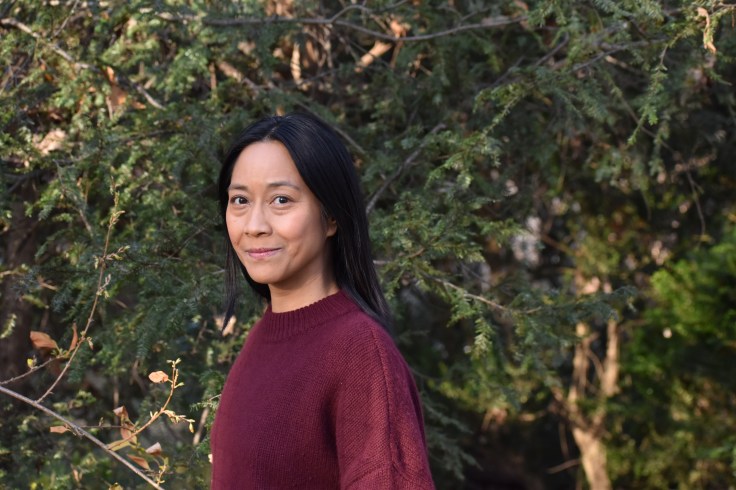
Teresa Villa-Ignacio is a literary translator and scholar whose works include Souffles-Anfas: A Critical Anthology from the Moroccan Journal of Culture and Politics (Stanford University Press, 2016), Hocine Tandjaoui’s Clamor (Litmus, 2021), and Anne-Marie Albiach’s The Mezzanine: The Last Account of Catarina Quia (Litmus, 2026). The recipient of an NEA Literary Translation Fellows Award and an Albertine Translation Fund Grant, she is Associate Professor of French Translation at Kent State University.

 hopscotchtranslation.com