
“Not Sacrifice the Ease of the French”: Jean de La Fontaine, Marianne Moore, and the Principle of Equivalence (Part II.b)
by Vincent Kling
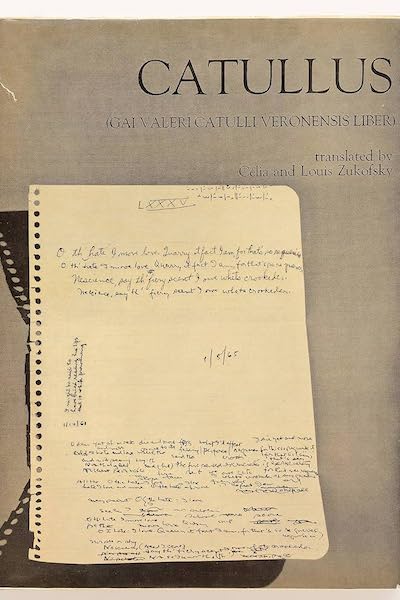
The Zukofskys’ Catullus is as close a reproduction in phonics as it seems possible to achieve, but no reader would ever have an idea of what is being said in the sense that a standard translation provides.
The principle of equivalence established in the previous sections of this essay seems almost the only one elastic enough to allow agreement about the quality of a literary translation, whether the rendering is compared to the original (Federmair) or judged on its own inherent qualities (Saunders). What follows is an inventory of efforts at equivalence ranging from versions that appear altogether successful in their inventiveness to some that seem to fall short by lacking essential elements. A middle category of “folly” tests the notion of equivalence by being applied in ingenious, unorthodox ways.
- Equivalence: Judgments and Assessments
Spurned Languages: Successful Equivalence 1
Alhierd Bacharevič’s novel Alindarka’s Children, translated from the Belarusian by Jim Dingley and Petra Reid, tells the story of a brother and sister, Sia and Avi, confined to an internment camp, where they are being “re-educated” through drugs and “therapeutic” indoctrination as well as surgery on the larynx into abandoning their native Belarusian in favor of Russian. One is reminded of efforts, now mostly in the past and admittedly not quite so drastic, to punish school children speaking Cajun or standard French in Louisiana or the attempts to suppress Catalan in Spain during the Franco years, to cite just two examples. Bacharevič’s translators maintain that they found an apt equivalent by resorting in their English translation to Scots as the “forbidden” language. A prefatory “Note from the Scottish Translator” (Bacharevič xiii-xiv) explains: “To parallel the attempts of the Lukashenko regime in Belarus to obliterate the Belarusian language, the translators choose to render that language in Scots, a language often judged an inferior or oafish dialect in relation to ‘proper’ English.”
No attempt seems ever to have been made to eradicate Scots by such severe methods (though there was an attempt in the nineteenth century to suppress Geailge, the Celtic language of Ireland, by force), but humiliation is just as powerful a deterrent in its own way. Why resort to drastic measures when acute shaming can strongly discourage people from speaking Scots or at least make them feel like clods when they do? Dan Nosowitz refers to “the Scottish Cringe,” “a feeling of embarrassment about Scottish heritage—including the Scots language—and interpreting Scottishness as worse, lower, than Englishness.” This is a powerful form of coercion in so class-conscious a society, where it is still by no means a rarity for some English men and women to look down on the Scots, the Welsh, and the Irish. Not all critics are convinced that the Belarusian-Scots equivalence works effectively (Pinkham), but a better parallel is unlikely to emerge as to the cultural and social prestige of a language. UNESCO lists both Belarusian and Scots as “vulnerable” (McCabe 182; 232), and other factors seem to make the equation workable. Linguist Ross Perlin’s observation (28) that “now more than ever, languages are being hounded out of existence” brings this aspect of translation to prominence, as does his whole chapter on “Radical Linguistics” (25-42).
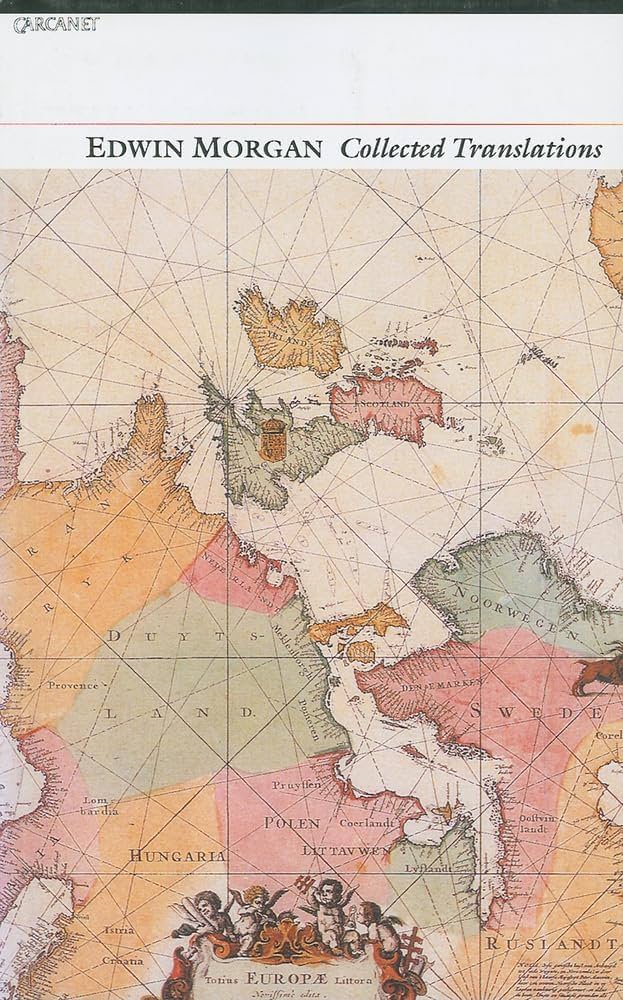
(Could the relative prevalence of literary translation in Scotland arise in part from the keener attention speakers of Scots would need to pay when code switching? Translators like William Fowler and Alexander Montgomerie were employed at the court of King James VI in Scotland to produce translations of the European classics; the same king, as James I of England, then commissioned the translation of the Bible that bears his name; Tobias Smollett was a popular novelist but also a gifted translator whose rendering of Le Sage’s Gil Blas is still in print after two hundred and fifty years; C. K. Scott Moncrieff, mentioned in a previous section of this essay, brought Proust to renown through a translation never improved or superseded; Willa and Edwin Muir created an English-speaking readership for Broch and Kafka; and Edwin Morgan ranks as one of the most prolific and distinguished translators of the twentieth century, often venturing where others did not go [https://edwinmorgan.scottishpoetrylibrary.org.uk/1990s/collected_translations.html]. Add the unusually extensive and masterful contributions of Irishman Seamus Heaney, and it seems fair to ask if the more marginalized status of Scots or other “provincial” versions of English around the Celtic ring could not have brought about keener perception of the tuning fork, encouraging translation as a central poetic activity.)
The Music in the Words: Successful Equivalence 2
The argument is sometimes made that translating rhyme in poetry is expendable and leads to clumsy renderings (more about this topic later), but that point never seems to be raised about song lyrics. Rhyme is too central a feature of art songs and ballads and popular tunes to be called into question as a merely decorative device, it seems, and an ingenious transfer of rhyme has often been a decisive factor in the ability of a song to travel across cultures. There needs to be an attractive melody, of course, but that is not in itself enough; skill in rendering rhymes has often made a key difference. Readers of a certain age may remember, for example, a smash hit from the late 1950s, “Nel blu, dipinto di blu,” better known as “Volare,” whose exceptional popularity was perhaps as much attributable to the suave, “catchy” English lyrics as to the tune itself. Literalness (Dryden’s “metaphrase”) gave way to effective equivalencies that met the taste of the times through ingenious use of idiom and the kind of adroit, conspicuous rhyming found in the ballads performed by Johnny Mathis, Bobby Darin, and other singers from that era. The website “Lyrics Translate” makes no effort to provide anything but an artless gloss of “Volare,” a flat word-for-word rendering, drab in contrast to the version devised by Mitchell Parrish—he also wrote lyrics for “Stardust,” “Moonlight Serenade,” “Blue Tango,” “Sophisticated Lady,” and other beloved hits—whose highly skilled craft greatly contributed to the song’s wide appeal. “We can sing in the glow of a star that I know of / Where lovers enjoy peace of mind / Let us leave the confusion and all disillusion behind / Just like birds of a feather, a rainbow together we’ll find.” This version, aligned with Dryden’s more free-wheeling category of “paraphrase,” is a masterpiece of sophistication itself, “faithful” to the Italian original in its own imaginatively creative way.
The topic threatens to be endless. Consider, for instance, the huge success at providing equivalences in the memorable songs from the film Les parapluies de Cherbourg (The Umbrellas of Cherbourg), lyrics hewing successfully to the seemingly artless quality of the diction in the original French. There may be no more striking, even arresting, example, however, than the lyrics Marc Blitzstein devised for Kurt Weill’s and Bertolt Brecht’s Die Dreigroschenoper (The Three Penny Opera). The first American production was staged in 1933 in an adaptation by Gifford Cochran and Jerrold Krimsky; it closed after twelve performances, dismissed by Gilbert Gabriel in the Tribune as a “torpid affectation, sluggish, ghastly” and by the New York American as a “dreary enigma” (Wolff). American composer Marc Blitzstein, fluent in German and motivated by strong affinity to the esthetic and political stances of Brecht’s play, started his project with an English version of the ballad of Pirate Jenny; it met with enthusiastic approval by Weill, who then commissioned Blitzstein to translate the rest of the text. The production using Blitzstein’s version opened off Broadway in 1954 and was immediately hailed by none less than Brooks Atkinson as “an authentic contemporary masterpiece.” Though it was scheduled for a relatively brief twelve-week run, it ran for more than two thousand performances over six years (Briggs) and became a legend in theater history. The main factor accounting for the drastic difference in reception of the 1933 and the 1954 productions must surely be the quality of Blitzstein’s lyrics, since the music had not changed (see Pollack 352-357).
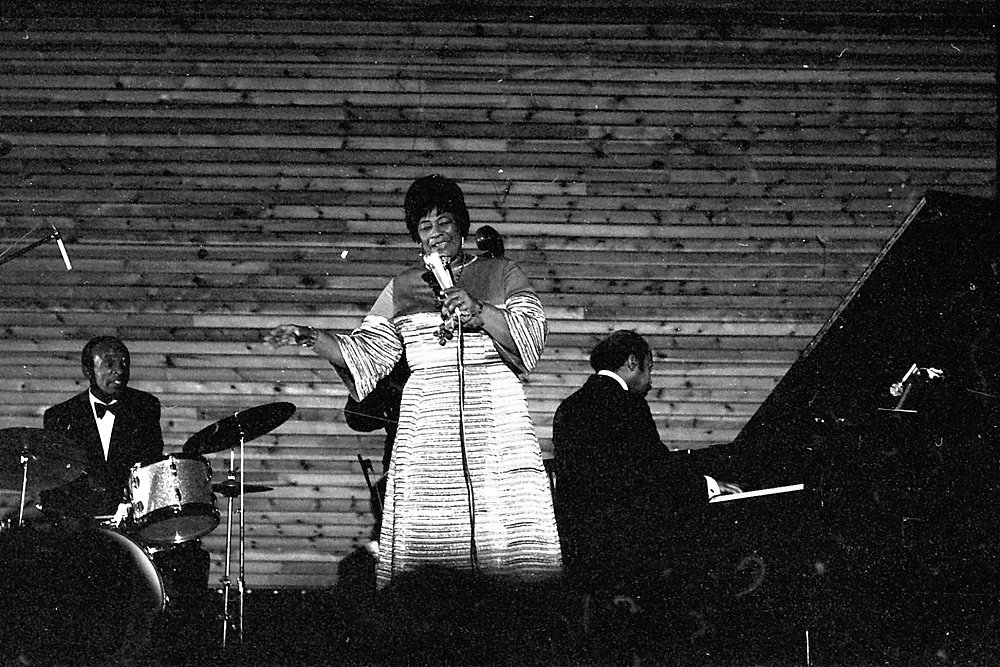
For that matter, “Mack the Knife”—Blitzstein’s version—became one of the most beloved and widely performed songs of its (or almost any other) time, with dozens of vocalists from Louis Armstrong to Marianne Faithful, from Bobby Darin to Connie Francis, from Eartha Kitt to Patti Page, making it a mega-popular phenomenon year after year (https://secondhandsongs.com/work/9119/all#work-9119). Even when Ella Fitzgerald forgot the words and improvised during a live performance in Berlin (https://www.youtube.com/watch?v=qU7R1w0aNF00), the immense acclaim of the song allowed her to turn forgetting the lyrics into a powerfully effective impromptu “translation” of its own, a feat possible only because the song was anchored so firmly in public awareness thanks to Blitzstein. His lyrics mediated perfectly between the sass and cynicism, the Schnodderigkeit, of 1920s Berlin, and the hipster, Rat-Pack, shooby-dooby-doo idiom of the American 1950s, finding equivalent registers of cool disrespect and classic nil admirari. This example alone argues for Blitzstein as a great but underrated translator.
Nor was the acclaim of “Mack the Knife” an isolated one-off, if we consider the many versions of “Pirate Jenny” from Nina Simone through Patti LuPone and numerous other singers. There too, Blitzstein’s lyrics capture the essence of disillusion and fantasized revenge in robustly American colloquialisms, fully domesticating the song and thereby—a paradox of translation—enhancing its universality. (https://genius.com/Nina-simone-pirate-jenny-lyrics).
In Praise of Folly, A Middle Category
Poet Brad Leithauser, quoted earlier as to Marianne Moore’s originality, proposes a category he calls “folly,” which celebrates “the whimsical, the perversely peculiar” (261), and often “enkindles more curiosity than inspiration.” But “the most compelling follies . . . are those whose primary goal isn’t the merely bizarre or even the fiendishly difficult; rather, their aims and appeals are aesthetic” (262). Considering examples of folly in Leithauser’s meaning sends readers of translations back to their assumptions, because folly, through its emphatic privileging of contrivance, returns us to pondering the role of artifice in the first place.
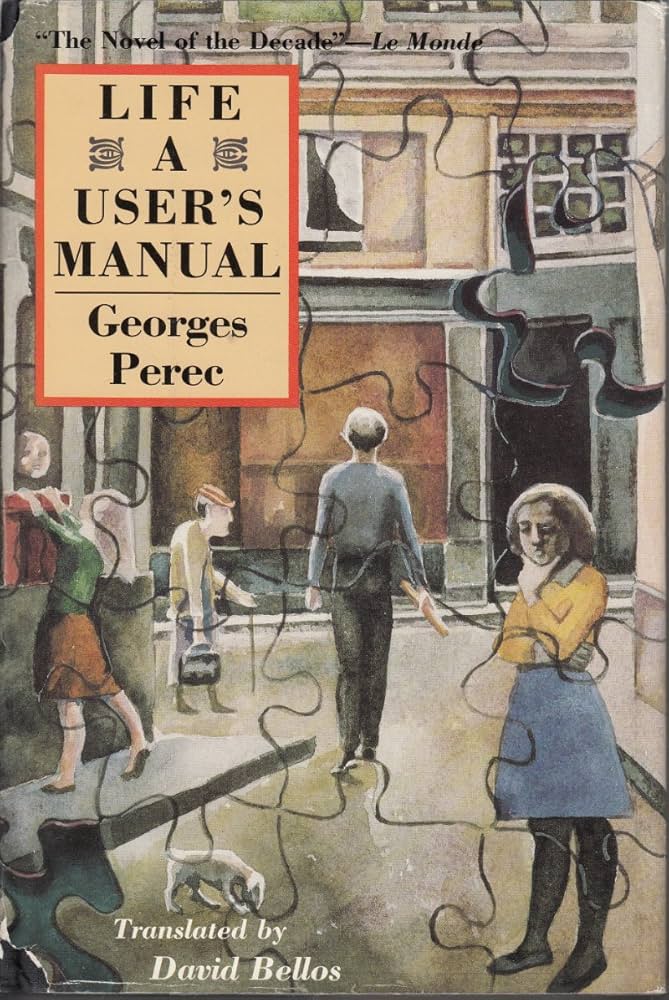
Folly drives contrivance to its limits, then, emphasizing manner so strongly over matter as to force fundamental rethinking of what translation is or intends or should be or could be. The patron saint of folly could be Percival Bartlebooth, a character in Georges Perec’s novel Life: A User’s Manual, who “resolved one day that his whole life would be organized around a single project, an arbitrarily constrained programme with no purpose outside its own completion” (Perec 117, tr. David Bellos). The arbitrariness and the rigidity of the constraints reveal a mastery all the more sovereign for being directed toward no useful aim but toward a complex, demanding whimsy instead.
Even when not all-consuming and not “pure” in its lack of purpose, folly can delight through sheer ingenuity. Scene 3 of Tom Stoppard’s play Arcadia contains (35-39), almost as a throwaway, a high-spirited intellectual prank involving translation. Tutor Septimus Hodge gives his pupil Thomasina Coverly a Latin text to translate at sight. She is making her way with steady diligence, but until he gives her a teasing hint, she does not notice that the passage is Enobarbus’s famous description of Cleopatra in her barge (Antony and Cleopatra, Act II, Scene 2), translated into Latin as a pedagogical drollery by Hodge, and she screams with joyful vexation when she catches on. While Hodge’s intent is duly tutorial, effective and inventive in equal measure, no such utility marks Peter Glassgold’s Hwæt! A Little Old English Anthology of American Modernist Poetry, in which Wallace Stevens’s “Anecdote of the Jar” becomes “þæs crocces spell” and Marianne Moore’s “O to Be a Dragon” is rendered as “la to weorþenne draca.” No one would ever ask why Faulkner was translated into French, say, or Joyce Carol Oates into Polish, but any rationale for Glassgold’s undertaking seems not so self-evident. By very reason of its being a folly devoid of practicality, it calls its own procedure into question. Glassgold concedes that his work is “more in the spirit of Dada than Germanic philology” (13) but also claims the right of all makers. “Language-play is what makes our species every bit as much homo ludens as homo sapiens” (11).
Folly: Homophonic Translation 1
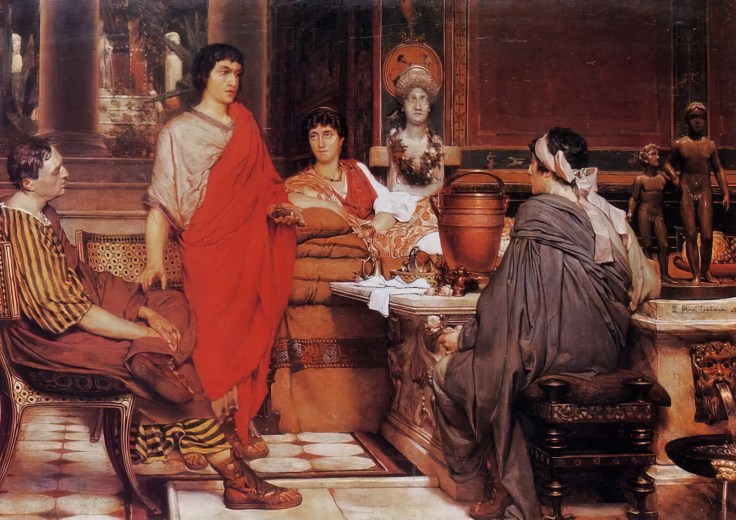
The translations of Catullus made by Louis and Celia Zukofsky over some ten years (1958-1969) and titled Catullus (Gai Valeri Catulli Veronensis Liber) reveal homo ludens, and mulier ludens too, at their most playful. The Zukofskys state their aim in the preface to the volume: “This translation of Catullus follows the sound, rhythm, and syntax of his Latin—tries, as is said, to breathe the ‘literal’ meaning with him” (Zukofsky 243). This is their somewhat oblique way of saying they have cast aside lexical meaning almost entirely; their project doesn’t strive at the conventional aim of capturing meaning but is much more concerned with what the poems sound like, so much so that this challenging translation jettisons “dictionary” meanings almost entirely in favor of attempting to replicate as closely as possible the aural layout of the original Latin. Here are the first several lines of Catullus’s carmen 21, “To Aurelius,” the Latin side by side with A. S. Kline’s blunt but lexically dependable English rendering:
Avreli, pater esuritionum
non harum modo,
sed quot aut fuerunt
aut sunt, aut allis erunt in annis,
pedicure cupis meos amores.
Nec clam: nam simul es, iocaris una,
haerens ad latus omnia experiris.
Frustra: nam insidias mihi instruentem
tangam te prior irrumatione.
Aurelius, father of hungers,
you desire to fuck,
not just these, but whoever my friends
were, or are, or will be in future years.
Not secretly: now at the same time as you joke
with one, you try clinging to him on every side.
In vain: now my insidious cock
will bugger you first.
The Zukofskys, aiming to echo the sound of the Latin, translate these lines (254) as:
Aurelius, father, assure that the o numb
gnawn hungers’ odious quota of errant
ort, sump, alias the years’ runt of anise,
pea to caries scoops my love to such mores.
no clam when you smile the joker is you now,
adheres to him, his life owns your experience.
The Zukofskys’ Catullus is as close a reproduction in phonics as it seems possible to achieve, but no reader would ever have an idea of what is being said in the sense that a standard translation provides. Woe to the student in a Latin class who would look for help from this experiment in sound over sense.
Any translation naturally has to be mindful of prosody in the sense of cadence, rhythm, tempo, meter, and other aural effects. Poetry in particular deploys its acoustical properties to underpin and even enact the content. Here, however, the acoustical element dominates to the exclusion of every other, and while folly rejoices in the self-contained quality of its play, no reader—or at least not this one—can help asking what the Zukofskys’ animating principle might have been, if any, beyond displaying ingenuity at homophonic renderings. George Steiner wonders if they are not just “spinning off puerile acrostics” for the fun of it, but he also surmises that they may be “trying to instance possible procedures for American poetry now and tomorrow and hinting, confusedly, at a theory of immediate universal understanding” (371). That tomorrow does not seem to have come yet, and the universal understanding remains in abeyance, but it seems undeniable that the Zukofskys have met one vital criterion of translation by having achieved equivalence, a questionable one of its own odd kind, on a large scale.
Folly: Homophonic Translation 2
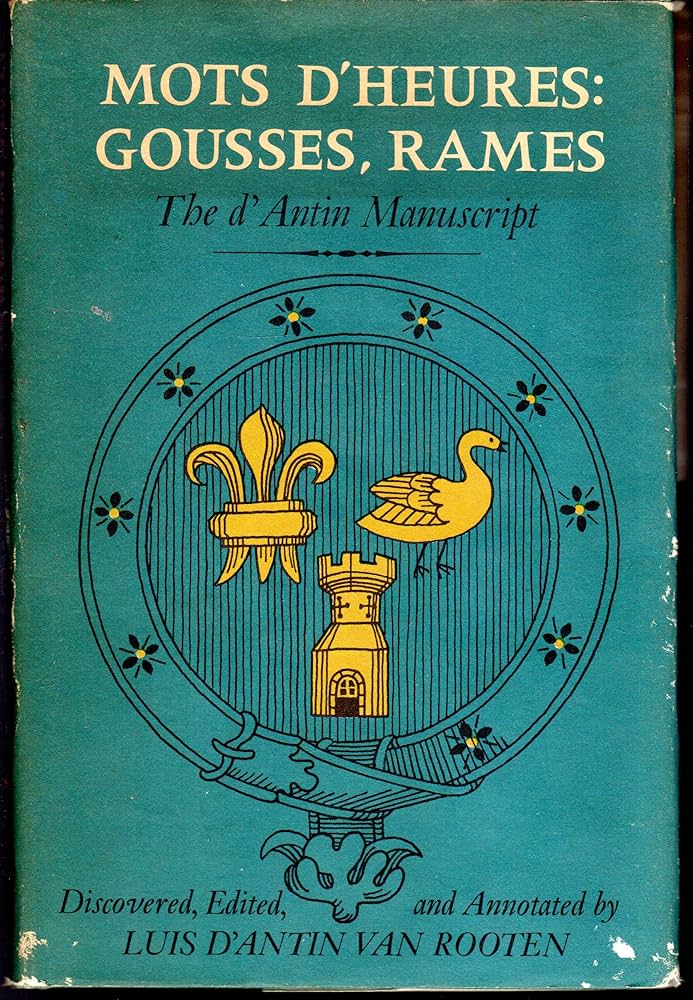
In 2019, the Bodleian Library presented an exhibit on translation. The catalogue is titled Babel, and its subtitle, Adventures in Translation, directs readers and visitors to the kinds of anomalies and non-standard approaches to which folly is so hospitable. The editors refer to such experiments as “Babelic play,” and they cite at least one instance that carries the Zukofskys’ sound-matching even further. Noting that cross-linguistic amalgamation can be “a spur to comedy” (Duncan and Harrison 26), they instance a masterpiece of folly, a triumph of homophonic translation. Mots d’Heures: Gousses, Rames: The d’Antin Manuscript purports to be a collection of poems written on paper watermarked 1788 and passed down to Luis d’Antin van Rooten in 1950 from the estate of an aged relative. “The cryptic phrasing, the disconnected thoughts, the mysterious allusions to places and people suggest at first an affinity to the prophetic quatrains of Nostradamus” (van Rooten, “Foreword”). But the foreword also gives the real game away in its directions on how to read the text: “The most fascinating quality of these verses is found upon reading them aloud in the sonorous, measured classic style made famous by the Comédie Française . . . these poems then assume a strangely familiar, almost nostalgic, homely quality.”
Read the title out loud, then, and the words “Mother Goose Rhymes” pop out from inside the French sounds, as it were. Similarly, the stanza below, accompanied by a workable lexical translation, turns out to be “Humpty Dumpty” in Pink-Panther-style French-accented English.
Un petit d’un petit
S’étonne aux Halles
Un petit d’un petit
Ah ! Degrés te fallent
Indolent qui ne sort cesse
Indolent qui ne se mène
Qu’importe un petit
Tout gai de Reguennes.
A child of a child
Is surprised at the Market
A child of a child
Oh, degrees you needed!
Lazy is he who never goes out
Lazy is he who is not led
Who cares about a little one
All happy with Reguennes
And likewise for
Lit-elle messe, moffette,
Satan ne te fête,
Et digne somme coeurs et nouez.
À longue qu’aime est-ce pailles d’Eure.
Et ne Satan bise ailleurs
Et ne fredonne messe. Moffette, ah. ouais!
Or
Chacun Gille
Houer ne taupe de hile
Tôt-fait, j’appelle au boiteur
Chaque fêle dan un broc, est-ce crosne?
Un Gille qu’aime tant berline à fêtard.
The pseudo-scholarly apparatus “elucidating” these droll verses takes Mother Goose to rare heights of crazily erudite playfulness. The strange and obsolete words, the dialect terms and provincialisms, the technical vocabulary are all meticulously explained; literary and historical glosses abound; superseded alchemical lore is revived; geographical coordinates are provided; jargon and argot are sedulously elucidated—all this in the service of a monophonic translation as well wrought as it is madcap. These homophonic verses again challenge readers interested in translation to widen their notions of what the craft encompasses and in what varying ways it can be practiced. Whether homophonic translations place the two languages side by side, as in the Zukofskys’ Catullus, or overtop one another, as in the Mots d’Heures: Gousses, Rames, they add a dimension that broadens horizons, expanding no less than do Dryden’s categories our sense of what translation can be.
Upholding Equivalence: Instance 1
In her study of translators better known for their writing in their own voices, Judith Woodsworth points to a “certain tradition of subservience” that makes translators “reluctant to adopt an authorial stance. Writers, on the other hand, even when involved in the act of translation, are more inclined to be authorial or ‘author-itative’” (8). “Subservience” may be the key word here, if we overlook the pejorative tinge Woodsworth may be giving it. The only overall principle that seems most consistently helpful is that a translation must strive for equivalence, however that is understood, must aim at some clear correspondence between the original and its rendering in another language. The translator, whether an acclaimed “original” writer or not, is working from a prior text, after all, and so subservience is a prerequisite in a way that it is not for authors writing directly from their own imaginations, whatever their genres or models. Accordingly, many distinguished writers have placed their talents in the service of the original, creating skilled and respectful adaptations. Sadly, though, others have been only too “author-itative,” departing from the originals to the point of dereliction.
First a look at two exceptionally adept translations/adaptations by authors famous in their own right. Among dozens of examples, an early poem by William Butler Yeats, “When You Are Old,” is so authentic in its own voice and so flawless in technique that many readers appear unaware of its being a close adaptation of a sonnet by Pierre de Ronsard from 1578. Here are the two poems side by side, the comparison calling all the more admiration onto Yeats’s achievement, somewhere between metaphrase and paraphrase. The aim is not “literal” in such adaptations, but the integrity of the original text is masterfully preserved. Ronsard’s sonnet is the occasion or impetus of Yeats’s poem, a springboard to his own creation, but the reverence for the original shows through in his reworking.
When you are old and grey and full of sleep,
And nodding by the fire, take down this book,
And slowly read, and dream of the soft look
Your eyes had once, and of their shadows deep;
How many loved your moments of glad grace,
And loved your beauty with love false or true,
But one man loved the pilgrim soul in you,
And loved the sorrows of your changing face;
And bending down beside the glowing bars,
Murmur, a little sadly, how Love fled
And paced upon the mountains overhead
And hid his face amid a crowd of stars.
Quand vous serez bien vieille, au soir, à la chandelle,
Assise auprès du feu, dévidant et filant,
Direz, chantant mes vers, en vous émerveillant :
Ronsard me célébrait du temps que j’étais belle.
Lors, vous n’aurez servante oyant telle nouvelle,
Déjà sous le labeur à demi sommeillant,
Qui au bruit de mon nom ne s’aille réveillant,
Bénissant votre nom de louange immortelle.
Je serai sous la terre et fantôme sans os :
Par les ombres myrteux je prendrai mon repos :
Vous serez au foyer une vieille accroupie,
Regrettant mon amour et votre fier dédain.
Vivez, si m’en croyez, n’attendez à demain :
Cueillez dès aujourd’hui les roses de la vie.
Upholding Equivalence: Instance 2
Likewise, A. E. Housman created a memorable poem in his unmistakable voice by mediating among several versions of a children’s round dance, “Nous n’irons plus au bois.” The poem, originally as simple as a nursery rhyme, was amplified into high sophistication by Théodore de Banville in 1846, and we can first place Banville’s version side by side with a functional translation made by Eli Siegel in 1968.
Nous n’irons plus au bois, les lauriers sont coupés.
Les Amours des bassins, les Naïades en groupe
Voient reluire au soleil en cristaux découpés
Les flots silencieux qui coulaient de leur coupe.
Les lauriers sont coupés, et le cerf aux abois
Tressaille au son du cor ; nous n’irons plus au bois,
Où des enfants charmants riait la folle troupe
Sous les regards des lys aux pleurs du ciel trempés,
Voici l’herbe qu’on fauche et les lauriers qu’on coupe.
Nous n’irons plus au bois, les lauriers sont coupés.
See shining again in the sun as cut out crystals,
The silent waters which flowed from where they were.
The laurels are cut down, and the stag, quiet in fear,
Trembles at the sound of the horn; we go no more to the woods,
Where playing children laughed, gathered in abandon—
Among the lilies of silver moistened by the sky’s tears.
Here is the grass which is reaped and the laurels which are cut down.
We go to the woods no more, the laurels are cut down.
Elinor Wylie draws on Banville as a point of departure, his poem clearly her basis, the original recognizable but now turned into an apostrophe to a lover.
Ah, love, within the shadow of the wood
The laurels are cut down; some other brows
May bear the classic wreath which Fame allows
And find the burden honorable and good.
Have we not passed the laurels as they stood—
Soft in the veil with which Spring endows
The wintry glitter of their woven boughs—
Nor stopped to break the branches while we could?
Ah, love, for other brows they are cut down.
Thornless and scentless are their stems and flowers,
And cold as death their twisted coronal.
Sweeter to us the sharpness of this crown;
Sweeter the wildest roses which are ours;
Sweeter the petals, even when they fall.
Pursuing his own aim, Housman removes almost all of Banville’s consciously aestheticizing effects, retaining one classical reference while reverting to the plainer diction of his typical poems, achieving tones of melancholy and loss with seeming artless contrivance. His debt to the children’s rhyme is obvious while its adaptation bears his unmistakable stamp, laconic, stoic, and poignant.
We’ll to the woods no more,
The laurels all are cut,
The bowers are bare of bay
That once the Muses wore;
The year draws in the day
And soon will evening shut:
The laurels all are cut,
We’ll to the woods no more.
Oh we’ll no more, no more
To the leafy woods away,
To the high wild woods of laurel
And the bowers of bay no more.
Poets like Yeats and Housman, Anthony Hecht and Richard Wilbur, Rainer Maria Rilke (Valéry) and Stefan George (Mallarmé) demonstrate that individuality is not incompatible with scrupulous attention to the nuances of the originals from which they are working.
Faltering Equivalence?
Just as we cannot fix universal principles or immutable standards when attempting positive assessments of a translation, neither are there such clear criteria when ascertaining inadequacy or deficiency. Because judgments always entail individual taste, they may be better reached along a continuum. Criteria are arrived at not beforehand, but in the act of assessing a completed work. For example, George Steiner’s work carries conviction because he reaches his findings from concrete instances, not prior theories. He judges that the translations of Gerard Manley Hopkins by Pierre Leyris “ought to come under the rubric of impossibility” (430), considering Leyris’s nearly miraculous correspondences in French with the sounds of the original English. Steiner pays detailed attention to one stanza from The Wreck of the Deutschland and to “Pied Beauty,” concluding that “Leyris’s Hopkins puts the reader on the tantalizing verge of gaining insight into the processes—acoustic, tactile, hermeneutic—whereby the mind can pass from one language into another and then return” (433). But does Leyris’s mastery invalidate or banish all other versions of Hopkins in French? Such a “winner-take-all” mentality would block engagement with other skilled renderings and bring only impoverishment.
Admiring Leyris’s extraordinary skill at replicating sounds and shapes and metric pulses, one might decide through misplaced purism to read, say, no English translation of Dante’s Divine Comedy not cast in terza rima. Wikipedia lists a dozen and more versions that adhere to the original meter and rhyme, the best known perhaps being the one by Dorothy L. Sayers. But the rendering in blank tercets by Henry Wadsworth Longfellow is widely acclaimed as the very best in English (Luzzi), though it would not even be open to consideration if we took a doctrinaire or perfectionistic stance. (Here is a link to the Longfellow version through the Gutenberg Project: https://www.gutenberg.org/cache/epub/1004/pg1004-images.html). Closest to the Italian in form would be a version like that of Sayers, to be sure, but does that closeness of adherence to form make it automatically the best? At one remove—in tercets but not terza rima—is the Longfellow translation; a further remove yet from the original poetic structure would be a Dante in prose, like Charles S. Singleton’s rendering, though that version also has strong admirers. Perhaps all three aptly illuminate the original and achieve equivalence from different approaches (more about Singleton later).
Given the need for elasticity in judgment, at what point does a translation merit reproof? Two examples come to mind of renderings whose omissions eliminate features that make the essence of the original what it is. Franz Josef Czernin, who has himself produced admired versions of Shakespeare’s sonnets in German, informs us (132) that the very first translation of the sonnets in that language, made by one Johann Joachim Eschenburg (1787), was in prose. Eschenburg disregarded meter in the plays as well and likewise translated them into prose. As serious a distortion as changing blank verse to prose would seem to begin with, the damage appears much greater when the sonnet form itself is forfeited. The genre disappears completely when both rhyme and meter are tossed aside. What is left that could be called a sonnet? Arguments are sometimes made that it is better to have some idea, however approximate, of what a work is saying than to have nothing. But what is being communicated is not a “text” in discursive mode; it is a literary work composed in a definite form. Remove the form altogether and the essence is gone.
Similarly, Galway Kinnell’s translations of François Villon forfeit the end-rhymes. Kinnell maintains stanza breaks and lines per stanza, and there is some compensation in having the original French on facing pages. He chooses to bypass rhyme, however, maintaining that it could have been achieved only by “brute force” which would have “destroyed” some sections of the poems (Villon/Kinnell xxi.) But if Villon labored to find the rhymes in the first place, why is the translator so readily setting them aside? Some reviewers indeed feel that the elimination of rhyme releases Villon’s poems from forced effects (Palma), as compared to the translations by Louis Simpson, but Anthony Hecht’s objection addresses the essential point. The ballade is “a difficult and demanding form,” containing “only three rhyme sounds for the entire poem” of 28 lines. The demands on the translator are correspondingly great, but “no small part of our pleasure in reading a ballade consists in seeing how skillfully the poet renders this challenge.” Excising the rhymes gives us “something very diluted, and, from my point of view, unsatisfactory” (Hecht Letters 304). The effect of Kinnell’s omission obliterates any sense of what the ballade can do, especially considering the sparkling brilliance of Phyllis McGinley’s supple, ingenious rhyming in her tribute to the form, “Ballade of Lost Objects” (1953) https://wordsfortheyear.com/2015/04/23/sunday-poetry-ballade-of-lost-objects-by-phyllis-mcginley/.
Pondering how poets adapted tradition to their individual talents in respectful tributes to the letter and spirit of their sources provides us with a touchstone for trustworthy literal equivalence that nonetheless need not render each and every word. Yeats and Housman are eminent voices paying faithful homage to their forebears. As original poets, they are indeed “author-itative” in their work of adaptation, to recollect Woodsworth’s coinage, but other writers have been so eager to wrest authority from their sources that they have created severe distortion, at times to the point of irresponsibility, in their translations. Both Gertrude Stein and Vladimir Nabokov were notably doctrinaire in their self-assurance. Stein claimed primacy of place in twentieth-century American literature; “everything really begins with my Three Lives” (quoted in Woodsworth 70); Nabokov was legendarily splenetic, scolding, and sneering. However helpful these postures may have been in empowering their creative work, this level of insistence on the centrality of their own processes turned their translations into failures, with the very principle of equivalence abandoned, the tuning fork ignored, and the ear betrayed.
As a way of leading into a rationale as to why Marianne Moore’s La Fontaine was essentially a failure, the forthcoming final section of Part II of this essay will discuss in detail instances of translations by two renowned writers in which they virtually jettisoned the principle of equivalence to such an extent that their versions are outright unacceptable.
REFERENCES: For a complete list of the works cited in this essay, please visit the References page HERE. (The page will open in a new tab.)

Vincent Kling is a professor of German and comparative literature at La Salle University. He has published translations of works by Gert Jonke, Heimito von Doderer, Hugo von Hofmannsthal, Gerhard Fritsch, Werner Kofler, and Aglaja Veteranyi. His translation of Veteranyi’s novel Why the Child Is Cooking in the Polenta was awarded the Schlegel-Tieck Prize in 2013. His translation of Doderer’s The Strudlhof Steps was published by New York Review Books in 2021 and was awarded the Helen and Kurt Wolff Prize in 2022.
Originally published on Hopscotch Translation
Tuesday, February 24, 2026

 hopscotchtranslation.com