
“Not Sacrifice the Ease of the French”: Jean de La Fontaine, Marianne Moore, and the Principle of Equivalence (Part II.c)
by Vincent Kling
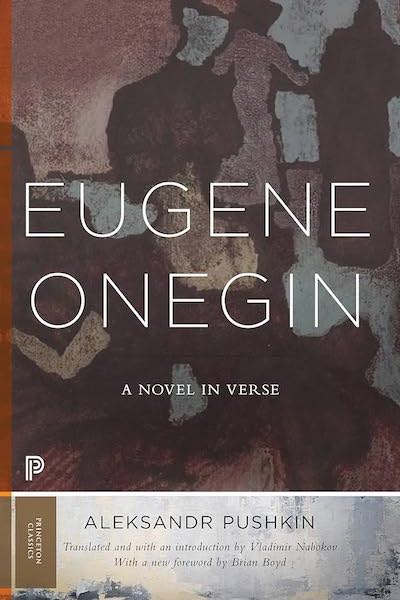
The totality of Nabokov’s betrayal stands in direct proportion to the complexity, the ingenuity, and the rhythmic suppleness of Pushkin’s brilliant, fleet, intricate stanza.
So far, in Part II.a and II.b of this essay, we’ve been looking at progressively more dubious applications of our overall principle, equivalence, seeing ever more clearly how equivalence is not identity. Even when “folly” is being perpetrated, the principle holds. The next section discusses two examples of translations that fail badly for lack of attention to that balance from one language to another. Gertrude Stein and Vladimir Nabokov—neither was ever accused of lacking self-assurance—inject their own unrelated concerns into their renderings, asserting an individual authority that ends up betraying their projects. [If you are coming to the essay for the first time, you can begin at the beginning with Part I.]
- Equivalence Abandoned
Abandoning Equivalence: Betrayal 1
Aside from an occasional random page, Stein is known as a translator in three main instances. In The Autobiography of Alice B. Toklas (written by Stein about Stein), she states that she had begun “as an exercise in literature to translate Flaubert’s Trois contes . . . and under its stimulus she wrote Three Lives” (34). The story appears plausible considering the close parallels between one of Flaubert’s stories, “Un cœur simple,” and Stein’s “Melanctha.” The similarities have lent credence to her assertion, despite the obvious factual distortions and embroideries of Alice B. Toklas. Yet, notes Woodsworth (79), “in the abundant archival material left to Yale University, in the notebooks she filled as she wrote Three Lives in 1905-1906, there is nothing resembling even the beginnings of a translation”; nor has a later and more exhaustive search of the Stein holdings at the Beinecke Library turned up any relevant papers, though a partial or full translation of the Flaubert stories could admittedly have been lost or discarded (Woodsworth 79).
Only the two projects Stein did undertake can be considered, then, but the present discussion offers a logical place for dispelling the unsubstantiated myth of her having translated Flaubert. The most curious aspect of the other two projects is their situation at opposite poles of equivalence or what is usually called “faithful” rendering.
In his study of the twentieth-century novel, Edwin Frank points out that Stein’s political views “involved an unsavory fascination with such putative strong men as Napoleon and Marshal Pétain” (107-108), so it may not be surprising that she undertook to translate some of the speeches delivered by the head of the collaborationist Vichy government. It is only fair to note from the outset that Stein may have been motivated more by friendship than by politics; moreover, she could well have produced translations of Pétain to spare herself, a Jew, and her companion severe inconvenience, not to say possible arrest and imprisonment, in Nazi-occupied France. Hence, perhaps, her laudatory preface to the speeches, in which she compares Pétain to George Washington (Woodsworth 115). At any rate, the friendship was with a young Franco-American, Bernard Faÿ, inaugural professor of American civilization at the Collège de France, with whom she formed a strong intellectual bond based on literary interests and reactionary political views. Faÿ translated Stein into French and in effect acted as an agent diligent in promoting her work. He was also an advisor to Pétain and a close adherent to his politics (Woodsworth 107-109).
The most striking feature of Stein’s renderings is their overall quality of almost plodding subservience, their persistence in remaining so close lexically to the French original as to be awkward and ungainly. That assessment has been challenged, especially by Rachel Galvin (quoted in Woodsworth 109), who finds the translations more than adequate, but Stein’s renderings have for the most part retained their reputation for unusual clumsiness. Samples with commentary can be studied in Woodsworth (107-113).
Diametrically opposed to Stein’s virtual slavishness in translating Pétain is her complete abandonment of the original and her composing entirely unrelated original poems purporting to be “translations” of Georges Hugnet. If she had stuck all too closely to Pétain, she went to the other extreme of coming gradually to disregard Hugnet’s originals entirely as she went along. In the case of Pétain, the reader of English at least has a clear idea of what the French is communicating lexically; in that of Hugnet, the original is jettisoned.
There is more than one irony here, the main one being that when Hugnet, a young poet who was in effect another votary of Stein’s, translated her work, the older poet insisted on exercising strict control to produce word-for-word renderings—seemingly more glosses than translations—while she composed “translations” of Hugnet’s work at ever farther removes from the originals. At first, Stein provides renderings that at least nod to the source. Hugnet: “Rien à cacher / je le dis à tous / mon sexe a respiré / entre leurs mains moites.” Stein translates: “There is very little to hide / When there is everything beside / And there is a well inside / in hands untied.” Rhythm has been changed, and close rhymes have been introduced that were not in the original; while these changes, especially the sing-song rhymes, reveal a prominent feature of Stein’s penchant for repetition, there is still some correspondence between the two versions. Richard Bridgman points out that Stein pointedly omits Hugnet’s sexual references, perhaps out of prudishness (202), which may have been an impetus for her increasing departure from the originals. At any rate, the texts have diverged so far by the end of the series that they no longer have any relation to one another.
Enfances aux quatre coins du monde,
dans cette ville où l’on me fit vivre,
parti avec une valise à ma taille, à la mer,
et ignorant le langage des enfants.
There are a few here now and the rest can follow a cow,
The rest can follow now there are a few here now.
They are all all here now the rest can follow a cow
And mushrooms on a hill and anything else until.
Some commentators view Stein’s work here as an act of asserting feminist identity and imagery as against a male homosexual original; others find it a calculated deconstruction, arguing that Stein strategically breaks with “the traditional gendered view of what translators should be doing, and asserts her identity as Gertrude Stein, the author of a poem” (Woodsworth 94-95). It may well be that my narrowness of scope prevents me from finding any sense in these arguments, but there is no polemic or viewpoint that would ever allow me to accept Stein’s indulgence in sheer willfulness, her utterly irresponsible abandonment of her original as fitting within the realm of anything I could understand as a translation.
Mocking Equivalence: Betrayal 2
Rhythm, rhyme, sense, and tone—all of them together are
what Eugene Onegin is about, and not just literal meaning.
To throw any of these overboard is to destroy the poem utterly.
(Hofstadter xxxiv)
. . . Spare me if I think it best
. . . . . . . . . . . . . . . .
To stake a stanza to suggest
You spend some unfulfilled day of leisure
By that original spring of pleasure:
Sweet-watered, fluent, clear, light, blithe
(This homage merely pays a tithe
Of what in joy and inspiration
It gave me once and does not cease
To give me)—Pushkin’s masterpiece
In Johnston’s luminous translation
Eugene Onegin—like champagne
Its effervescence stirs my brain.
(Seth 102)
Russian literature has, on the whole, been so successfully translated into English for about the past two hundred years that Slavicist Boris Dralyuk speaks of a Golden Age and a Silver Age of translation to correspond to the putative Golden Age and Silver Age of the works being translated. The Golden Age (roughly 1890-1940) encompassed, among others, the “unjustly maligned” Constance Garnett, of whom we wrote earlier (see Part I), as well as David Magarschak, Louise and Aylmer Maude; the Silver Age, commencing in the 1960s, includes names like Andrew Bromfield, Rosamund Bartlett, Robert Chandler, and Richard Pevear and Larissa Volokhonsky. This is only a partial roster of accomplished practitioners, but it seems plausible to argue that Vladimir Nabokov, given his phenomenal virtuosity in English, might have emerged as the one translator in this whole history who might have succeeded—we recall Steiner on Hopkins as translated by Pierre Leyris—in producing a translation of Aleksander Pushkin’s verse novel Eugene Onegin so sensitively responsive to every nuance of rhythm and tempo, sound and word painting, overtones and undertones, nuance and layered meaning, as virtually to fuse the two languages.
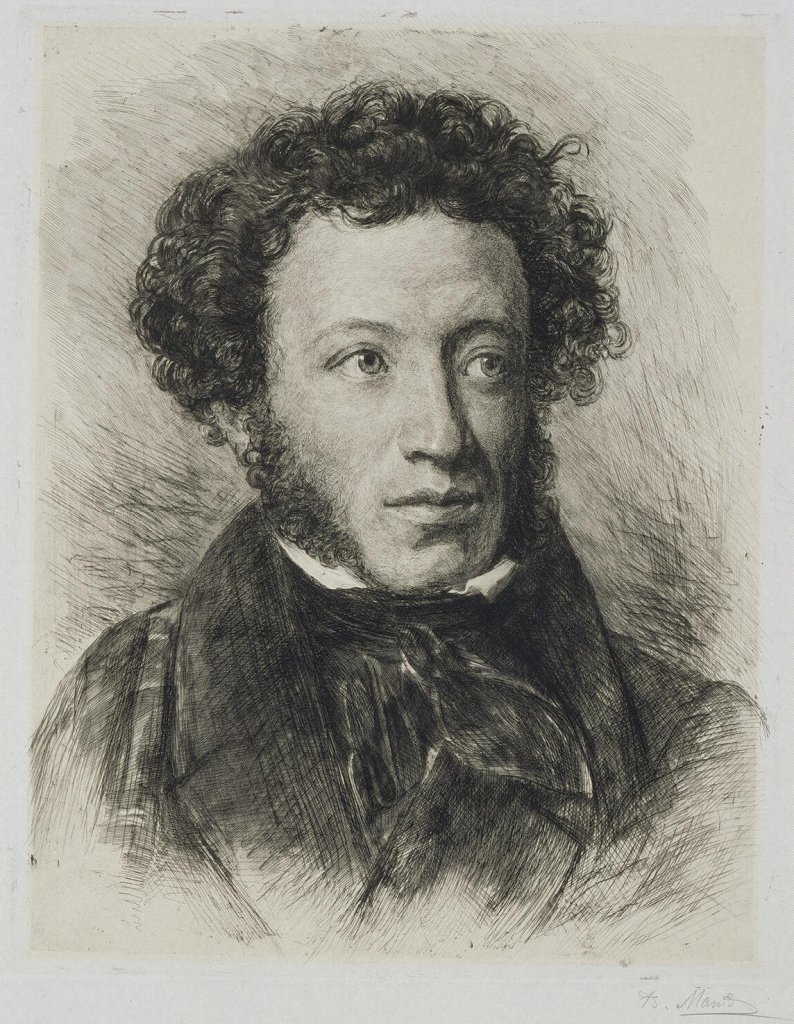
Considering his extraordinary talents and qualifications, his exceptional command of and sensitivity to language, Nabokov’s Pushkin might have become a standout, an achievement setting a new and unsurpassable standard among the many translations of Eugene Onegin into English. From the outset, though, his version was mainly judged a serious failure; Edward J. Brown argues what has from the start been the majority view: “. . . this translation . . . by one of the great literary craftsmen of our time is execrable. Worse than that, it is poor and it is not Pushkin, whatever else it is” (101). Isaiah Berlin labeled it an “absolute monstrosity” (quoted in Dergatcheva 1). Nabokov’s Pushkin enacts no less than an abandonment or negation of everything literary translation could and should be, a radical refusal of equivalence in every feature except stanza form. The paperback reprint edition in two volumes contains some 240 pages of Pushkin’s text and close to 920 of notes and comments, a striking disproportion that reveals Nabokov’s skewed priorities. He seems to be replicating the comic imbalance of his novel Pale Fire, in which a poem by one John Shade is overwhelmed by the “real” content, a set of notes by an obsessed scholar/critic named Charles Kinbote, so crushingly exhaustive as to nullify the poem being commented on. Likewise, the immense corpus of annotations to Eugene Onegin turns Pushkin himself practically into an afterthought—especially considering Nabokov’s deliberate failure actually to translate—to the vast scholarly apparatus the “translator” provides. Nabokov has “set out to be more scholarly than the scholars,” to quote Clive James in the New Statesman (https://archive.clivejames.com/books/nabokov.htm). Or, to quote Brown, Nabokov is indulging “in mimicry . . . ad nauseam of the pedantic scholiast” (104).
Nabokov’s paucity stands out in contrast to a similar project, Charles S. Singleton’s translation of and commentary on Dante’s Divine Comedy. Singleton elected to translate Dante into prose, with the Italian on facing pages as a modest invitation to readers to evaluate his English version on a running basis. Singleton’s decision to forgo the terza rima structure might appear to diminish the aesthetic effect of the original, and the translator himself admits to “enduring the painful loss of the poetry of the Comedy . . . ” but also to being happy that readers have the compensation of being “able to make out the meaning in the original Italian on the left-hand page” (Dante, Inferno 373). As for the quality of the translation as equivalent to the original after all, Singleton composes a prose, in the view of Simone Marchesi, “that subtly preserves and conveys the rhythm of Dante’s hendecasyllabic line.” Again, “Singleton’s prose approaches that of verse. Disassembled and rearticulated in the prose, the cogency of the internal rhythm of the text is preserved across languages” (Marchesi 28). This degree of painstaking care in aesthetics takes on the quality of an ethical concern and is at a far remove from Nabokov’s decision to cut out, among other elements, the rhythmic heart of Pushkin’s artistry.
The respective bodies of commentary are just as far different, too. Singleton’s commentary is by nature more extensive than the work commented on, but not a word of it fails to illuminate the vast cosmos of Dante. Politics, religion, theology, social classes and structures, the arts, folkways, legal matters, nuances of language—there is nothing left out of consideration by Singleton, whose notes are constantly leading back into the primary text. So definitive is the commentary that none less than Eugenio Montale called Singleton “l’americano che ci spiegò Dante” (the American who explained Dante to us), and Singleton’s commentary on the Comedy and other of his works on Dante are still mandatory reading at more than one Italian university (Marchesi 25). It would be wrong to say that Nabokov’s comments do not do great service to Pushkin in the same way, but it seems a safe bet that their self-indulgent pedantry prevents them from occupying a similar canonical status as Singleton’s. Singleton is always pointing the way back to Dante, whereas Nabokov rides his own hobby horses of minutiae, arcana, crank observations, needless digressions, and pedantry so hard as to distract from Onegin itself too often, too systematically.
Nabokov’s commentary, however vastly extended, is less at issue here than the actual work by Pushkin. Rather, it is Nabokov’s choice of how to define and implement what he calls translation that raises objections. Questions arise even in Nabokov’s foreword, as my comments in square brackets suggest:
In transposing Eugene Onegin from Pushkin’s Russian into my English [note how Nabokov’s wording posits equality of skill between him and Pushkin] I have sacrificed to completeness of meaning every formal element . . . whenever its retention hindered fidelity . . . To my ideal of literalism I have sacrificed everything (elegance, euphony, clarity, good taste, modern usage, and even grammar) that the dainty mimic prizes higher than truth [note the characteristic sneer at the “dainty mimic” and the invalid assumption that artifice can only obscure truth]. (Nabokov I, x).
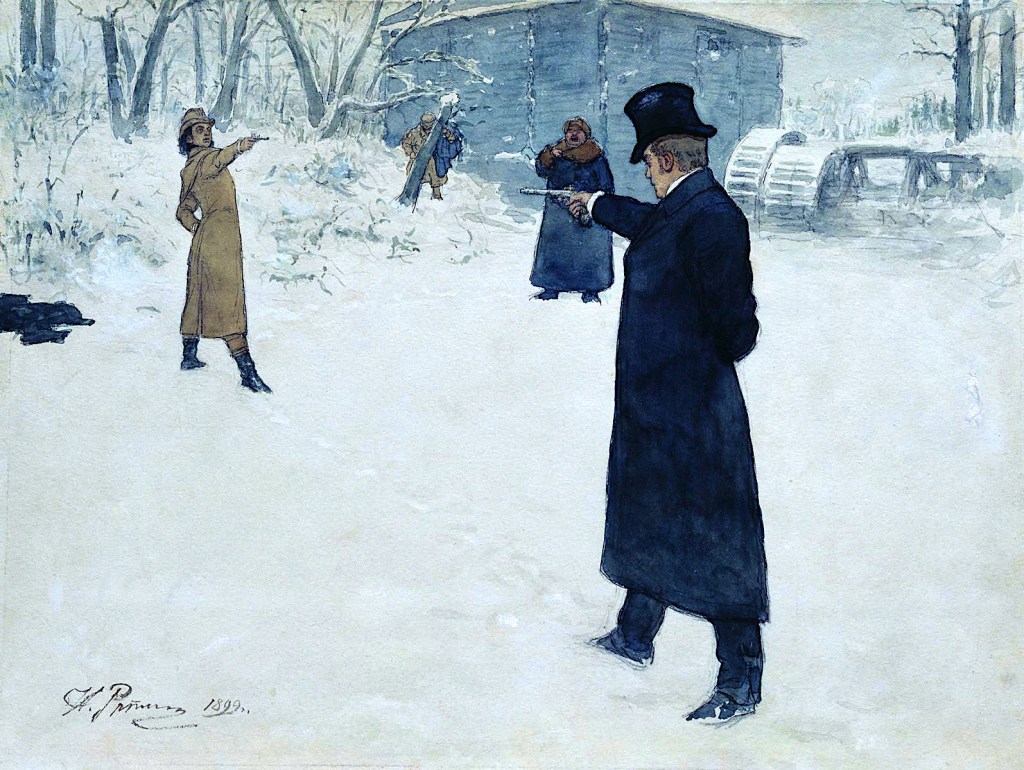
The totality of Nabokov’s betrayal stands in direct proportion to the complexity, the ingenuity, and the rhythmic suppleness of Pushkin’s brilliant, fleet, intricate stanza, written mainly in iambic tetrameter with the rhyme scheme aBaBccDDeFFeGG; the lowercase letters stand for feminine rhymes and the uppercase for masculine. Here is the first stanza in Douglas Hofstadter’s faintly breezy colloquial translation (1):
“My Uncle, matchless moral model,
When deathly ill, learned how to make
His friends respect him, bow and coddle—
Of all his ploys, that takes the cake.
To others, this might teach a lesson;
But Lord above, I’d feel such stress in
Having to sit there night and day,
Daring not once to step away.
Plus, I’d say, it’s hypocritical
To keep the half-dead’s spirits bright,
To plump his pillows till they’re right,
Fetch his pills with tears veridical—
Yet in secret wish and sigh
‘Hurry, dear Uncle, up and die!’”
This rendering is not beyond criticism. Hofstadter was flattered when James E. Falen, another translator of Eugene Onegin, commented that the Hofstadter version reads as if it could have been translated by Cole Porter (Hofstadter xxxix), a comment with the faint ring of a back-handed compliment. Yet Cole Porter’s dexterity and verve are closer to the wit, the irony, the deft versification so often praised in Pushkin—traits conveying the very essence of the work, but which Nabokov makes such a parade of throwing aside in favor of “truth” (95):
“My uncle has most honest principles:
when taken ill in earnest,
he has made one respect him
and nothing better could invent.
To others his example is a lesson;
but, good God, what a bore
to sit by a sick man both day and night,
without moving a step away!
What base perfidiousness
the half-alive one to amuse,
adjust for him the pillows,
sadly present the medicine,
sigh—and think inwardly
when will the devil take you?”
(Full disclosure: my comments in this discussion of Eugene Onegin are based on a “Saunders” reading, not a “Federmair” one; that is, I do not know Russian, but I can clearly recognize rhymes on sight and hear meter when the poem is read aloud. Not knowing Russian, I would not venture to be emphatic if I did not feel seconded by the informed and considered findings of expert Slavicists and accomplished translators from that language as well as affirmed by my own experience as a literary translator.)
The Lectern, always an intriguing blog, mentions several translations of Pushkin’s novel and compares five of them (those by Nabokov, Stanley Mitchell, Charles Johnston, James E. Falen, and Hofstadter), including lively and informed comments from readers. See also the blog by Stephen Saperstein Frug on various translations of Eugene Onegin in English.
By his own statement, Nabokov would sneer at Hofstadter (or any other translator who observes meter and rhyme) as a “dainty mimic,” one willing to sacrifice truth, as if truth were betrayed by efforts to replicate meter and rhythm as closely as possible, whereas they are integral and indispensable components of the “meaning.” Indeed, Nabokov states (x) with apparent humility that he can think of no “greater reward” than “that students may use my work as a pony.” So be it, but a literary translation is a work of art, not a trot or a gloss; in the purported interest of a greater truth, Nabokov, proud and dexterous artificer, has thrown all the art out the window. He speaks of “completeness of meaning” as if the lexical sense alone could convey it. He is echoing such defective choices to disregard structure and thus mutilate or amputate the original as when rendering Shakespeare’s sonnets into German prose or translating Villon’s ballades without the rhymes. If we do not have Villon’s rhyme scheme we do not have Villon, as Anthony Hecht argued; if we do not have the stately blank verse of Milton, we do not have Milton; if we do not have the idiosyncratic rhymes and inscapes of Hopkins, we do not have Hopkins; if we do not have the reticent slant-rhymes of Dickinson, we do not have Dickinson. There may be approaches to or theories of translation that would plausibly argue the permissibility of ignoring formal aspects; on the other hand, Phyllis McGinley’s brilliant “Ballade of Lost Objects” refutes by virtuosic achievement the empty palaver, the hollow rationalization, of Galway Kinnell when explaining his refusal to rhyme Villon. Nabokov ends up betraying his precious “truth,” which is not apprehended by tossing out elements essential to experiencing the art as art.
Yet in a gesture of characteristic arrogance, he calls all other versions in English “inept and ignorant imitations, whose piped-in background music has hypnotized innocent readers into fearing literality’s salutary jolt” (quoted in Brown 103). He refers to the “humble fidelity of my version,” (quoted in Brown 103), but he then went on—consistently, contemptuously, and maliciously—to trash every other version in English, especially the fine rendering by Walter Arndt. It is pertinent at this point to quote one of the first reviews of Nabokov’s Eugene Onegin published by Edmund Wilson:
Since Mr. Nabokov is in the habit of introducing any job of this kind which he undertakes by an announcement that he is unique and incomparable and that everybody else who has attempted it is an oaf and an ignoramus, incompetent as a linguist and scholar, usually with the implication that he is also a low-class person and a ridiculous personality, Nabokov ought not to complain if the reviewer, though trying not to imitate his bad literary manners, does not hesitate to underline his weaknesses.
For years after this observation (it marked the beginning of the end of what had been a cordial literary friendship), Nabokov grew ever more shrill and venomous in rejecting with mockery all criticism of his version while speaking with fierce contempt of every other rendering in English. Nabokov’s “bad literary manners,” the growing nastiness and manic defensiveness are not directly related to the quality of his translation as such, of course—except to arouse the suspicion that his ferocious doubling down may be masking his awareness of having miscalculated while stubbornly, even combatively, refusing to admit it.
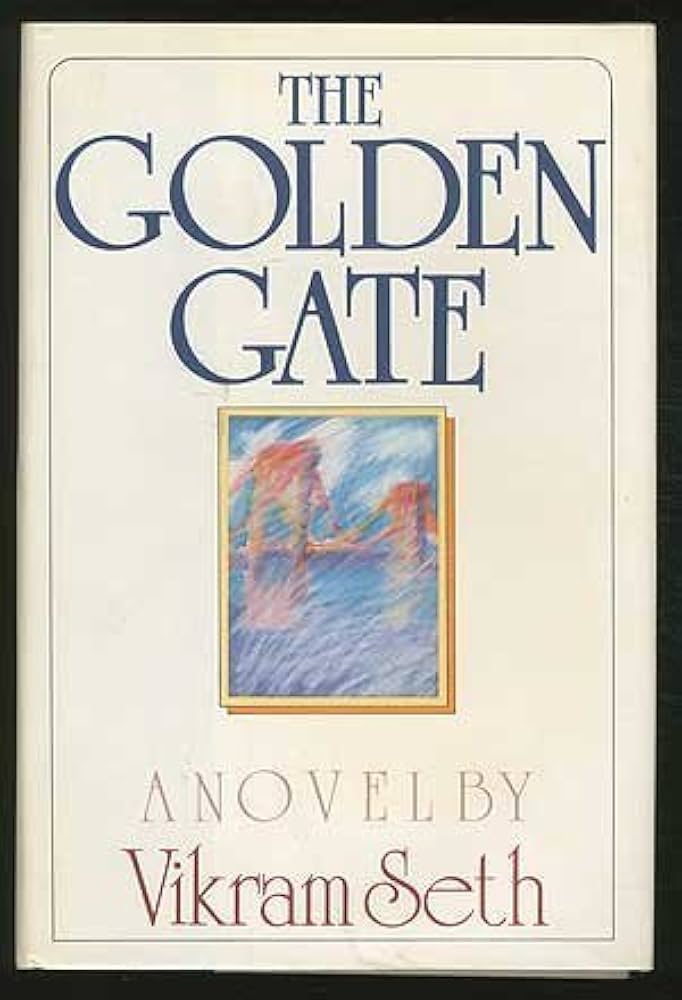
Some commentators have offered various defenses of Nabokov’s procedure, and it is only fair to address three of them. Brown, no friend of Nabokov’s rendering, does note (104) that the “metrical and rhyming complexities of Onegin or Don Juan are distinctly out of favor today [i.e. 1977], especially in America. An original poem written in the meter or rhyme scheme of either would sound hopelessly old-fashioned to an American ear, and probably could not find a publisher.” This argument loses validity, however, when considering Vikram Seth’s full-length novel Golden Gate, set in contemporary (1980s) California and written entirely in the Onegin stanza. Far from appearing old-fashioned, Golden Gate was hailed with acclaim, selling robustly and garnering significant literary awards. Brown was of course writing before Golden Gate appeared. (See the lines from that work quoted at the beginning of this section on Nabokov.)
A few critics, most prominently Judson Rosengrant, assess Nabokov’s Pushkin largely based on the translator’s successful adherence to a set of guidelines about translation that he himself devised. Rosengrant argues in his article “Nabokov, Onegin, and the Theory of Translation” that there prevails a “critical failure to engage Nabokov’s theory,” inevitably resulting in flawed judgments (13). In his foreword (vii-viii), Nabokov articulated three categories into which translations fall: the paraphrastic, the lexical, and the literal. By specific citations of the original Russian, Rosengrant underpins his argument with salient examples (22-24) of Nabokov’s adaptability in drawing on one or another of these categories as the context demands. However, Nabokov’s categories themselves appear to be warmed-over versions of Dryden’s, and judging the success of a translation by the translator’s featly to some a priori theory seems to elevate that theory above the end result. Rosengrant instructively illuminates several aspects of Nabokov’s transference from Russian to English, but he seems not to have noticed that although the operation was a success, the patient died.
Anna Dergatcheva offers a more persuasive insight into Nabokov’s Pushkin by looking away from the category of translation as such and evaluating the work as a performative “meta-text of postmodernity.” She argues that Pushkin himself, in his mixture of tones and his variety of allusion and reference, his incongruous amalgam of voices and levels of diction, and his motley array of characters from every social stratum, prefigured the typical postmodern playfulness of a text that courts incongruity by pulling in different and apparently irreconcilable directions. “Nabokov, in his turn, has certainly identified the demiurgic presence of Pushkin-the-Author in the novel, and a constant dialogue with him, with the heroes, the readers, and the imagined reference groups such as the critics, the friends, the ‘beau monde,’ is supported through the Commentary,” which is no longer to be considered merely Nabokov’s elucidation of Pushkin’s novel but in effect an equal recreation of and reply to Pushkin’s creative process. The translation (or more aptly, “translation,” if we find Dergatcheva’s approach valid) and the commentary taken together constitute a unity that conceptualizes “intertextuality and the game with different signifiers of the reality within a wider context than a traditional reference to la condition postmoderne.”
In particular, Nabokov’s Pushkin is best understood, argues Dergatcheva, under the heading of menippeah, a narrative and rhetorical stance deriving from the carnivalesque as elucidated by Mikhail Bakhtin and thus fundamentally oriented to satire, irony, and parody in its aim to subvert the characteristics or atmosphere of the original through humor and irreverence, not to say chaos. Because it welcomes carnival elements, menippeah is not stringent and is characterized by “an extraordinary freedom of plot and philosophical invention.” It invites undercutting of style and standpoint; if Dergatcheva’s category holds, it explains well Nabokov’s refusal of meter and rhyme in the novel as effective subversions and his choice to make the commentary not just an elucidation of Pushkin’s original but a full-fledge work of literary art on its own. Both parts are then aiming less at recreation of the original than at “discursive irony . . . . Nabokov holds and supports parallel dialogues at multiple levels throughout the entire Commentary.” It is typical of menippeah that Nabokov exercises “unrestrained freedom” in his “value-oriented hierarchy of literature, his inventing the new history of literature, with alienated estranged plots from . . . other authors, retold in an ironic way.” Those traits would then mark the true achievement of the commentary, and the deliberate exclusion of all artistic elements in the translation seen as a calculated strategy congruent with the iconoclastic nature of carnivalesque performance claiming the freedom to cut out polished metrics and rhyme for effects of rough-hewn crudity as a robust rejection of high artistic polish.
Dergatcheva’s analysis is not easy to dismiss, because it assigns Nabokov’s Pushkin to a category that seems to show it as a coherent achievement, not a failed exercise in translation. Her view accounts for what Nabokov produced as an exercise in deconstruction or defamiliarization, an example of the freedom to dismantle, to remap coordinates of genre and form, and to exploit ironies and compositional gaps based on the assumption that a work of art is so entirely autonomous, so subject to the insight of the individual reader, that the author can be disregarded as having no authority or perhaps even existence. Pushkin’s novel then functions as the basis for a performative romp by Nabokov in a subversive, ironic modality. This procedure would be a classic instance of “doing things with texts,” to cite the title of a well-known anthology of essays on literary criticism. Yet a translation in any standard or conventional meaning does not “do things” in this way. It does not deconstruct; it reconstructs. It does not use the original as a point of departure, but as a point of return. It does not set aside or dismantle structure and style; it reinforces them. A translation, however skilled or brilliant, is an act of deference, but it seems from all we know of Nabokov’s temperament that it would have been impossible for him to defer to anyone. To recall Woodsworth’s term, this self-proclaimed mandarin could never have been anything than “author-itative.”
This temperament helps explain not only why Nabokov did not create a successful translation but also why he could not have done so under any circumstances. His unwillingness to take a back seat or to accept the authority of the original combines with some suggestions by him that he considered translation impossible from the outset. The very virtuosity and extreme sensitivity to every nuance, every sound, every cadence of language—talents that would seem to have promised masterful recreation—appear to have paralyzed him, revealing a perfectionism that will always thwart a transfer from language to language.
As early as 1941, Nabokov published an article in The New Republic titled “The Art of Translation.” It wouldn’t be genuine Nabokov if it did not castigate a whole gallery of what he considers incompetents and bunglers, but he soon settles in to inventory frankly his own struggles “in the queer world of verbal transmigration.” Here he proposes three criteria for a successful translator, but these are so stringent as to ensure that they could very seldom be fulfilled, if at all.
We can deduce now the requirements that a translator must possess to be able to give an ideal version of a foreign masterpiece. First of all, he must have as much talent, or at least the same kind of talent, as the author he chooses. Second, he must know thoroughly the two nations and the two languages involved and be perfectly acquainted with all details relating to his author’s manner and methods; also, with the social background of words, their fashions, history and period associations. This leads to the third point: while having genius and knowledge he must also possess the gift of mimicry and be able to act, as it were, the real author’s part by impersonating his tricks of demeanor and speech, his ways and his mind, with the utmost degree of verisimilitude.
Is it possible to think of any translator anywhere or at any time who was able to fulfill all these requirements? They seem almost to surpass human capacity and to exclude virtually anyone attempting to translate. On a practical level, Nabokov documents his efforts at rendering some poems he felt had been badly handled before, conceding that he was entirely unable to find any equivalence of sound. Through attempt after attempt, the English sounded banal, devoid of the word music in the original Russian, and he spent an agonizing night trying on one line. “I did translate it at last,” Nabokov says, “but to give my version at this point might lead the reader to doubt that perfection be attainable by merely following a few perfect rules.” If the result is not perfect, then—however that perfection is defined—it does not deserve to see the light of day. What would ever be published if this criterion were applied universally?
Nabokov’s fundamental denial of the very possibility is borne out, paradoxically, by two stanzas he composed in the Onegin stanza with formal perfection and dazzling virtuosity. First published in the New Yorker in 1955 and reprinted in the introductory material to his translation (“The ‘Eugene Onegin’ Stanza,” vol. 1, 9-14), they seem to announce in advance the futility of trying to replicate rhyme and meter in any even remotely adequate way. The stanzas are addressed to Pushkin and bemoan all efforts to do justice, even approximately, to the original. “What is translation? On a platter / A poet’s pale and glaring head / A parrot’s screech, a monkey’s chatter, / And profanation of the dead.” In a moment of self-belittlement that seems the very opposite of his usual high-flying disdain, he refers to his attempt, or anyone else’s, to do justice to the original as mere “Dove-droppings on your monument.”
These words of self-disparagement, these long efforts at producing something he declares impossible from the start, surely have their psychological element, but that is beyond the range of the present study. Anyone looking at the work Nabokov actually produced will be forced to fault it for fatal omissions, for underachievement as a work of equivalence, an abandonment of everything translation can achieve beyond the crudity of a mere gloss. On the other hand, it becomes apparent on closer inspection that Marianne Moore made the opposite mistake by overachieving, by burdening La Fontaine’s fables with subtleties and devices that often forced her away from their plain meaning.
Marianne Moore was not contemptuous of her source, as Stein and Nabokov appear to have been. While hewing much closer to her original, she nonetheless distorted both the spirit and the letter of La Fontaine through her own artistic approach, deeply at odds with the original and with the literary ethos of the times in which La Fontaine was writing. In the forthcoming third part of this essay, we will return to Moore’s La Fontaine and reconsider it on the basis of all that we have discussed so far.
REFERENCES: For a complete list of the works cited in this essay, please visit the References page HERE. (The page will open in a new tab.)

Vincent Kling is a professor of German and comparative literature at La Salle University. He has published translations of works by Gert Jonke, Heimito von Doderer, Hugo von Hofmannsthal, Gerhard Fritsch, Werner Kofler, and Aglaja Veteranyi. His translation of Veteranyi’s novel Why the Child Is Cooking in the Polenta was awarded the Schlegel-Tieck Prize in 2013. His translation of Doderer’s The Strudlhof Steps was published by New York Review Books in 2021 and was awarded the Helen and Kurt Wolff Prize in 2022.
Originally published on Hopscotch Translation
Tuesday, March 10, 2026

 hopscotchtranslation.com