
Translating in Sympathetic Ink: Marie Canavaggia’s French rendering of John Cowper Powys’s Autobiography
by Amélie Derome

Loneliness, far from being a curse, is the place from which art can be wholly enjoyed. Refusing to be someone’s wife, Canavaggia needed to be alone so as to be able to devote her entire life to literature. As she once wrote to Céline: “I was so afraid of being sentenced to life in stifling domesticity… that almost any other path only feels lighter for the burden I have cast away.”
“Translation is like a woman. If it is beautiful, it is not faithful. If it is faithful, it is most certainly not beautiful.” Despite its dubious origins, this rather misogynistic witticism is scattered all over quote websites online: although some claim it originates from the French bourgeois novelist Edmond Jaloux, other writers such as the award-winning French Moroccan writer Tahar Ben Jelloun or the Soviet dissident poet Yevgeny Yevtushenko can also contend for its authorship. While the quote might raise an eyebrow or two, it actually stems from a long-standing tradition of comparing translation to women.
Georges Mounin, for instance, famously coined the expression “belles infidèles” to refer to inaccurate 18th-century French translations, equating these texts to unfaithful women. Although scholars now tend to advocate for examining translations through the prism of accuracy rather than that of faithfulness, the metaphor is still deeply engrained in translation studies. However, translations and women are not only expected to be loyal but have also been seen as naturally auxiliary for a long time. Good translations, hence, were meant to serve their original texts as wives had to obey their husbands. In this regard, it is almost as though both were supposed to behave. I would like to argue, however, that “good translations” might on the contrary be the ones that tend to act up, since meddling with the source text can lead to fresher interpretations.
Moreover, in the specific case of translations made by women, gender as well as translation-related prejudices seem to build up. The translator’s invisibility, as described by Lawrence Venuti, is further shrouded for female translators of the past, who remain widely uncredited for their work. This shortcoming of translation history seems all the more unfair since women have been able to introduce many classical texts in new languages because translation was deemed an unfit activity for male geniuses. I would therefore like to shed a light on one of these unjustly overshadowed women: Marie Canavaggia.
Born in Limoges in 1896, Marie Canavaggia showed early signs of attempting to steer away from designated trails. As an eager reader and a diligent student, she managed to get her baccalauréat at a time when only 5% of high school graduates were women. Devouring books at a fast pace, she quickly found that French literature could no longer quench her thirst for new works. She thus decided to learn English and Italian, traveling to England where she gave French lessons to a doctor’s young daughter and to Italy where she mostly seems to have marvelled at museums and archaeological sites. On this “grand tour,” as opposed to a “room” of her own, she not only elevated her mastery of foreign tongues, but also wrote poetry. In several peculiarly modern pieces from the 1920s, written in Rome or London, she dwelled on her strong yearning for foreign lands, for instance writing in “À qui part gagne”: “In my chest, an instinct swells/ moves and mumbles “oh well! / as for me – I’m going.” In a small volume devoted to her career and published by Lérot in 2003, almost all of the dozen poems deal with notions of travel and the fear of going back home. Strikingly enough, the idea of having to return is metaphorically depicted as a wound in the small poem entitled “Stitches,” where her leaving Italy is equated to a ripe fruit which gets bruised in its fall and ends up being entirely spoilt. As a matter of fact, Canavaggia’s prospects back in France were rather bleak: refusing to marry, she had to find a way to earn a living and thus ultimately forsake poetry.
It therefore does not come as a surprise that she should have taken a liking for George Gissing’s novel Born in Exile (1892), in which the main protagonist struggles with his middle-class environment, aspiring to become a scholar rather than a tradesman. As a means to heal the wound left by her journey home, she began to translate the book into French. This rather common shift from original writing to translation was not only prompted by financial motives but also resulted from more personal reasons. Although she finished her translation in 1929, she did not manage to find a publisher until she moved to Paris in 1932, where her sister Renée, a promising astronomer, was already living. Over the course of her prolific career, she translated 38 English works and 14 Italian books. In 1946, she was awarded the Denyse Clairouin prize for her translation of Hawthorne’s The Scarlet Letter, receiving praise from prominent authors such as Julien Green, André Malraux, Graham Greene, and Somerset Maugham. Almost twenty years later, she was given the Académie française Gustave-Le-Métais-Larivière award for her rendering of John Cowper Powys’s Autobiography. This achievement is all the more impressive since her work is the only translation to be found among the other award-winners.


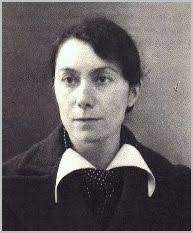
In spite of this extraordinarily successful career, Marie Canavaggia remains fairly unrecognized as a translator and is best known in France for having been Louis-Ferdinand Céline’s secretary. Only two scholarly articles discuss her translations per se, while the insightful texts covering her work collected by Lérot can hardly be found in public libraries. In the very year of her first translation, she was offered a position as Céline’s assistant. His previous secretary was leaving the country and recommended Marie, her former classmate, to the author. This partnership would only end with Céline’s death and was brought to the public eye by the publication of the writer’s manifold letters to Canavaggia. Unfortunately, the correspondence remains predominantly one-sided, as the author of Journey to the End of the Night threw most of Marie’s letters away. Scholars have mostly used this substantial corpus in order to flesh out Céline’s writing process. The letters indeed provide valuable information regarding his method: he would send a first draft to Marie Canavaggia, who would not only correct typos but also add personal commentaries regarding vocabulary or rhythm. Céline would then read the text out loud to Canavaggia who would write it down by hand. When they were both satisfied with the final result, Canavaggia would dictate the text to a typist. In this respect, Canavaggia was not merely Céline’s assistant, but his most treasured advisor whom he sometimes referred to as his “alter ego.”
Metaphorically speaking, Canavaggia could thus be portrayed as a dual double, both echoing Céline’s words in her own language and translating those of foreign writers. Canavaggia’s invisibility, furthermore, also shares this twofold quality: her contribution to Céline’s writing, although recognized, remains vastly uninvestigated, as only a handful of her own letters were not discarded, and her reception as a translator still needs to be thoroughly examined. Canavaggia herself tended to stay off the radar as far as her work with Céline was concerned. Embracing the translator’s or the assistant’s invisibility, she declined for instance to use her full name to sign a text which was published in the Cahier de l’Herne issue devoted to the author. Moreover, she never attempted to claim recognition for her corrections, explaining that Céline “expected of his secretary what Molière expected of his maid,” exemplifying the age-old deferential position required from both translation and women. Ironically, she had played a male character in a high school performance of Molière’s Les Femmes savantes.
Nevertheless, the dynamics of the power relationship at stake between the author and his secretary were sometimes overturned, as in the congratulatory letter Céline sent to Canavaggia when she was awarded the Denyse Clairouin prize. “If courage, intelligence, and great talent are beginning to get the recognition and praise that they deserve, there must finally be room for hope! There might even be some for me, a mere wretched ghost trembling in your shadow.” We are here faced with one of the rare instances where Céline breaks his habit of belittling Canavaggia, whom he often blamed for being a jealous and bothersome spinster. Since the rest of the letter consists in a long list of complaints regarding his current situation, he may only have been seeking her sympathy. The passage, however, does disclose an unusual reversal of traditional roles.
While Canavaggia did not often draw attention to her collaboration with Céline, she toiled away to bring her own translations to the limelight. As Marcella Henderson Peal has shown, she often appealed to the journalists and publishers of her acquaintance in order to promote her translations. However, she was seldom granted the privilege of authoring prefaces, as her voice was deemed less valuable than that of better-known writers such as Jean Wahl, a former student of Henri Bergson and the founder of the Collège philosophique. (As a philosopher who had mainly studied pluralism, Wahl for instance commented on Powys’s take on alterity in his foreword to Weymouth Sands.) Any attempt to explore Canavaggia’s work as a translator is thus hindered by the lack of texts documenting her process. In order to try and decipher her persona as a translator, one still needs to follow faint leads – an endeavor which I will now strive to undertake.
Canavaggia’s version of John Cowper Powys’s Autobiography, published in 1965, illustrates the ambivalence of her translational status. Indeed, while the text was met with widespread success when it came out, it also questions the obliteration of female voices, echoing Canavaggia’s own situation: as a prolific translator in her time, her reception slowly faded into oblivion over the years. The Autobiography first came out in 1934, at a time when its author had just left the United States for Dorchester and was living with a young American woman, Phyllis Playter. John Cowper Powys, however, was a married man, and did not consider divorce an option lest his wife’s reputation should take a blow. Furthermore, as his mother was a shy woman who preferred to keep to herself, he chose not to bring any attention to her in his memoirs. For those private and rather peculiar reasons, Powys resolved not to mention any women in his Autobiography. This purposeful omission evidently speaks to Powys’s odd fashion of trying to spare his loved ones, but also challenges the female translator aiming to render it in French.


The lengthy correspondence between Canavaggia and Powys reveals that the translator had quickly planned to work on the Autobiography, yet the project was regrettably postponed because of conflicts of interest with the French publisher Gallimard. Canavaggia had, however, managed to talk Jean Paulhan, an important figurehead of the French publishing industry, into promoting Powys in the Nouvelle Revue Française (NRF), a popular literary journal. The NRF hence published the first chapter of the Autobiography in 1962. Since Canavaggia had other commitments at the time, a little-known French novelist, Claude Martine, undertook the translation instead. The French edition of Powys’s Autobiography therefore combines Claude Martine’s first chapter and Canavaggia’s translation of the remaining text. The foreword included in the volume remains quite cryptic and does not specify the exact nature of Martine’s contribution: “Madame Claude Martine […] was kind enough to provide me with her rough draft of this monumental work.” In this sense, not only one but two obliterated translators may be added to the long list of overshadowed women in the text. Canavaggia even slightly downplays Martine’s role, implying that the novelist’s work should not be considered as complete, while omitting to mention that she has actually not revised the first chapter in spite of its supposed imperfection.
Although the twofold nature of the translation remains hidden, a careful reader may easily spot two divergent tones, as neither Canavaggia nor the publisher attempted to homogenize the text. Claude Martine tends to shy away from the many bawdy excerpts, while Marie Canavaggia tackles them more literally. Martine, for instance, euphemizes “sex delight” into “plaisir sexuel” (“sexual pleasure”) and adds a moral dimension to her translation of “unmitigated erotic nerve”: “érotisme éhonté que rien ne mitige” (“unmitigated and shameless eroticism”). Canavaggia, on the contrary, literally translates the work’s erotic passages. Many literary critics, however, have marvelled at Canavaggia’s handling of the obscene. For example, Henri Godard, a French professor specializing in Céline’s work, explains that “she never could have used swear words but did not mind them in Céline’s texts.” In a similar fashion, Jean-Paul Louis, the author of the preface to Canavaggia and Céline’s correspondence wonders how “a young woman […] with such classical artistic taste could have managed to tackle [Céline’s] text.”
If one can expect such stances from early 20th-century authors, it may come as a surprise that contemporary scholars should still question women’s role as translators within an essentialist framework. In 2009, for instance, Élizabeth Durot-Boucé argued that Mary Gay was a more faithful translator of Ann Radcliffe’s The Italian than l’abbé Morellet because of her better understanding of the feminine “sensitivity of the author.” In the same year, Françoise Wuilmart claimed that women translating male writers manifested a “sexualized empathy.” Female translators working on male authors thus seem trapped in a form of twofold otherness, the alterity already implied by translation being amplified by gender difference. The comparison of Martine’s and Canavaggia’s works, however, proves that gender difference does not necessarily build an unbreachable wall between authors and translators, nor does it have to romanticize or sexualize their relation.
Both Powys and Canavaggia actually veer away from gender stereotypes while developing an amorous relationship with texts rather than colleagues. In his Autobiography, Powys often refers to the more feminine aspects of his personality. He lengthily ponders over the “girlish” admiration which he felt for his male counterparts, talking about “the woman-like attention, rapt and spellbound, with which [he] listened to Gooch”, or his habit of acting “like a devoted young woman” when faced with authors whom he looked up to. Powys hence envisions reading first and foremost as a feminine occupation, which is to say as a dynamic relation that involves romantic and even erotic pleasure. He describes reading Thomas Hardy’s novels, for instance, as a predominantly sensuous adventure: “for hours and hours I would sit up reading […] Jude the Obscure while all the while voluptuously and luxuriously, more after the manner of a young woman than a young man, I would take piece after piece of chocolate out of my bag and nibble it in my absorption.” One can, and probably should, indulge in reading as one would in eating pastries or even in lovemaking. The joy sparked by this “feminine” attitude towards reading also has to do with the notion of rapture, understood both as “delight” and as its etymological meaning of “being carried away.” When enraptured, one can indeed feel the thrill of being transformed and of getting the opportunity to step into somebody else’s shoes. In this sense, Powys’s play on gender echoes the position of translators who must slip into their author’s skin in order to render their words in a different language.
Yet, Powys does not solely relate to women in the prime of their youth, but also to the opposite end of the spectrum, claiming that he feels most at ease with spinsters: “There is yet another class of childless woman to whom I feel unbounded reverence and attraction. I refer to those rare and sensitive Beings usually called Old Maids. […] I understand them through and through and they understand me through and through!” The author even playfully portrays himself as one of these women: “I am a Punchinello, a Proteus, and an extremely fussy old woman. And this […] old-Miss-Betsy soul of mine can change its triadic skin like a snake.” Here, Canavaggia seems embarrassed by the phrase “old-Miss-Betsy” and discards it for the generic phrase “mon âme” (“my soul”). Céline would famously taunt Canavaggia for being a respectable but undesirable old maid and Pierre Monnier mocked her for being a “dame au chapeau vert” (“a lady in a green hat”), an expression deriving from the title of a novel by Germaine Acremant and which was used to refer to unmarried women. However, it seems unlikely that Canavaggia would have been so easily offended, and several clues may hint at the fact that she was adamant about remaining single. In a poem entitled “Museums,” she sneers at those who admire great paintings as couples rather than as solitary visitors. Beauty, indeed, is valued as a dangerous endeavor which can only fully be experienced alone. Couples hence jeopardize the opportunity of falling in love with artworks while running the risk of falling out of love with each other. Loneliness, far from being a curse, is the place from which art can be wholly enjoyed. Refusing to be someone’s wife, Canavaggia needed to be alone so as to be able to devote her entire life to literature. As she once wrote to Céline: “I was so afraid of being sentenced to life in stifling domesticity… that almost any other path only feels lighter for the burden I have cast away.” Fiercely independent, she went as far as dropping gendered grammatical references when mentioning her work, calling herself a “traducteur” rather than a “traductrice,” even though the feminized version of the noun was common in French at the time.

Both Powys and Canavaggia therefore revel in the metamorphoses that reading and writing can induce, while paradoxically leading rather solitary lives. The author and the translator view shapeshifting as a metaphor for translation. In his Autobiography, Powys for instance recalls how he recoiled from word-to-word Greek translation as a student. Instead of practicing this translating method which he equated to “philological niceties,” he preferred to focus on “practical chemistry,” taking “Faustian pride” in “making celestial greens and blues out of nothing.” These scientific experiments would later take a metaphorical turn, as Powys came to regard writing and literary criticism as alchemical practices.
As an itinerant literature lecturer across America, Powys attempted to physically and mentally transform into the authors whom he was discussing. Called “dithyrambic analysis,” this method steered away from traditional textual commentary. Powys found that classic commentaries fruitlessly dissected texts, and pleaded instead for a livelier fashion of talking about literature. He thus brazenly aimed to resurrect dead authors on stage through transmutation as a sacred form of acting. Powys took this unusual approach with a grain of salt, willingly acknowledging that it might be perceived as sheer charlatanism. Yet, major authors such as Henry Miller have recognized its impact on the audience.
This spiritual process, in spite of all of its quirks, curiously mirrors that of translation: “it gives me the power, I will not say of becoming the personality I am dealing with, but at least of diffusing my identity through its identity and of realising myself through the medium of its sensibility. […] I flow like a magnetic current through the substance of his nature, penetrating with my spirit the stuff out of which his flesh is made, following the vibrations of his nerves, tracking his being’s effluence as this volatile breath rises up like steam from the thawing ice of his identity,” Powys explains. Translators, while writing from their own perspective, indeed also unmistakably blend their own voice with that of their authors.
Yet, Powys’s ability to reincarnate is as glaring in his own writing as it is in his literary criticism. The author’s empathy for idiosyncrasies and eccentricities ranges beyond the realm of human life, leading him to conceive a philosophy according to which the inanimate is granted its own form of consciousness. This boundless sympathy for the profusion of particularisms to be found on Earth thus results in an array of animal, vegetal and even mineral characters who form opinions of their own and grapple with the full spectrum of human emotions. As Henry Miller once put it, “He never acts as an entomologist, as a botanist or as a horticulturist: he is the insect, the blade of grass or the flower.” In this sense, Powys’s tendency to identify with all of the world’s beings and things might very well make him the ideal author for a translator, flipping the cliché according to which good translations happen when a work finds its ideal translator.
I would finally like to argue that Powys’s self-called Protean attitude towards writing could also apply to Marie Canavaggia. Canavaggia’s literary skills heavily rely on imitation. Several excerpts from her correspondence reveal that she was able to impeccably don Céline’s unique tone and could also write impressive pastiches of many authors such as Honoré de Balzac. While imitation is traditionally considered as an inferior form of literary art only used by those who are unable to create from scratch, the distinctive style of Canavaggia’s poems proves that she was not a servile impersonator but rather an extremely competent writer, who could both emulate and conjure up words of her own. Powys himself seems to have shared this view, as evidenced by this excerpt from a letter he wrote to her: “A writer is a writer whether inventor or translator, and we writers whether inventors or translators cannot exchange things without Intermediaries.”
I would hence like to suggest that Canavaggia’s translation of Powys’s Autobiography could metaphorically appear to have been written in sympathetic ink. Her name might not be as closely associated with it as it deserves, yet it does shine through the text, just as invisible ink is revealed by light. Powys’s and Canavaggia’s relation, furthermore, is also “sympathetic” in the sense that they view writing as a chemical reaction that transforms both identity and language – a phenomenon which, in this case, relies on their shared and acute ability to empathize.
Select bibliography
Arsenault, Julie. “La traduction de The Scarlet Letter (Nathaniel Hawthorne) par Marie Canavaggia: étude selon les perspectives de Pierre Bourdieu et d’Antoine Berman.” TTR, vol. 22: 2009.
Céline, Louis-Ferdinand. Lettres à Marie Canavaggia: 1936-1960. Ed. Jean-Paul Louis. Paris: Gallimard, 2007.
F. Céline. Ed. Dominique de Roux, Michel Beaujour and Michel Thélia. Paris: Cahiers de L’Herne, 1972.
Durot-Boucé, Élizabeth. “Traducteurs et traductrices d’Ann Radcliffe, ou la fidélité est-elle une question de sexe?” Palimpsestes n° 22: 2009.
Gissing, George. Né en exil. Tr. Marie Canavaggia. Paris: Éditions du siècle, 1932.
Hawthorne, Nathaniel. La Lettre écarlate. Tr. Marie Canavaggia. Paris: La Nouvelle Édition, 1945.
Henderson-Peal, Marcella, and Charles Lock. “Marie Canavaggia: Translator of John Cowper Powys into French.” The Powys Journal, vol. 25: 2015.
Marie Canavaggia: textes inédits, documents, correspondance, bibliographie. 2003: Tusson, du Lérot.
Mounin, Georges. Les Belles infidèles. Marseille: Cahiers du Sud, 1955.
NRF, vol. 116, 117, 118. 1962.
Powys, John Cowper. Autobiography. London: The Bodley Head, 1934.
Powys, John Cowper. Autobiographie. Tr. Marie Canavaggia. Paris: Gallimard, 1965.
Wuilmart, Françoise. “Traduire un homme, traduire une femme, est-ce la même chose?” Palimpsestes vol. 22, 2009.

Amélie Derome teaches translation at Paris Nanterre University. Her doctoral dissertation was concerned with the French translations of Gulliver’s Travels. She has organized poetry translation workshops at Aix-Marseille University and has translated audio-visual works. She is also a member of the scientific committee of the open access academic blogging platform https://hypotheses.org/.
Originally published on Hopscotch Translation
Tuesday, November 16, 2021

 hopscotchtranslation.com