
Bread Loaf Missives
by Kotryna Garanasvili and Michelle Mirabella
The following is the second of a two-part feature devoted to Bread Loaf by our collaborators Kotryna Garanasvili and Michelle Mirabella, who were roommates at the conference in June. The first part can be read here.
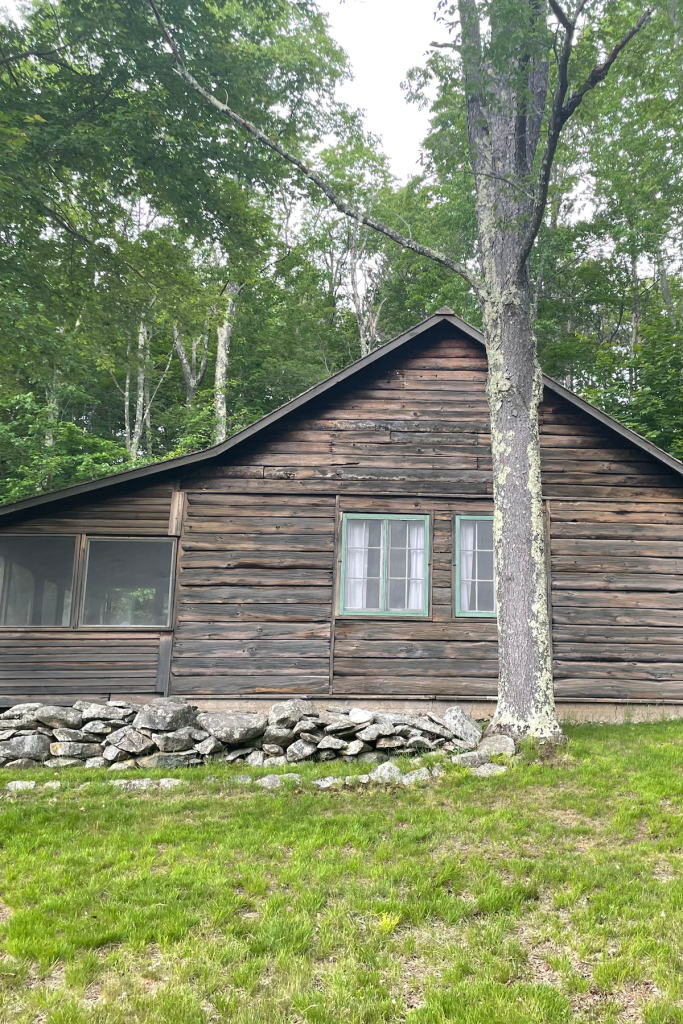
23 June 2022
Pittsburgh
I continue to flash back to our week on the mountain, and what I keep returning to is the emotional depth of it all. So many of us work in physical isolation, especially in recent years, and to be surrounded by so many writers, so many artists with whom I share a craft was profoundly moving. To find myself daily among such scholarship, such keen awareness of words was a true privilege. Words not only jumped off the page but seemingly out of people’s souls, lodging themselves deep into whatever holds my feelings where sprang a leak, perhaps in a literal sense—tears welled hearing the echo of Yvette Siegert’s words: “the texts that come to you know you in some way”; laughter erupted as Kimi Traube read from her masterful translation of Don Quixote; and that laughter continued with Anton Hur when he greeted us with exuberance: “HELLO TRANSLATORS!” …then… “and monolinguals.”
A day felt like a week and yet the week felt like a day, a moment of gathering, outside of time, simply brimming with felicities. Anushka Sen’s poem written and delivered during Yvette’s lecture on error; Hannah Allen-Shim’s hyper-creative translation of a Bashō haiku in Peter Constantine’s lecture challenging concepts of translation and original; the myriad approaches to translating Imru al-Qays in Kareem James Abu-Zeid’s craft class on translating a radically different cultural context; the ingenuity of the people in that verdant place was boundless.
As translators we spend a great deal of time very close to words. The week at Bread Loaf allowed me to step back from the page, for days at a time, and listen as words coalesced into works of art all around me. To disconnect, but also connect as you and I did in our workshop and as roommates in that idyllic place. I find myself wondering about how others were touched by words that week, Kotryna. What did you feel, what did you hear? Don’t forget the birds Kotryna, those chipper, pre-dawn birds!
Michelle
25 June 2022
New York
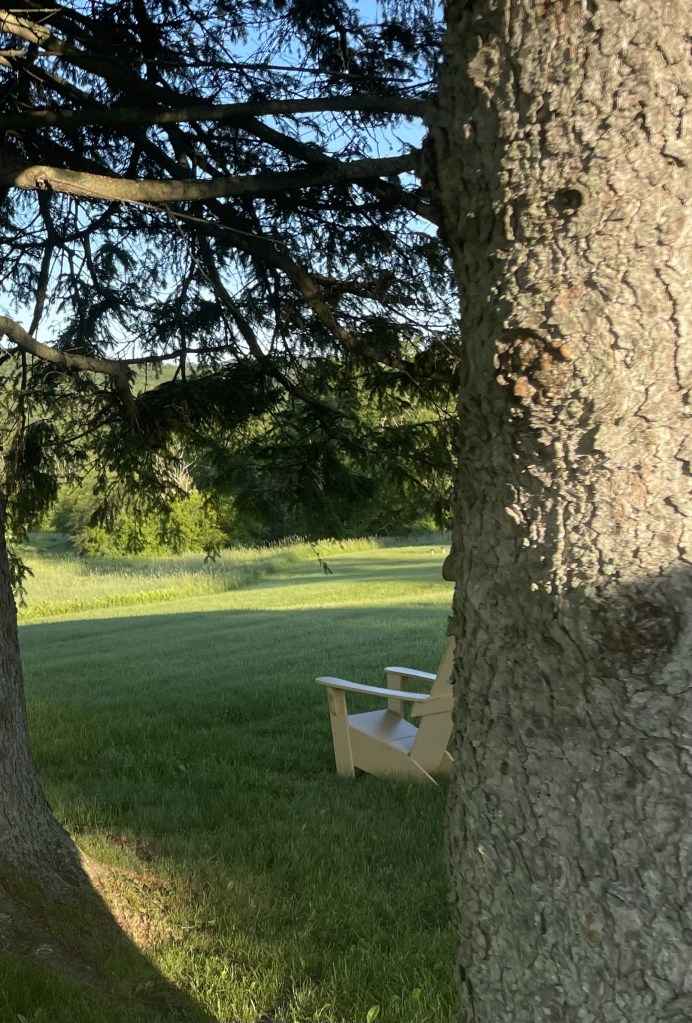
How could I forget the birds, Michelle? The sounds, the voices and the images of that place have settled firmly in my mind. I’m on the New York subway as I’m writing this to you, and I feel I should find a more proper place to write. Bread Loaf has raised the bar so high for this I’m not even sure I can do that. Will this hard plastic chair in a busy carriage do? Will my regular desk at home do? I feel I should be sitting in one of the Adirondacks outside, gazing at the misty landscape stretching out ahead of me, before going back to a blank, fresh page waiting to be filled with words. I also feel this should be a hand-written letter, much like the notes on the margins of our translation manuscripts, something I got used to reading and writing over this week – every word written with care and concentration, rather than quickly jotted down on the notes app on my phone. Meanwhile, the air con is whirring, cooling down the heat that’s waiting to wrap us back in the minute we step out of the station, a million voices are mixed together in a narrow carriage that’s rushing incessantly forward, in the background of someone’s speakerphone playing Empire State of Mind on full sound.
Yet in this urgent, bustling contrast, I can feel the place we’ve been in so recently with an even sharper sort of clarity – how still and welcoming it has been to our ideas and contributions. And it is precisely here that I realize Bread Loaf is not just the picturesque campus on the mountain, a place filled with a mysterious, cosy sort of beauty – it’s also a state of mind (to borrow the metaphor straight from the conveniently placed speakerphone) that’s already within us. We can return to it in our thoughts, and it’s there to offer us stillness, inspiration, and support – everything our week there has been.
Kotryna
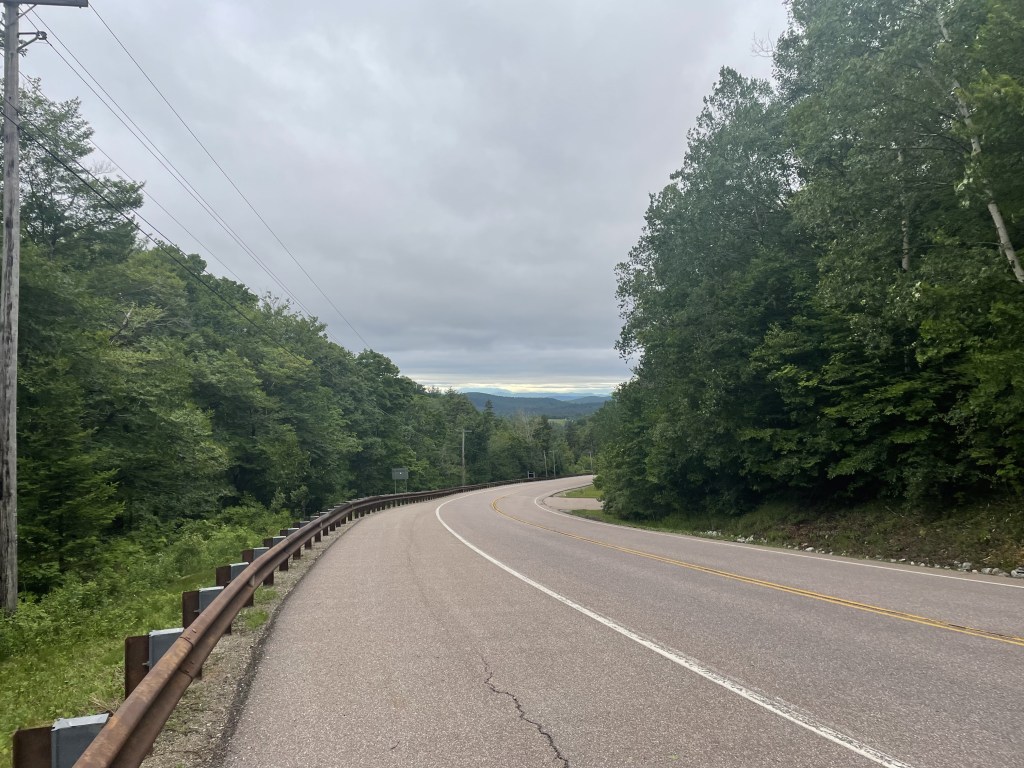
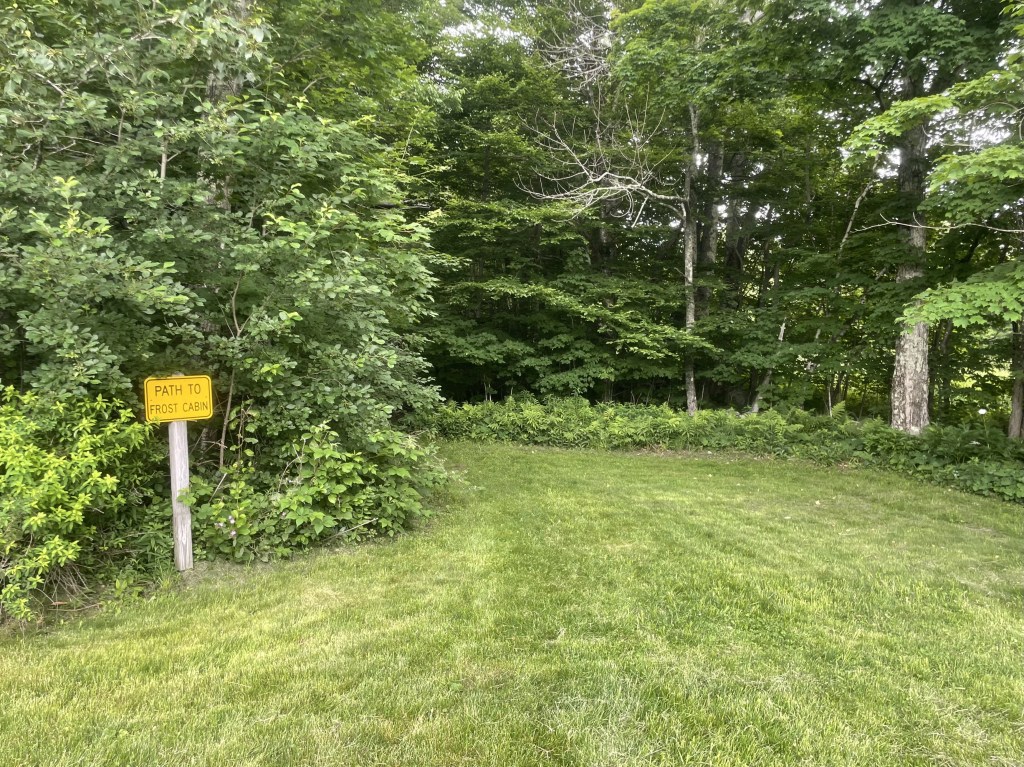
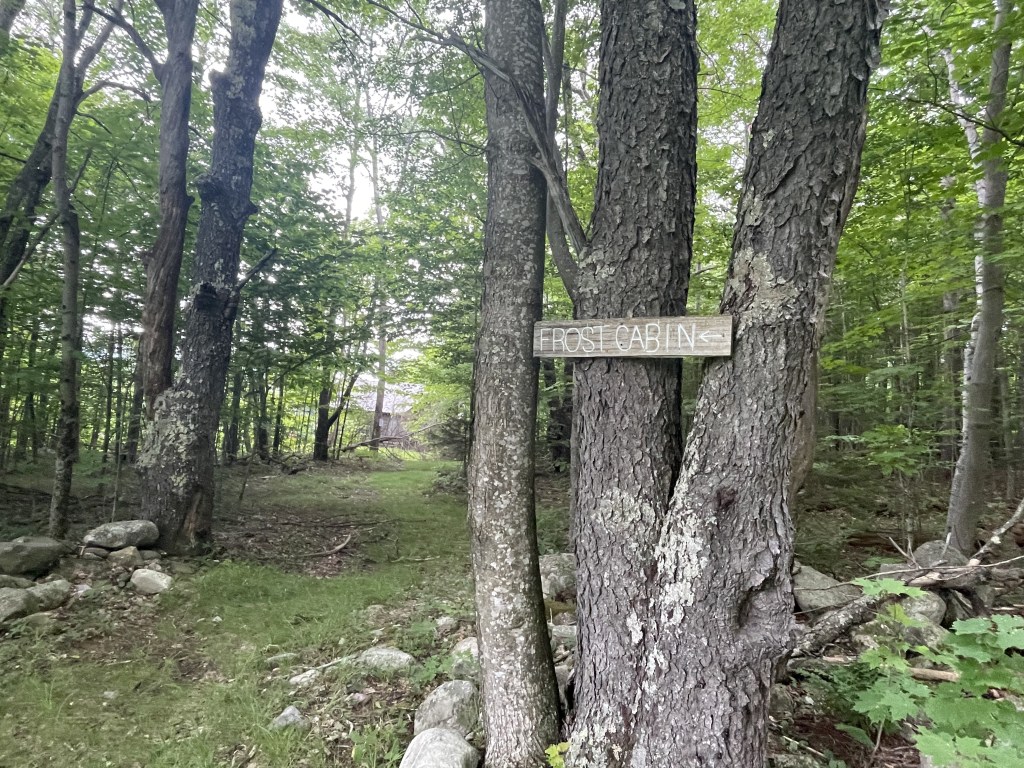
29 June 2022
Pittsburgh
You mention, Kotryna, a state of mind. How is it that we can return to that place for ourselves in the hustle and bustle you’ve described? What have you taken with you from Bread Loaf back to Norwich to create moments of reflective pause in translation practice without need for a pastoral landscape? I will attempt, here with you, a retreat into the reflective spaces of my mind from my humble desk in Pittsburgh. To do so, Kotryna, I’d like to discuss the birds.
It hit me like a tethered arrow the other day, while thinking of our exchanges here. The seed was initially planted by Gerardo Pacheco, a staff scholar and writer at the Environmental Conference concurrent to the Translators’ Conference on the mountain. As you know, the first few days I could not sleep through daybreak. Talking with Gerardo one morning over breakfast he encouraged me to use those early hours to listen to and write on the birds. The day following my conversation with Gerardo I was finally able to sleep through dawn, so I must admit I am only just now taking his advice, albeit a bit less literally.
To take this detour down a scenic route, Kotryna, I revisited the recording of Yvette Siegert’s lecture titled “Translating with the Sirens: What Translation Knows.” Yvette spoke of the Sirens in Emily Wilson’s translation of the Odyssey—bird-women, not mermaids, who lured sailors with the temptation of knowledge:
“The question of what song the Sirens sing, what is this forbidden knowledge, what’s wrong with it, what’s the temptation—the text leaves a lot of open space there,” Wilson said. Therein lies the seduction.[1]
Yvette invited us to think about what draws us to translate a text, perhaps even at our peril, to use her word, proposing that “the books I need, that need me, will find me.” She shared with us an uncanny experience of translating something she’d not only seen before, but something she’d translated before. She speaks of “Every night, in the span of a scream / a new shadow appears” from Chantal Maillard’s Killing Plato. Yvette had translated that before in “Nuit de Coeur” in Alejandra Pizarnik’s Extracting the Stone of Madness: Poems 1962-1972.
As I continue to reflect on our week at Bread Loaf, I’m realizing that I have also seen something before, these “serendipities of translation” as Yvette called them. One of those serendipities speaks to me directly from the translation I read to you all at the conference, Natalia García Freire’s “Chess Piece”:
“…she doesn’t like to buy new clothes, they make her feel bad, for some reason he can’t remember anymore, but that has to do with birds, everything has to do with birds.”[2]
Everything has to do with birds. Perhaps, for me, it does. Looking back through my translations, birds appear in quite a number of pieces—in works by Catalina Infante Beovic, John Better Armella, Iliana Vargas, and now Natalia García Freire. And they appear in pieces that grapple with allusions to death, be that of a character, a way of life, the planet… Gerardo advised me to listen to the birds but Yvette also warned of peril. Perhaps these birds are symbolic of my Sirens, moving between the life we know and what lies beyond, luring me to translate in what Yvette describes as an epistemological quest, “drawing [me] at [my] peril and also out of creative necessity.”
Something Yvette said in her closing remarks continues to echo, almost hauntingly, in my mind:
“Here I am Alejandra [Pizarnik], calling to myself, with your voice.”
This eerily familiar enmeshed self, both a beauty and danger of translation as an epistemological quest that can sometimes lead us to draw too close to the Sirens’ island. The Sirens, the bird-women and their hidden knowledge, perhaps while on my quest I must always steer myself just shy of their shores, so as not to allow my self to slip from myself.
Michelle
13 August 2022
London
I read your latest letter, Michelle, as a suspense story, with a bit of an impatience to get to the end, where all the serendipities of translation – birds and sirens and Yvette’s lecture and Emily Wilson’s translation – come together in what seems to be a compelling resolution.
A place like Bread Loaf has an impetuous effect. It intensifies reality to an extreme degree, and things that capture our attention become symbolic, signalling larger, significant meanings. It’s something of a catalyst, too – not only creating its own effects but bringing others to surface. Things we have learned and heard blend with our other experiences, our knowledge, the works we’re translating, the personal thoughts we’re having.
All my handouts from Bread Loaf lectures, workshops and classes are covered in notes, quotes and sketches. Here, I think, lies the answer to your question – that’s what I brought with me to Norwich (well, first London, then Oxford, then Norwich, to be more exact, and as I’m still on the go, I will bring them with me everywhere). All these things are yet to be processed. It’s what happens in the long run. The outcomes are hard if not impossible to predict. When I spoke of a state of mind that we can return to, I was also thinking of it as something like this – something that fuels you up and keeps feeding you as time goes by, feeding into other sources of inspiration, past, present and future, blending together to inform and inspire us.
I wonder if that’s how it’s supposed to be – this intense experience charging us for many months and years to come. What if it stretched out over a long period of time, becoming, instead, our permanent lifestyle? Do you see yourself making a residency like Bread Loaf your home?
Just before going to Vermont, I was having a conversation with UEA writers Rex Rowley and Brett Darling. We were talking of perfect living conditions for artists, writers, translators, and we turned out to have a similar vision for this, a never-ending residency. Not a temporary state of inspiration but a permanent state of life, consisting of components that can be found at Bread Loaf: a vast, beautiful location, being surrounded by like-minded people, devoting time for creativity by ourselves and gathering, regularly, to discuss the process and the outcomes. This may sound completely utopian. Coincidentally, never-ending art residencies are also the topic of Marius’ latest book that I’ve been translating in parallel to Green. It’s called Thomas Moore, and it explores a dystopian version of this arrangement – the story takes place in the near future where artists do indeed live in never-ending art residencies. Yet they find themselves trapped, increasingly losing their grip on reality, and there’s a danger in the seemingly perfect arrangement. As ever, all depends on how you look at it.
I couldn’t help but notice traces of Infante’s writing in your letter. The place where you mention Gerardo, in particular, reminds me of the protagonist’s conversations with the architect photographer. It makes me think of what you wrote about before, too – drawing too close to the Sirens’ island, the sense of enmeshed self, the beauty and danger of translation.
There’s a quote from William Wyler’s 1966 film How to Steal a Million that I like. One of the characters, a masterful art forger, is described thus: “<…> he copies the masters to learn their secrets. It is his hobby. But over the years, it becomes an obsession. He learned every nuance of light, of color, of shade, of form. He identifies with them completely. When he paints a van Gogh, he is van Gogh. He’s Lautrec, Cézanne, he’s any painter he chooses to be, and that is his motive… and also his profit.”
In the process of translation, we are inevitably affected by the source text with all that it is.
Similarly, every book we read stays with us, only translation makes it much more intense, more persistent, and immersive to the extent it’s capable of taking you over completely. Being immersed in someone else’s writing reminds me of entering a state, yet again, that affects everything around you – not just absorbing their style of writing but also their way of seeing the world.
When the translation is completed, do we cease to be them, or do they remain a part of us? How much of this can we control?
I’m sure you remember what Anton was saying at the very first lecture. As he quoted Terry Pratchett, this concept stuck with me. “[Stories don’t care who takes part in them. All that matters is that the story gets told, that the story repeats.] Or, if you prefer to think of it like this: stories are a parasitical life form, warping lives in the service only of the story itself.”
Authors are possessed by the stories, and then we are willingly dragged after them. What possesses us – is it the author’s words, or the parasitic source that gave life to them?
We seem to delve into those states and back again in something that’s a never-ending balancing act.
Kotryna

22 August 2022
Bologna
It’s no wonder there has been a bit of a gap in our correspondence given all that travel, and yet this conversation carries on. I’ve been on the go as well, Kotryna, since I wrote to you last—New York, Houston, Philadelphia, Chile, a brief stint passing through London and Paris, and now Italy, which is where I am now as I write this to you. Residencies like Bread Loaf create opportunities to step away from the chaos of life to dedicate intensive time to the interpretation and expression of life through art (although writing that to you did bring to mind Oscar Wilde’s quote that “Life imitates art far more than art imitates life,” pushing me to read more on mimesis and anti-mimesis), so it does feel a bit dangerous to me, your suggestion of a perpetual residency—isolating ourselves from life for endless art. I tend to think that life and art feed one another and isolating ourselves with other like-minded people may rob us of life and that which nurtures artistic creation. Everything in moderation; but Oscar Wilde had something to say about that as well, no? You can be sure I’ll be digging into this.
I’ve been jotting down my thoughts to you as I travel through Italy reflecting on language as I revive my Italian; my familiarity with Italian-American slang is born of a decades-long game of telephone leading me to access Italian more through my Spanish and some coursework in Italian years ago than my jure sanguinis. When you say you find traces of Infante’s writing in my letter, I wonder, must it also be said that there are traces of me in Infante’s writing in English? Is it that we as translators become the writer or that writer and translator become an us? Do we replicate the author’s work or create something new? Recently, one of my authors tweeted that our piece would be coming out soon. I often feel that way about translation work, that the text is ours. Translation as co-creation, translator as creator with all our gifts and flaws in the way that we interpret and write a text. Your letter made me want to look more into the concept of translation as palimpsest. Art on top of art—a text that is not just horizontal but also vertical, building on previous works. The idea seems to challenge the concept of original and translation, because “originals” also have vertical layers upon which they build—can not a derivative work or hypertext be its own “original” upon which other art is built? Translation as its own original wherein the translator also leaves their indelible mark.
Michelle
23 August 2022
Geneva
Your words have made me rethink the way I read, Michelle. It’s a welcome change, because lately I’ve been mostly thinking about the way I translate. I almost stopped making a distinction between the two. The processes might not be that different, after all.
Every book is inevitably an encounter with the story and the author. In the case of a translated book, it is also an encounter with another language looming through the fabric of the story, and the translator. This strikes me as the most compelling of encounters.
The idea of us, this close connection between the author and the translator is, by all means, powerful. (Does the same apply to the connection between the reader and the author?) Some of the traces you mention might be too subtle to track down – the traces of your authors in your writing and your traces in your authors’ works in English are intertwined, entangled, linked up, and sometimes this entanglement seems as captivating as the story itself.
By reading a translated story with the translator in mind, you are also witnessing their interpretation, their version – the way they have read the same story, and what they have made of it. It makes me think that translation is a reading experience made known. A private experience made public.
Adding to a sequence of serendipities that have led us both to Bread Loaf, I will happen to follow your path soon, arriving in Rome in early September. As a preparation, I’m reading nothing else but the source text of Salcisse by Igiaba Scego, which Kim translated for Bread Loaf, admiring her brilliant rendition. As I’m visiting the French-speaking part of Switzerland at the moment, I’ve also had a chance to revisit Hannah’s source text, Furie by Myriam Vincent. Isn’t it so fortunate we have been able to work with so many languages throughout our time on the mountain? Language in itself reminds me of a lens that alters the view of the world around. Discovering a new one is also a discovery of a new perspective, an assumption of a new identity.
Bread Loaf has given start to this correspondence, an outlet to process and share the discoveries it inspired. We seem to have taken these discoveries with us wherever we went. We might not be living in a perpetual residency, but we can access it as a state of mind – a place for inspiration and reflection. I’m sure it will keep accompanying us in our journeys across continents, languages, and literatures, and I’m looking forward to it.
Kotryna
28 August 2022
Somewhere over the Atlantic
Kotryna, I couldn’t help but write you this short note as I cross the Atlantic back to the US. In your last letter you wrote about witnessing a translator’s interpretation. Last night, in Venice, I attended a performance of Vivaldi’s Le quattro stagioni (Four Seasons). Spring and Summer were performed by one soloist and Autumn and Winter were performed by another, both of whom delivered their interpretation of Vivaldi, interpretations that were quite distinct but yet still, and of course, distinctly Vivaldi. I kept thinking of translation and your most recent letter. Both soloists read the same story, the score, and made from that score their own work of art. There are so many parallels to be drawn between music and translation. These past few months I’ve been reflecting on my own background in music (something I’ve let tarnish over the years) and my more recent arrival to translation, almost a homecoming, in a way, to performance, to art. To go back to my first letter to you, I spoke of how moving it was to be surrounded by artists at Bread Loaf. Perhaps Bread Loaf’s lasting mark for me stems from just that—a profound reconnection with artists and with myself in art.
Michelle

Notes:
[1] “Sirens of Greek Myth were Bird-Women, Not Mermaids” by Asher Elbein published by audubon.org in 2018.
[2] “Chess Piece” by Natalia García Freire and translated by Michelle Mirabella was published by the Arkansas International in 2022.
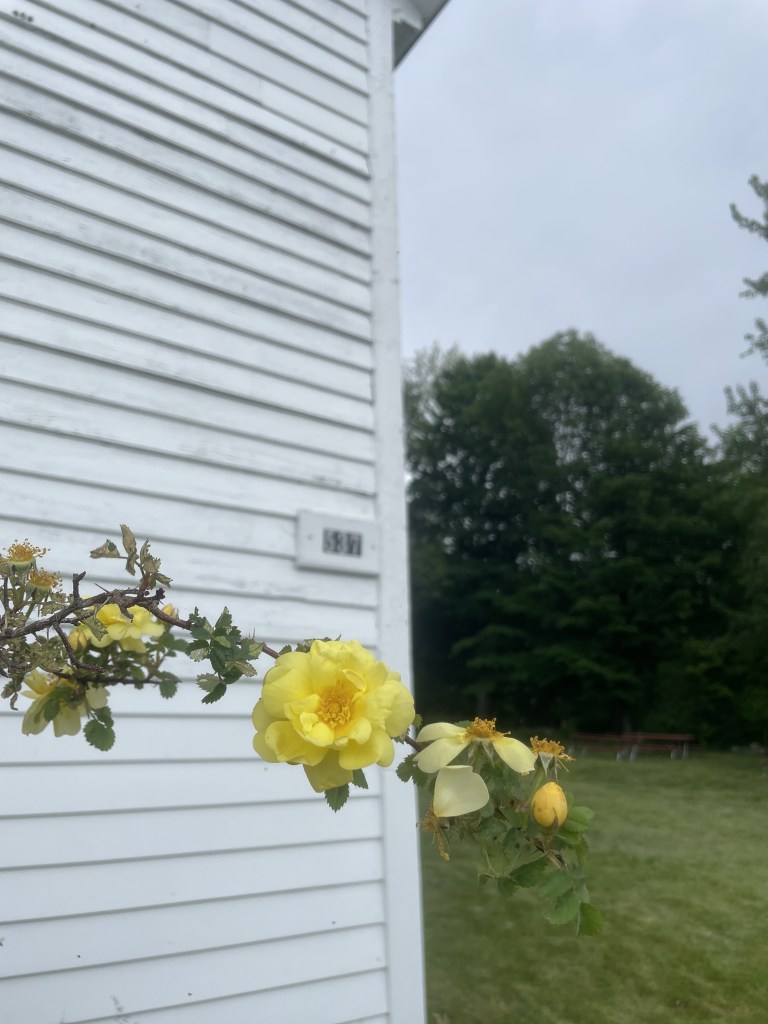
All Bread Loaf photos by Patrick Finneran.
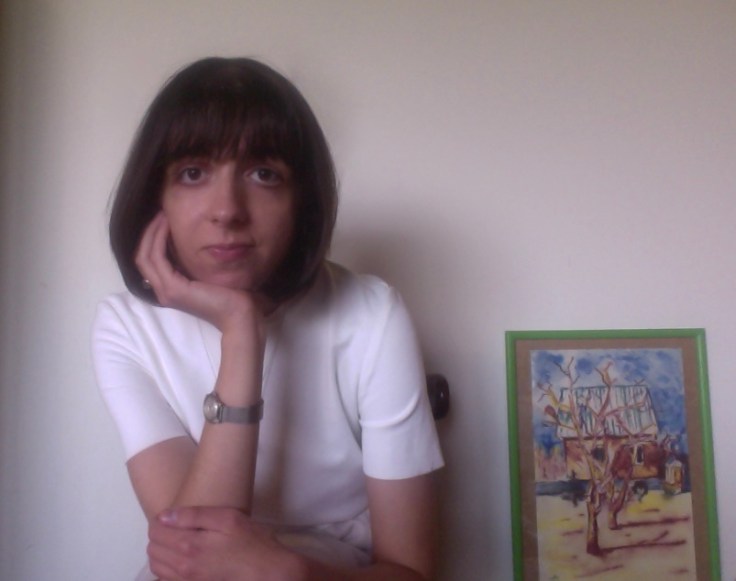
Kotryna Garanasvili is a writer, translator and interpreter working with English, Lithuanian, French, German, Russian and Georgian. She is currently pursuing PhD Candidate and teaching at the University of East Anglia. Her research is supported by CHASE Arts and Humanities Research Council. She is the winner of an Emerging Translator Mentorship at the National Centre for Writing and has been awarded translation traineeships at the EU Council and the European Parliament. She writes about translation among other things on her blog, https://kotrynagaranasvili.wordpress.com, and tweets as @kotryna_21.
Michelle Mirabella is a Spanish to English literary translator whose work appears in The Arkansas International, World Literature Today, Latin American Literature Today, Firmament, and elsewhere. A finalist in Columbia Journal’s 2022 Spring Contest in the translation category, Michelle has also published her original writing in Hopscotch Translation. She is a graduate of the Middlebury Institute of International Studies and an alumna of the Banff International Literary Translation Centre. You can find out more at www.michellemirabella.com and follow her on Twitter as @MirabellaM_.

Originally published on Hopscotch Translation
Tuesday, August 30, 2022

 hopscotchtranslation.com