
Hopscotch Editors’ Summer 2024 Reading Preview
Spring is in the air, so we thought we’d share some summer reading (in translation) plans!

Samuel Martin
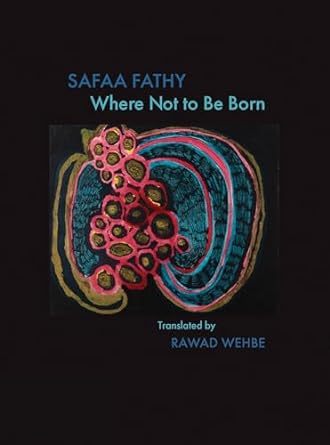
In June, perhaps I’ll be philosophical. As it stands, I have an unfortunate habit (though surely I’m not the only one…) of quoting Wittgenstein’s Tractatus Logico-Philosophicus an awful lot for someone who’s never yet managed to read it from start to finish. If Damion Searls’s new translation, published by Liveright and prefaced by the already much-missed Marjorie Perloff, doesn’t change that (the gap in my reading, that is, not my penchant for quotation!), nothing is likely to. The exercise will itself be a suitable preface to Searls’s own Philosophy of Translation, forthcoming from Yale University Press later this year and previewed in Hopscotch’s Summer 2023 Translators Forum. I also look forward to sitting down at length with Rawad Z. Wehbe’s translation of Where Not to Be Born by the Egyptian poet and filmmaker Safaa Fathy, who collaborated prominently with Jacques Derrida not long before his death. This collection, published by Litmus Press with an afterword by Derrida’s close and likewise much-missed friend Jean-Luc Nancy, is slim but deep. There’s sustenance there for days.
Perhaps in July I’ll be historical. During the time that I was lucky enough to spend last year in the National Library of Scotland perusing the papers of W. S. Graham, I came across a notebook entry (NLS Acc. 12468) in which the poet had reminded himself to “Read more GAVIN DOUGLAS.” Stewart Sanderson tells readers the same in a splendid essay from the latest issue of The Dark Horse, so I reckon it’s high time I heeded their advice. Douglas’s early 16th-century Scots translation of Virgil’s Aeneid, rebaptized The Eneados, was recently the object of a new 3-volume edition by the Scottish Text Society, complete with extensive annotations. Sanderson’s essay in The Dark Horse contains several verse glosses of Douglas that read quite beautifully, even though he stresses that they aren’t intended as finished translations themselves. While I confess I’ll miss his company for the length of the full poem, I’ll be happy to place myself in the careful editorial hands of Priscilla Bawcutt and Ian Cunningham.
In August, I may yet be radical. Tenement Press has just published An Anarchist Playbook, a collaborative anthology compiled by the Radical Translations group, which aims to revitalize long-buried voices of the French Revolution. It’s the inaugural volume of Tenement’s No University Press imprint – a bracing battle cry, indeed! But I’ve trusted and admired the press’s work ever since Robin Moger and Yasmine Seale’s miraculous Agitated Air: Poems After Ibn Arabi, which was one of my highlights of 2022 (and of the past several years, for that matter). To round things out with more poetry, I’m excited to read Khairani Barokka’s new collection amuk, published by Nine Arches Press. Following the author’s four exquisitely curated issues of Modern Poetry in Translation, this book looks poised to further stretch my sense of what translation can be and of what mistranslation can do.
Samuel Martin
Chris Clarke
Between teaching undergraduate translation courses, a graduate seminar, and being invited to sit on this year’s jury for the French-American Foundation Translation Prize, I have already read more literature (and non-fiction) in translation this year than I do in most years. There have been a number of standouts in the prize list, which began as 480 PDFs and now, two months later, has been whittled down to a pile of twenty print volumes. However, I’m going to play it coy and keep my impressions on those 80 works to myself until after the prize has been announced, which will come sometime after the jurors’ luncheon in mid-May.
This is not to say that I’ll be done with the heavy reading when that process comes to an end. I currently have several translation projects of my own on the go, which is always cause for reading; I’ve got a variety of research plans for an upcoming séjour in France this summer (despite having just learned with sadness that one of my favorite single-author literary archive sites is currently shuttered and looking for a new home for its contents); and I am bound to lug home a steamer trunk of French books as I always manage to do.
But what am I looking forward to that’s currently on the docket here at home?
First, in mid-May, which might be the next time I get to choose my own reading, Wakefield Press will be publishing Trouble in the Swaths, Terry Bradford’s translation of the great Boris Vian’s debut novel, Trouble dans les andains. Passed to Raymond Queneau at Gallimard by the younger Vian’s neighbor, Jean Rostand, this manuscript introduction led to a productive friendship, and though it wouldn’t be published until some seven years after Vian’s untimely death in 1959, it helped to pave the way to Vian’s unique and productive (if short-lived) literary career. I’m glad that Wakefield has taken on the publication of these early Vian works, and that so far, Bradford seems up to the task.
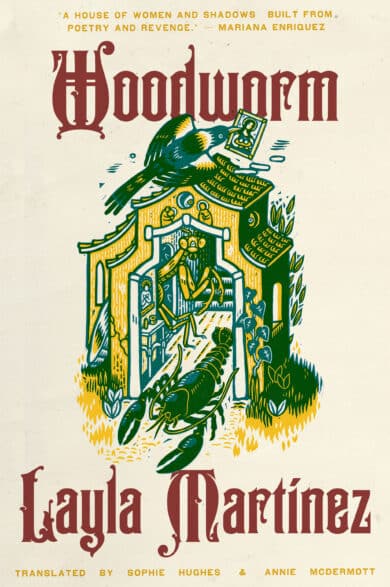
Also in May, I’ll be camped out overnight to get a copy of Layla Martínez’s Woodworm, to be published by Two Lines Press in a translation by Sophie Hughes & Annie McDermott. They had me at “For fans of Samanta Schweblin and Fernanda Melchor,” but the fact that it is translated by Hughes and McDermott means the sale is assured. Plus, the Two Lines presser calls this translation “lush.” After a long semester of discussing the many ways we talk about translation and translations, this is a particularly provocative descriptor: nothing says “terrifying new voice in international horror” to me like the intentionally repressed memory of walking past a Lush store in a mall, and having no choice but to smell every “good” smell in the world all at once, and at maximum potency.
In June, I’ll be making sure to get my hands on a copy of Louis-Ferdinand Céline’s War in Charlotte Mandell’s translation, to be published by New Directions. There has rightly been much discussion abroad (and even a bit over here) over what to do with Céline’s unpublished manuscripts, and this volume is a part of that conversation. What can you do when one of the century’s great French stylists was also, in many ways, a reprehensible asshole? Not to mention a man who tended to produce an innovatively oral-tinged and argot-peppered voice that is notoriously difficult to translate. Fortunately, Mandell is one of our great living translators of French, so I’m excited to see what she’s done with this text.
Happy translating and happy reading!
Chris Clarke
Erik Beranek
Unpacking My Suitcase. Much of my summer reading this year won’t be reading in translation – but maybe I’ll translate some of it myself, one day? I’ll be unpacking my suitcase, as it were. I’m recently back from Spain, a land of a thousand marvelous bookstores and seemingly endless public space in which to enjoy your spoils. As a traveler for whom bookstores and cafés always rank up there with (or, let’s be frank, above) the usual tourist destinations, I accept the fact that my bags on the return trip will always be heavy – and this trip was no exception. With stops at great bookstores in Barcelona, Granada, and Valencia, and then a major haul from the outstanding Sin Tarima Libros in Madrid, I’ll be busy for a while.
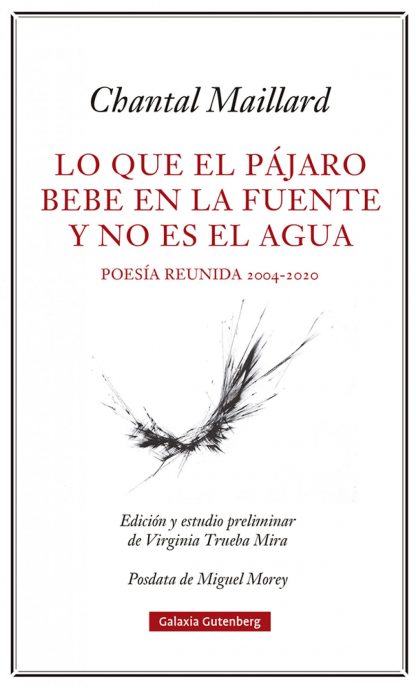
Some highlights: a beautiful edition of Whitman’s Leaves of Grass, selected and translated into Spanish by Jorge Luis Borges (!) and illustrated with prints by Antonio Berni (!); a first edition of Cortázar’s Fantomas contra los vampiros multinacionales (available in David Kurnick’s English translation HERE); and an art book of Antoni Tàpies, featuring an essay by one of my favorite writers on art and film, Youssef Ishaghpour (translated from French to Spanish by Montse Bautista Carrasco). In addition to those gems, I also bought several books each by a couple of contemporary Spanish writers. At Librería Inusual in Granada, I came across Corazonada, the new volume of poems from Berta García Faet, and the bookseller was emphatic that this was a Spanish poet I had to read. Then, at Sin Tarima, my bookseller-friend Benito was equally enthusiastic, so I bought several more, including her new book-length essay on poetry, El arte de encender las palabras, and an earlier volume of poetry, La edad de merecer, which has been translated into English as The Eligible Age by Kelsi Vanada. And I loaded up on books by the great Belgian-Spanish poet-philosopher Chantal Maillard. I’ve been wanting to read more of her work ever since New Directions published Yvette Siegert’s translations of Matar à Platon and Escribir in 2019. [See Anushka Sen’s review of Killing Plato on Hopscotch HERE.] And, again, booksellers kept insisting that hers was one of Spain’s most important voices, both as a poet and as an essayist – so I had to buy Lo que bebe el pájaro en el fuente y no es el agua, which collects her poetic work from 2004 to 2020, and several books of essays. (I’ll add my voice to the choir of Spanish booksellers – read these two authors!)
The Two Carrións. Beyond all that, I also plan on spending some time with a couple of Carrións. On the one had, the great Mexican conceptual and book artist, Ulises Carrión, whose work will be on display in Ulises Carrión: Bookworks and Beyond at the Ellen and Leonard Milberg Gallery in the Firestone Library at Princeton (supposedly the largest retrospective of his work to date). (This) Carrión is best known for his bookworks and his critiques of artistic, institutional, and cultural conventions through explorations of the traditional material and semiotic values of books themselves. He famously founded the legendary bookstore-gallery Other Books & So in Amsterdam and also published numerous works of pathbreaking book art. As he wrote in his manifesto “The New Art of Making Books” (1975), a book “is not a case of words, nor a bag of words, nor a bearer of words” but “a sequence of spaces” (…) “also a sequence of moments” (…) and therefore “a space-time sequence.” I’ll certainly be visiting the exhibition at Princeton, I’ll certainly be reading the accompanying exhibition catalog published by Princeton University Press – and I’ll also be taking the opportunity to read Ugly Duckling Presse’s beautiful edition of his Sonnet(s), a bookwork in which he runs Dante Gabriel Rossetti’s poem “Heart’s Compass” through a sequence of forty-four variations (in a manner somewhat akin to Raymond Queneau’s Exercices de style).
On the other hand, a second Carrión: Jorge Carrión, a writer whose exhilarating multimedia presence has been a constant companion of mine over the past few years. (This) Carrión’s work also engages actively with the material and institutional means of disseminating knowledge and organizing experience and expression. His podcasts – Solaris, Ecos, and most recently Gemelos Digitales – examine intersections between contemporary science and technology and recent developments in art and culture, while also being exemplary in their use of the medium. In English translation, he has two must-read, wide-ranging celebrations of books and bookstores (and critiques of the forces that assail them): Bookshops: A Reader’s History and Against Amazon and Other Essays. On the top of my list for the summer, though, is Barcelona. Libro de los pasajes, a fragmentary, ambulatory work, explicitly inspired by Walter Benjamin’s Arcades Project, in which Carrión weaves a story of his hometown through the histories – large and small, anecdotal and archival, literary and lived – of its nearly four-hundred arcades.
Rulfo Retranslated. Lastly, one strictly translation-based summer reading plan: this September, the University of Texas Press will be publishing The Burning Plain, Douglas Weatherford’s translation of Juan Rulfo’s El llano en llamas – completing Weatherford’s new translations of Rulfo’s works. This will be a great excuse to reread Rulfo, in Spanish and in Weatherford’s translations – and also to read the inimitable Cristina Rivera Garza’s book on Rulfo, Había mucha neblina o humo o no sé qué: Caminar con Juan Rulfo. (Speaking of whom, one more bookstore shoutout! The lovely Lata Peinada in Barcelona, devoted to Latin American literature, where I bought the new complete poetry of Cristina Rivera Garza, Me llamo cuerpo que no está.)
Erik Beranek
Originally published on Hopscotch Translation
Tuesday, April 9, 2024

 hopscotchtranslation.com