
Translation is Like…
by Talbot S. Hook
Must translation be like something else in order to be understood?
Since my relatively recent introduction to the field of literary translation, I have repeatedly noticed how eager translators are to say that their work is like something else. Translation is like fashioning a table, or doing jazz improvisation, or ferrying people across a river. It is like a handshake or conducting electricity. To an outsider, this seems rather strange. In my home field of educational psychology (which I grant is not literary or artistic the majority of the time), we are certainly not concerned with what our job is like. We have so many insurmountable problems and fundamental issues that no time is left to cloak what we do in metaphor. And we are not overly concerned if our process is understood by laypeople or not, though this is of course to our detriment in some ways. Ultimately, we assume that the results of our work are of clear and obvious importance, and that the public conception of science, itself a deeply misunderstood project, is robust enough to give our profession a firm foundation. In that vein, we simply carry on with scholarship and dissemination. We find problems, analyze them, and offer potential solutions. Who would be interested in a metaphor of that? And who would be interested in coming up with one? The public doesn’t want analogies for educational research—they just want some path forward out of America’s educational quagmire.
I recognize that this situation is not quite analogous to that of translation. Translation’s “problems,” puzzles, and affordances are of a very different sort altogether—from more objective semantic and linguistic concerns to the subjective, debatable matters of connotation and artistic craft. Unlike educational psychology, translation is not a social science explicitly tasked with bettering some aspect of civilization, as is economics with correcting our financial situation or political science with our governance. It is one of the humanities. It is meant to offer some insight into the human condition across time and space. Yet, translation seems to be haunted by two questions I have not encountered in the humanities I have studied longest: history, art, and philosophy. These two questions surfaced during my first semester of literary translation, and they have been my constant companions across numerous essays and books concerning translation. These two questions bear stating clearly:
- Why is there such concern to equate translation to something other than what it actually is, instead of just explaining it concretely?
- Must translation be like something else in order to be understood?
These are the two fundamental questions that interest me here, though the second is, in some ways, a partial answer to the first (more on that later). A few other questions crop up uninvited as I attempt to answer these two fundamental ones: Is the constant analogizing so prevalent because translation is somehow undefined or invisible as a field or activity? Does the public just not get it? Are translators underappreciated or distrusted or reviled, and can this metaphorizing be seen as a defensive reaction to preserve the craft and its practitioners? Or do translators just like playing with language and imagery? To me, these are all fair questions, some of which have already been answered by more experienced translators and critics. As somewhat the outsider, my primary goal is to point to the strangeness hinted at by this dyad of questions. However, in the spirit of inquiry, I will also try to dissect this strangeness into a few primary elements. I hope this effort is seen in that light, as I by no means want to cast aspersions on an activity that I deeply love.
I want to first expand the setting a bit, which might also help to answer some of those ancillary questions above. From about the second week of my first translation course, I began to detect a sort of insecurity within the field of literary translation that I had never felt in any of my prior studies. I have studied foreign language, education, and psychology to varying degrees, and I get no sense that these fields feel the need to explain or equate themselves in the slightest. Of course, that is not to say that these fields are totally self-confident or free of problems. Modern education is an edifice made of problems, art is wracked by strident philosophical disagreements, and psychology itself has a massive inferiority complex (not to mention a replication crisis). Yet, even so, practitioners in such domains are not usually themselves doubtful of these fields or their importance. While psychologists are rightly concerned with the scientific-ness of their subject, there is great faith in the project overall. Likewise, architects aren’t writing reams defending their practice; they know the importance of their work for society. Want beautiful buildings? That requires architecture. Want better academic interventions? That requires educational psychology. Scientists, as I mentioned above, are clearly not overly concerned with defending their work: People see the fruits of science, even while having a troglodyte’s distrust of expertise and learning.
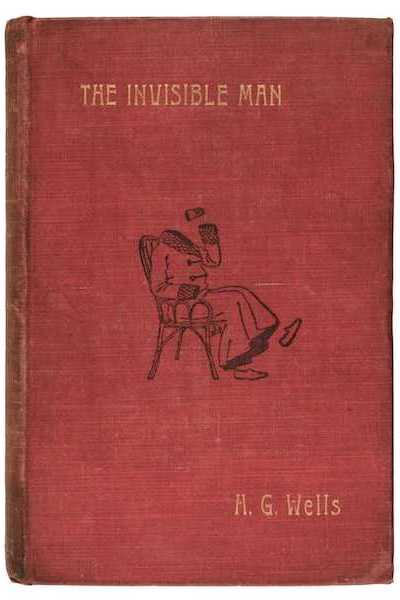
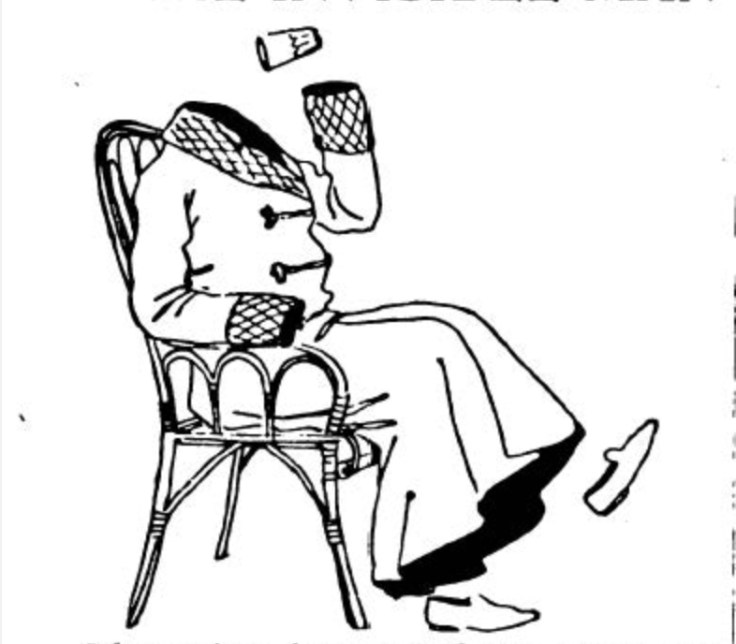
Is that the rub? That the public doesn’t see the work of a translator? The Great Invisibility? The translator’s name not appearing on the cover, or their name relegated to the copyright page? Making translation more visible has been a good and necessary crusade of the past few decades, and my intuition says that a lack of visibility is a key part of this phenomenon. Authors are capable of international stardom, and no one questions their line of work, because one minute a book appears where none previously existed. Yet translators are incapable of achieving the same recognition. Part of this insecurity, part of this desire to liken our craft to other, more visible activities—from jazz to carpentry to a handshake—is born from the Great Invisibility. There is a strong desire to make our products more visible to the public. Justifiably, we want recognition for countless (magnificent) hours spent bringing something new into being. However, the push for recognition does not end there. It is not just our products that we wish to make known, but our process. We want the public to know what the act of translation is like. This is a key difference from other fields, who are mostly concerned with the recognition of their products. This is a point that must be stressed.
That being said, practitioners in every field secretly long for an understanding not just of their products but of their process. Every field desires to be known more than it is, and what professional is unmoved by an individual who really takes the time to understand what it is that they do? Scientists want the public to actually understand science; and while most scientists haven’t read Chalmers, Popper, or Kuhn, the field would gain substantially from laypeople taking the time to understand the mystery and beauty of the scientific enterprise. Likewise, any historian would consent to a greater public understanding of historiography or source criticism, and any educational psychologist would be thrilled to have more public knowledge of statistics or measurement. Carpenters, I’m sure, would love it if people felt more interconnected with joinery. Unfortunately, that’s just not how things work in this world of vast unappreciation—there simply isn’t enough time to appreciate everything as it deserves to be appreciated. Translation is like any other field in this regard, though it might not know it. However, the key difference, as I’ve pointed out, is that translators are also separated from the products of their labors. Whereas the products of carpentry are readily visible in every home, the efforts of translation are rarely noticed and are in relatively fewer homes. Even people that read books in translation do not pay much attention to the translation or the translator; I was this same way prior to starting my journey of translation. It was only then that I began to notice the different flavors of my Hesse, Mishima, or Lispector novels. The public does not notice the translator, and thus the translator is isolated from any appreciation of their work. The recognition here is entirely disproportionate to the strenuous efforts and beauty of the creative process. I do not seek to downplay the injustice of this, but it is still curious as to why translators wish for others to understand and appreciate both product and process. In this, translation is different from a great many fields.
Relatedly, there also seems to be some discontent around notions that translation is somehow secondary to the primary creation of a work of art. As if this somehow invalidates or undervalues the importance, beauty, and fun of translation. I don’t see it this way at all. To me, translation is like (oh, here I go) art conservation. It is making something new from something old, often for a new audience. It is the maintenance of the past—and its furthering. It is keeping art ever moving and vibrant. I see no shame in this view of translation, even if certain members of the public view it as a derivative, secondary act. Does the public’s opinion of architectural restorationists matter even a little? Not to me. And if Machu Picchu is still standing in a millennium and accessible to more and more people, I challenge anyone to say that conservation work is secondary in importance to original creation. This is all to say that perhaps this feeling of instability and unappreciation is one reason that translation is so often cloaked in metaphor. So that is my first tentative answer, or aspect of a single answer: If translation is like this field or that activity, it gains more legitimacy—or at least better company. In short, it becomes more visible. Maybe through a recognition of the act will the product be respected.
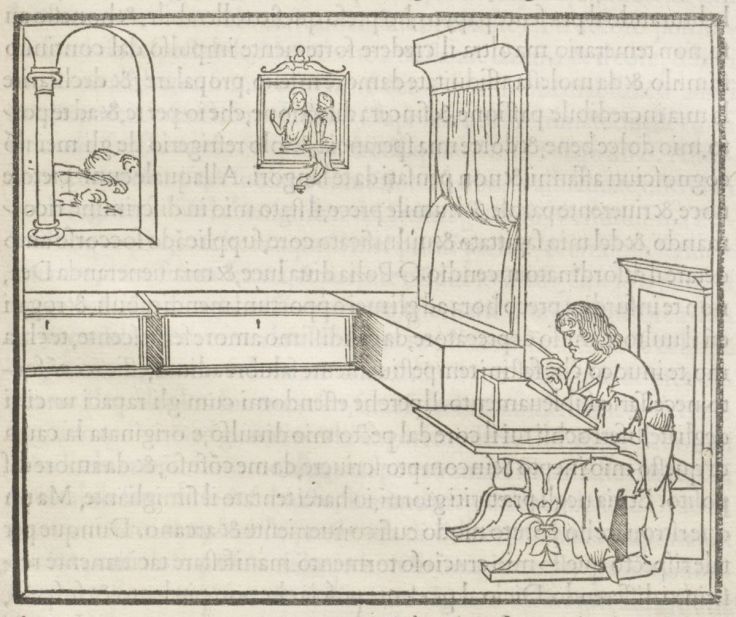
Another conceivable answer to these questions is that the process of translation is inscrutable to the layperson. Because it is inscrutable, metaphors are required to enable public understanding. This is how the second question partially answers the first—if translation is too cryptic to be explained directly, then we are left with second-order explanations or analogies. This might make sense, as translation, though it manifests on paper, happens entirely in the black box of the mind. One cannot see it in action. From the outside, the act of translation must look like something miraculous. A person sits at a table in front of some strange squiggles, leans back, massages their neck, and then produces another page of different squiggles—and they have the audacity to tell you it’s somehow the same! To those of us who have translated, the process isn’t entirely foreign, though it may still be inexplicable. It has unfolded in our heads, after all. We are somewhat privy to this word choice, that line break, or a purposeful misspelling. Everything has some meaning, even if the reader sees only smoke and mirrors. How can we make this clear to the public? It seems a tall order. Yet, translation is not unique in this way; many other fields are built on largely cognitive endeavors, with few elements of the physical, the kinetic, or the visible. In the most obvious instance, the writing that we translate was created in just such a way. A writer put pen to paper and out came a story, play, or poem. Math is likewise hyper-cognitive, though students are often asked to show their work. This mention of students leads to another aspect of this answer, which has its roots in our system of education. Everyone experiences the processes of both writing and mathematics during the course of their education, and so they are familiar with these cognitive acts. However, most students never translate anything literary, even if they take a second-language class. So, translation is both similar to and distinct from these other domains. It shares its cognitive nature with many fields, but it is separated by a lack of public experience. People have both done math and seen its products; they have learned to write and have themselves produced poems, essays, and journals. Not so with translation. It is always difficult to explain something that another has not, in some way, already experienced. And as it is difficult to explain translation succinctly, due to its complex intellectual and aesthetic nature, we seem to turn most readily to metaphor. This is a second aspect of an answer.
The final reason I’ll give for this love of metaphor is to me the most obvious: Translators delight in words. They like playing around in the sandbox of language. Everyone drawn to translation is in love with language on some level. We find it significant, fascinating, beautiful, and many other things besides. We have invested in intellectual tools that give us the ability to better work with it—we have specialized in some way. This specialization is proof of our love. By deeply considering the nature of our art through our training, we try to put the great unspeakable process into hopefully more concrete words. And because our activities are all ineluctably wrapped up in questions of identity, we long to be seen in relation to our chosen subject. To that end, who wouldn’t want to come up with a metaphor for translation? In the greatest spirit of interdisciplinarity, why shouldn’t we seek to connect our work to other domains? In some ways, crafting a metaphor seems not only part of the initiation into the brother- and sister-hood of translation, but the fellowship of scholars the world over. If Aristotle was correct in identifying the skillful creation of metaphors as a sign of genius, then those in literary translation have increased personal reason to find out what translation is like.
Taken as a whole, my argument runs something like this: Literary translators feel somewhat insecure about their invisibility. Their products go largely unnoticed by the public. Furthermore, the public does not understand what translators do. To gain more visibility, translators must reach the public in some way. One way to do this is to draw more attention to the products of translation, which may lead to greater acknowledgement of translators’ efforts. Another way is to illuminate the process of translation itself. Yet, this path toward greater public understanding is not straightforward, for two reasons: 1) Few people have ever experienced translation, and so, as a process, it is deeply foreign to them; and 2) The act of translation is difficult to put into words, because of its complex mental nature. Due to these two issues, translators have tended to take an indirect route to greater public understanding and appreciation: drawing connections between translation and other, more visible human activities. Not only has this been seen as necessary, but also as enjoyable in itself—it is both means and end.
In short, the underlying fear is invisibility, and therefore unimportance. The corresponding remedy has been to draw metaphors and connections to more obvious domains of human activity, like gardening, chess, or cartography. Creating analogies to help the public understand the process of translation is perhaps a noble thing, but doing it to put on airs strikes me as unnecessary. Translation, after all, can stand on its own, without external imagery or justification. It needn’t be like anything else to be itself. Imagine we are eventually successful in our endless pursuit of the right analogy, and every layperson comes to know several metaphors for translation: What then? Translation still will not be understood, and, what is worse, it will likely be seen as only an extension or shadow of other fields. A field cannot be defined by its likeness to other fields any more than a tree can be defined by analogies to other organisms. Translation must be positively and singularly defined. When asked what translation is, perhaps we should just start by attempting to describe the process. A translation is not a piece of music, and a translator is not a ninja. The layperson’s definition is, in this instance, the best: Translation is the act of putting words and their meanings in other languages. Of course, this is not a matter of just matching equivalent words or phrases. But changing words from one language to another is the nature of it, even if all our subtleties and nuances go misunderstood by the wider world. The same is true of the nuances of science, math, and anthropology. My main worry is that cloaking translation in metaphor makes it less readily understandable to laypeople. Indeed, I would argue that a host of metaphors obscures the nature of what we do. We should attempt straightforward definitions instead of similes. Better yet, we should engage others in the act itself.
I hope it is obvious by now that, while I recognize and understand the basic fear of invisibility—having many translator friends and colleagues, I feel this intimately—I disagree with the primary historical remedy. Instead of analogizing, let us engage the public directly in the process of translation. While we should focus on the visibility of our products by putting translators’ names in prominent places, we can also help the public understand the process of translation. Let us hold community workshops whenever possible. Let us partner with local libraries to get children and adults translating. Let us work with K-12 foreign language instructors to create curriculum units that center on translation (like The Center for the Art of Translation’s Poetry Inside Out initiative). Let us work with teachers to build translation into students’ second-language acquisition. Let us focus on instruction over obfuscation. If we can show people how fulfilling translation can be, I believe they will look on the entire enterprise more favorably. Because they have done it themselves, they may come to acknowledge and respect it.
To end, though literary translation suffers from some amount of invisibility, it need not feel insecure about its project. To be recognized as an important field of contribution to society does not mean that society need understand the field. While practitioners have some control over the former, the latter requires an act far greater than any field has yet achieved. No field is understood by laypeople. And that is how it should be, because modern society rests upon the principle of increasing specialization over time. If we all understood the inner workings of each profession, we would drown in details. As it happens, translation is more difficult to describe (though not necessarily to do) than many other worthwhile things. But that should not worry us. We should instead take solace in our craft—in the beauty of both process and product—and trust that by community outreach and producing new translations, society will be led into a greater knowledge of translation’s importance. Just as science shows its strength by simply leaning into what it does best, so too should literary translation focus on bringing beautiful works in other languages to speakers of other tongues. By our fruits shall we be known.
And because I too consider myself a translator, I’ll leave you with two similes of my own, just for the sheer fun of it:
- A good translation is like a palimpsest. The original text has been effaced to make space for a new interpretation, yet the careful reader can always see faint traces of the original. The essence is never fully erased, though something new is more readily visible. Part of the joy of reading translations from a language we know is seeing how the translator dealt with this or that peculiar aspect of the source language.
- Translation is like kintsugi, the Japanese art of repairing broken pottery with golden lacquer. We have held the original vessel, though it now rests in pieces. Yet, we can see the object’s intention or telos—what the vessel was made for. We join it together, piece by piece, with gold lacquer until it is made anew: the same, but noticeably different. The vessel is both fresh and old, the same yet unique. Something indelible has been added—something that we have imbued it with. So too do we handle a poem, read it, take it apart line by line, and then reconstitute it in another language. We know its essence and purpose, its form and contours, and so we artfully join it together with new words, new syntax, new structure, until we behold the old in the new.
Keep translating. We have an important job to do, and that job need be like nothing else.

Talbot S. Hook is an occasional writer, poet, and translator from Chinese and Spanish. He is Clinical Assistant Professor of Gifted and Creative Education at the University of Georgia.
Originally published on Hopscotch Translation
Tuesday, November 11, 2025


