
Hopscotch Editors’ 2025 Roundup
by the Hopscotch Translation editorial team
From the Hopscotch Translation team – very best wishes for the year 2026!

As in years past, the Hopscotch Translation editorial team are glad to share some of their reading highlights in translation from 2025 and anticipate a few things to come in 2026. Happy reading; we’ll look forward to seeing you in the new year!
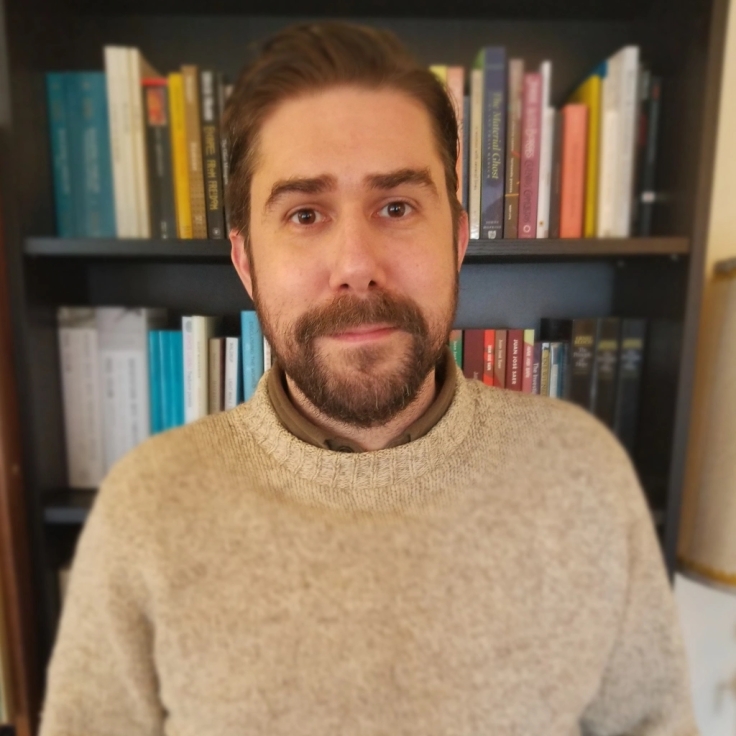
Erik Beranek (Editor)
I’m not sure, but it’s definitely possible I didn’t write, or translate, a single word this year. Despite a certain amount of optimism at the outset, as I now dimly recall, it wasn’t a good year—by any metric. Still, it wasn’t all bad. On the one hand, Rosalía worked with several translators to deliver one of the best albums of the year in LUX, a polyglot masterpiece of operatic bravura and ascetic ecstasy. On the other, the so-called “master of the apocalypse,” László Krasznahorkai, won the Nobel Prize in Literature. It is gratifying to have one of your favorite writers (and, by extension, his incredible translators) recognized, especially a writer as apparently forbidding as Krasznahorkai. I first read him while working on my first translation, of Jacques Rancière’s book on Hungarian filmmaker Béla Tarr (who collaborated frequently with Krasznahorkai), and never turned back. Despite the darkness and the density, I’ve always found a lot of joy and humor in his writing. Maybe things’ll look up if I ring in the new year reading Animalinside (tr. Ottilie Mulzet) while listening to LUX?
I did attend a few excellent translation-related talks and readings in 2025. In the spring, I saw Yoko Tawada speak/read/perform. That New Directions has published four new translations of her work over the past two years is certainly a cause for celebration (Exophony, tr. Lisa Hofmann-Kuroda, was a favorite read this year). And then in the fall, I saw Anne Carson—also read/speak/perform. It is incredible watching what minds like Tawada’s and Carson’s can do, leaping between languages, voices, media. Even with health issues, Carson delivered one of the nimblest—and funniest—talks I’ve ever seen.
Also in the spring, I attended a two-day conference on René Char, “Resistance and its Futures: Translating the (Untranslatable) Wartime Poetry of René Char.” The conference focused on Char’s Feuillets d’Hypnos, which he wrote while leading a division of the French Resistance and published shortly after the war. There were papers on translations of the Feuillets into Spanish, Japanese, Catalan, Provençal, and more; there were panels on Char’s friendship with Camus and on the influence Heraclitus had on his work; there were sculptures by Gabriel Sobin (son of poet and translator Gustaf Sobin), carved from stone from the south of France, where Char lived; there were readings of Char’s poetry by actor Gabriel Dufay and short films by Jérôme Prieur—it was quite the event! But there was one name missing from the schedule that, I thought, ought to have been there: Mireille Gansel. After all, it’s hard to imagine someone whose life and work better embodies the idea of translating the untranslatable as an act of resistance in wartime. Plus, her book Translation as Transhumance (tr. Ros Schwartz)—one of my absolute favorites, on translation or otherwise—ends with René Char! After reflecting on her own family’s history of displacement and linguistic estrangement before, during, and after the Holocaust, Gansel looks back on her career as a translator, notably on her major project of editing the first anthology of Vietnamese poetry in French at the height of the Vietnam War. And following that, she went to the south of France to work with Char to assemble a selection of his poems to have translated into Vietnamese. It would have fit in perfectly! I reread the book after the conference, and it was as spellbinding as the first time. I also finally read her book of poetry Soul House (tr. Joan Seliger Sidney), published a couple of years ago by World Poetry, and it didn’t disappoint. At the time, I thought about digging deeper into her work and writing a review of the two books, but as I said…
I’d also thought about writing something on the great Spanish novelist Juan José Millás following the publication of Only Smoke (tr. Thomas Bunstead and Daniel Hahn), the third of his novels to be published in English by Bellevue Literary Press. That, and the fact that, earlier this year, Millás and Spanish paleoanthropologist Juan Luis Arsuaga published the third in their “As Told By a Sapiens to a Neanderthal” series (La conciencia contada por un sapiens a un neandertal following La vida and La muerte—with the first two already translated by Bunstead and Hahn) made it feel like a good moment to spend some time with Millás. I didn’t get around to writing, but reading the books was a pleasure, as was listening to countless hours of Las edades de Millás, the podcast he does with Spanish journalist Javier del Pino.
As for looking ahead, high on the list are two recent Two Lines publications, Jazmina Barrera’s The Queen of Swords (tr. Christina MacSweeney) and Elena Garro’s The Week of Colors (tr. Megan McDowell). I’m also looking forward to reading Conversation in the Mountains, a collection of Paul Celan’s prose translated by Rosmarie Waldrop, and The Complete Works of Ricardo Reis (tr. Margaret Jull Costa and Patricio Ferrari), both coming out this spring with New Directions. And Ugly Duckling will be publishing Caetano, the new book by Alexis Almeida, a writer and translator whose work I really enjoy—and I’ll use that as an excuse to read Many Poems, her translations of poetry by Argentine poet Roberta Iannamico, published earlier this year by The Song Cave. Lastly, I have to mention Ariana Reines’ Wave of Blood, which is undoubtedly the most arresting and affecting book I read this year. I don’t know where to begin with it, so I’ll just recommend it. It’s on her recommendation that I’ll have to read Palestinian poet Ghayath Almadhoun’s I have brought you a severed hand (tr. Catherine Cobham), published earlier this year by Divided Publishing. And who knows, maybe I’ll even write a thing or two!

Chris Clarke (Editor)
2025. Another bizarre year that most of the time felt like an out-of-control carriage steaming down a hill with the wheels about to come off. I left one job, came and went at another, and caulked all the cracks with plenty of translation and editorial work; we spent some time in the Lesser Antilles; I now live south of the Mason-Dixon for the first time. With all of the moving parts, I didn’t get as much personal reading done this year as I had hoped, but there were of course some standouts, and there is always next year to look forward to.
To begin with, some highlights of what I did manage to get my hands on in 2025. NYRB Classics started the year off with a bang, releasing Augusto Monterroso’s The Rest is Silence (tr. Aaron Kerner) in January, and the final volume in the Antonio di Benedetto trilogy, The Suicides (tr. Esther Allen), in February. May saw New Directions publish a new Mathias Énard translation by Charlotte Mandell, The Deserters, which I quite enjoyed; it paired nicely with her recent Céline translation. In October, Other Press published Mathieu Belezi’s Attacking Earth and Sun, a scathing novel set in the early days of the French colonialization of Algeria; Lara Vergnaud is up to her usual magic in this one. And, one I haven’t cracked yet but am thrilled to have nabbed a copy, Conversation Tree Press of Kitchener, Ontario published a fine-binding edition of Bill Johnston’s retranslation of Stanislaw Lem’s Solaris; as so many have, I’ve been waiting years to read his version and am thrilled that they managed to finally navigate the rights situation and get it done.
Coming in 2026, one title that has caught my eye is Mercedes Halfon’s Outsider Everywhere: Witold Gombrowicz in Argentina, which Fitzcarraldo Editions will be releasing in a translation by Rahul Bery. Everything about Gombrowicz fascinates me, but plunk him down in 1939 Buenos Aires in the middle of this fascinating artistic period? Tell me more! Later in 2026, NYRB Classics is slated to publish the first ever translation of Georges Darien’s 1897 doorstopper The Thief, which I’ve been lucky enough to have an early look at. Long a favorite, this legendary anarchist novel resonates even more strongly today than it did when I first read it. I’m sure there’s plenty more coming to keep my attention, and we look forward to featuring reviews and interviews on anything that catches our eye during another great year at Hopscotch Translation.
Finally, I can’t get through this annual wrap-up without mentioning the big hit that literary translation took this year, and French-English translation in particular. We lost two of the greats in close succession, with Ian Monk passing in September, followed by David Bellos in October. Both were inspirations to me and are counted among my idols; I was lucky enough to spend a bit of time with each of them. Between the two of them, they truly set the bar for the translation of constraint-based writing, and they will be sorely missed. (The above obit for Monk is in French, alas; if you don’t read French and want a peek into the poetic and translative mind of Ian Monk, here is a long conversation I had with him back in 2017. Or, order yourself some of his writings!)

Samuel Martin (Editor)
I’ll be going slightly off-piste, since the three books that sprang to mind when I thought about what had most affected me in 2025, all memoirs with Palestine at their heart – Sarah Aziza’s The Hollow Half: A Memoir of Bodies and Borders, Tareq Baconi’s Fire in Every Direction, and Omar El Akkad’s One Day, Everyone Will Have Always Been Against This – are not translations, at least not on the face of it. Yet all three “participate in translation” (a phrase I take from Stewart Sanderson) in crucial ways, even when they appear to resist it, to question its rightfulness or its very possibility.
To begin with the most recent publication of the three, Baconi tells of his formative years as a queer youth in Amman and the rousing of his political consciousness after his arrival in the West. He is at once tender and unsparing toward his younger self, describing how, as a student in London before the Iraq War radicalized him, he had effectively become a walking caricature of self-translation: “I was an Arab who was closer to the colonial power than to those sorry souls who had been colonized. […] I performed being Arabia in jest, embracing images that would make Edward Said cringe” (p. 159). Baconi’s prose is gentler than his title might lead one to expect, yet the numerous phrases of deliberately untranslated Arabic strewn throughout the book are like stones in the shoe of the complacent monolingual reader. They may even form a trail leading the author back to a fuller embrace of his first language; while promoting his memoir in recent weeks, Baconi has spoken about renewing his study of Arabic.
“Fascinatingly, a preeminent Arab linguist says to me, the earliest meaning of ‘nakba’ is ‘damage to the foot caused by a stone,’” writes Sarah Aziza in one of the “Arabic Lessons” that punctuate The Hollow Half (p. 161). Aziza’s breathtaking book is not just more prominently bilingual than Baconi’s, it is also (among other things) a sustained meditation on the Arabic language and the stakes and strategies of translating it into English. There can’t be many authors, after all, who have included a “Translator’s Note” at the outset of their own memoir! The notes section, too, comes in the form of a “Diwan” – a compendium of (often translated) citations from Frantz Fanon and Édouard Glissant to Adania Shibli and Mahmoud Darwish. I’ll hold off on saying more about Aziza for the moment, since I know I’ll keep returning to her work in the months to come.
Omar El Akkad’s much-lauded book opens, not with a translator’s note, but with a seeming admission of translation’s inadequacy as he rewatches footage of Gazan rescuers trying to comfort a little girl in Arabic after pulling her from the rubble of an explosion: “You are like the moon. Again, translation fails. There is no English equivalent to the lineage of this phrase […] Listen to the sly setting joy and pleading, raw pleading that carries the words as this man tells the girl who lived when so many others died that she is beautiful beyond the bounds of this world” (p. 6). Yet this explanation is itself a translational gesture; the author writes beyond the bounds of transliteration and subtitling to convey what he takes the rescuers’ phrase to mean. Such are the stakes of a book about genocide: searching for words to express something that language seems unfit to encompass. El Akkad is not one to gainsay the rich possibilities of Arabic-to-English translation in a literary context, having written a beautiful foreword a few years ago to Yasmine Seale’s Annotated Arabian Nights. As for Yasmine Seale herself, her forthcoming translation of Ibn Hazm’s The Dove’s Necklace, a lyrical masterpiece from 11th-century Cordoba, will be cause for celebration in spite of everything. I don’t know if 2026 will see it published, but I dare to hope.

Emma Wagh (Editor-at-large)
It feels impossible to pick just a few books from the past year from the shelves: 2025 was a delightful year of reading, of finding new authors and translators whom I’ll look for in every bookstore. I’m a bookseller at heart, and this list could spin out to dizzying lengths if I don’t restrain myself.
I began the year with two English-language readings of Maria Stepanova’s Священная зима 20/21: Sasha Dugdale’s translation of Holy Winter 20/21 (New Directions, 2024) and Eugene Ostashevsky’s collaboration with Stepanova, Ovid Void (World Poetry Books, 2025). You hear voices from across time and space in these collections—after all, Stepanova’s book-length poem is grounded by her paraphrases of Ovid’s exile poems as she finds herself leaving Cambridge, MA for Russia when the pandemic begins. In Ovid Void, Ostashevsky gives his own readings of Stepanova, recast from his isolation in Shanghai. The pairing of Holy Winter 20/21 and Ovid Void lets you witness countless conversations, stretching from Augustus’s Rome to our post-pandemic world.
From here I turned to Iman Mersal’s Motherhood and Its Ghosts (Transit Books, 2025), translated by Robin Moger. A blend of autobiography, photographic analysis, and criticism, Mersal untangles the many shapes of motherhood’s narratives and their endless paradoxes. Motherhood and Its Ghost beautifully brings together grief, rage, and tenderness, emboldening mothers to sit with their own narratives instead of seeking a solution from others. I think a fitting pair for Mersal’s slim essay collection is Jenny Erpenbeck’s Things That Disappear (New Directions), translated by Kurt Beals and published earlier this year. Both Erpenbeck and Mersal reckon with absences, with memory left in the wake of disappearance. Erpenbeck’s prose pieces (each at most two or three long) shift from the East German Palace of the Republic to social norms, missing socks to the fading need for coal. Weaving together the relics of history and memory, Erpenbeck gives remarkable clarity to the many faces of loss.
Unsettling literature continues for me this year with Jacqueline Leung’s incredible translation of Hon Lai Chu’s Mending Bodies (Two Lines Press, 2025). In Mending Bodies, a government that encourages couples to “conjoin” in the most literal sense. Leung’s translation absolutely stuns in this allegorical dystopia where late capitalism meets body horror head-on. The body takes new forms again in the stories of Evgenia Nekrasova, the founder of “magical pessimism” in contemporary Russian literature. Her folkloric and magical work is rendered brilliantly in English by Marianna Suleymanova, including “She-Bear” (Kenyon Review), “Mordovian Cross” (Words Without Borders), “Kika” (The Offing), and “Legs” (khōréō). Nekrasova confronts the realities of life for women in contemporary Russia, and Suleymanova is sensational at leading us down the rabbit hole each story offers, toward each bewitchingly dark twist.
Looking ahead, I’m counting the days until Rene Karabash’s She Who Remains (Pereine Press / Sandorf Passage) is published. I was lucky to read an advance copy, and Izidora Angel’s thoughtful, haunting translation of this deeply psychological novel felt like a fever dream. Urszula Honek’s White Nights (Two Lines Press, translated by Kate Webster) is another delight for February that promises hypnotic prose and desolation. I’ll add to the pile Uljana Wolf’s Etymological Gossip (Nightboat Books, translated by Sophie Seita), Egana Djabbarova’s My Dreadful Body (New Vessel Press, translated by Lisa C. Hayden), and the second issue of Translator, so I can dive into their remarkable array of reportage and journalism in translation. I’m sure this pile will grow unwieldy (as it does every year), and I cannot wait! Be well, indulge in your reading, and happy translating!

David Boyd (Editor-at-large)
Hopscotch Translation Editor-at-large David Boyd is currently tied up somewhere between North Carolina and Japan, but he generously took a moment in transit to send us the following list of 2026 translations that he is looking forward to:
Sakura by Kanako Nishi (HarperVia) tr. Allison Markin Powell
Beautiful Distance by Nao-Cola Yamazaki (Daunt) tr. Charlotte Goff
Don’t Laugh at Other People’s Sex Lives by Nao-Cola Yamazaki (Daunt) tr. Polly Barton
If We Cannot Go at the Speed of Light by Kim Cho-Yup (MacLehose) tr. Anton Hur
Useless Writers by Ermanno Cavazzoni (Wakefield) tr. Jamie Richards
Editor Chris Clarke wholeheartedly seconds the recommendation of the Cavazzoni title from Wakefield Press, translated by Jamie Richards: “49 fables composing a gallery of writers who contribute absolutely nothing to society, scientifically organized and categorized in accordance to the seven deadly sins and seven contingencies of life.” What more could we ask for in 2026?
Originally published on Hopscotch Translation
Tuesday, December 23, 2025

 hopscotchtranslation.com