
Interview with the editors of African Language Literatures in Translation
Erik Beranek in conversation with Alexander Fyfe and Nate Holly
We see the translation as a creative practice, in the same way that the original is. We want the translators to do their thing. And for that to be something that readers will engage with too.
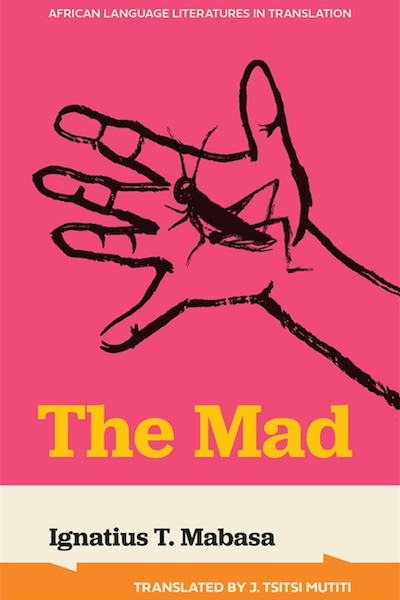
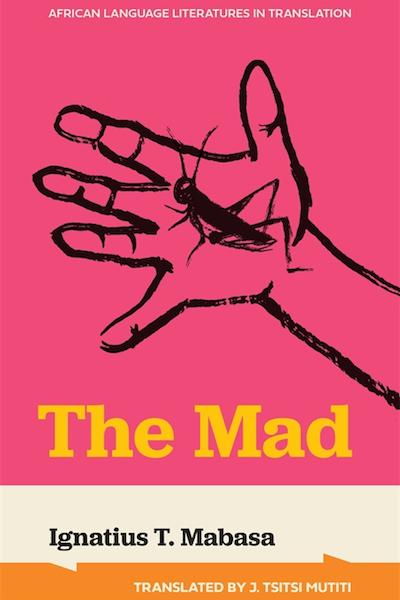
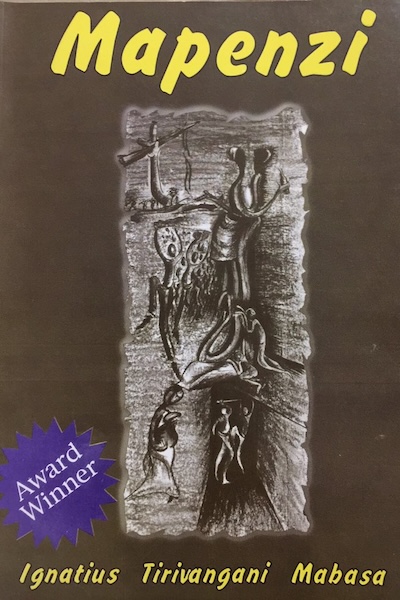
Earlier this month, Hopscotch editor Erik Beranek sat down with two of the editors of the University of Georgia Press’ new African Language Literatures in Translation series to discuss the origins and goals of the series and the importance of translating literature from African languages. The series’ first publication—Ignatius T. Mabasa’s Mapenzi, translated into English as The Mad by J. Tsitsi Mutiti—will be published on April 1, 2026.
Erik Beranek: Thank you both again for joining me to discuss the University of Georgia Press’s new African Language Literatures in Translation series. I think the series will be really interesting to many of our readers. And it is especially exciting for me, since I also work at a university press. I’m always interested to learn more about what other university presses are doing with translation and how it fits into their publishing.
But for starters, would you tell us a little bit about the origins of the series. How did the idea initially come about? Where did it originate? And what does it take to get a series like this started?
Alexander Fyfe: Sure. I think in some ways it’s a fairly mundane beginning. I was at an event where the director of UGA Press, Lisa Bayer, was tabling for the press, and we got chatting about the possibility of a series publishing translations of African literary works, a prospect about which Lisa was very enthusiastic. After that, I was put in touch with Nate as a potential series editor. I already knew Chris, so I approached him about being a co-editor. And from there, we went through the long process of putting together a series proposal, and putting that through peer review—which I think probably took a little over a year, if I’m remembering correctly—and then getting together the advisory board, which also took some time.
And from there, getting the first few titles into the production pipeline. Which really brings us to where we are now, with the first one coming out very soon, in the next few weeks.
Erik Beranek: Yeah, The Mad is coming out very soon, on April 1st. Oh, look at that! [Nate holds up an advance copy of The Mad.]
So, yeah, I guess the origins of projects like this are often somewhat mundane, as you say. I find it interesting, probably just because I straddle these two worlds of translation and university press publishing, but maybe for readers who aren’t aware of how series like this are structured and run—would one of you want to speak to that and say a bit about the different roles involved? Alex, you’ve already mentioned an advisory board. And you and Chris are the series editors, while, Nate, you are the acquisitions editor for the series (among other things) at University of Georgia Press. Would one of you mind speaking to how all the work gets organized and distributed in running a series like this?
Nate Holly: I imagine Alex and I will have different answers, or slightly different overlapping answers. I don’t want to bore people with peer review stuff, but part of what separates university press publishing from, you know, a press like Two Lines or other presses that publish a lot of translations is peer review. And, as Alex mentioned, we also peer reviewed the series proposal. I looked at the first draft of the proposal in December of 2021, and the series was under contract in January of 2023, so… I mean, that’s not bad. But peer review was a challenge, especially at the start, and I can tell you a story about the peer review of this translation [The Mad] a bit later if you want.
But Alex mentioned that we have five translations under contract at this point. We didn’t want to announce it until we had a number of projects in the pipeline. And so, the first few years of this has been Alex and Chris pounding the pavement and reviewing submissions. We have a form that interested translators can fill out, and that’s how almost all of these, if not all of them, have come to us—the translator proposes them.
And then once Chris and Alex get that form—and it took us a couple of tries to get that form right, I think—they share it with me, and I—you know, I’m the bass player in the band, I keep things moving from here. Alex and Chris get involved at a couple of different points after that. They’re involved when the translation comes in. We all read the translation and we have it reviewed by an outside reader, and then we all communicate with the translator to get the translation in order.
And the series advisory board, each series has one, and they do different things on different series. This one… well, Alex and Chris would be better positioned to say why they assembled the group that they did. But I think part of it is just that Africa is a big continent with a lot of languages, and we wanted to have that coverage for resources to figure out who would be best to read a particular translation, who would be best to read a Swahili translation or a translation from another language. Even Chris and Alex might not have all that expertise, right? But they have the network that does. So that’s part of what we see the series advisory board doing, and they’ll also occasionally review a translation themselves. Anyway, that’s the quick and dirty version.
Alexander Fyfe: The advisory board members also help connect us to translators and to other potential texts that are out there to be translated. And also, potentially, to co-publishing agreements with publishers on the African continent. Several of the people with whom we work on the board either have their own presses or have been integral to getting previous translations published.
Those networks have been really valuable, particularly if the long-term goal with the series is to create a sustainable environment for the translation of African language texts that doesn’t just rely on them being published in the United States. We want there to be a kind of feedback loop to the continent. And we want this to ultimately be a collaborative endeavor between translators, literary practitioners, publishers, and writers. And so, the board is really key for that, and we plan to expand the board in the future as the direction of the series develops.
Erik Beranek: Yes, I definitely want to ask you to say more in a minute about your ambitions to create a sort of feedback loop, as you put it, because that’s really exciting to hear. It’s so important, and I think a lot of publishers who are working in global publishing are trying to figure out the best ways to do something like this, so I’m really intrigued to hear your plans there.
Before we get to that specifically, would you mind saying a bit about the general goals and the scope of the series? I know some of this is already up on the series website, but just for the sake of our readers—I know you already have certain books under contract, and I’m sure you have your sights on some others. Are there particular regions, countries, languages that you’re finding are coming up more often than others right off the bat? Are you finding yourselves needing to put in extra work to diversify the set of languages that you’re encountering and being pitched? And is that an explicit goal right now, or maybe something you expect to emerge as an explicit goal as you get farther along?
Alexander Fyfe: Yeah, sure. I think this is quite an exciting moment for the translation of African writing. There are more and more translations being published by a wider variety of presses. See, for instance, David DeGusta and Mesfin Felleke Yirgu’s translation of Baalu Girma’s Amharic novel, Oromay (Soho Press) and Jay Boss Rubin’s recent translation of Euphrase Kezilahabi’s Swahili novel, Rosa Mistika (Yale University Press). And several series being launched by other university presses that focus on translations from Africa in one way or another [see the list of resources below]. But we felt from the beginning that it was really important to have a series that focused on translations into English of texts originally written in African languages. And that’s obviously a category that means different things to different people, but we mean particularly languages from Africa that don’t already have a lot of venues for translation. There are already routes to translation for texts written in French, for instance. We decided we wanted to try and at least create one place where African language texts could be published in translation.
So, we get a lot of submissions related to Swahili writing, which has been really exciting, and we have three texts forthcoming that are translations from Swahili. There’s a lot of really exciting, innovative fiction in Swahili, a lot of it with a speculative angle. Which is also very confluent with where the current field of African literary studies is and will likely generate a solid audience. But we want to represent as many languages as possible. And so, partly with the help of the advisory board, partly through people that Chris and I meet at conferences, or things we see online, we try to seek out and encourage translators to submit their proposals to us. But really, we’re really open to anything. We want the direction of the series to be determined by the people who become involved with it.
Erik Beranek: Great. And so, French, as you say, and obviously English, but probably also Portuguese and maybe Arabic—these more globally represented languages, and often if not always colonial languages, will not be the focus. It’s going to be the indigenous African languages that have much less exposure and have a harder time finding translators and publishers globally.
Alexander Fyfe: Yeah, and that’s obviously challenging, because there needs to be more of everything, right? There are great Francophonetexts that, unfortunately, are not always getting translated. But, in terms of the series having an identity, and also focusing on one area that we really think we could add to, this made the most sense.
Erik Beranek: I love that you mentioned the translators being, so far, the primary vehicles by which projects are getting to you. I had a note to ask about this, basically in exactly those same terms. Having done a few translations myself, I find it interesting that it’s not talked about more often, how one part of the work of being a translator is almost like that of an acquisitions editor at a press. When developing and pitching a project, you’re thinking about comp titles, you’re thinking about who the readers will be and what the market for the book will be, and you’re thinking about what presses would be best to get the work to the right audience—so, you’re thinking about the project in terms that are really similar to what an acquisitions editor at a press is thinking about. Anyway, the idea of translators as a sort of scout for these projects is, I think, really interesting and something that people don’t talk about too often.
You’ve touched a bit on linguistic diversity, and clearly there are going to be certain languages that come up more often than others, and you can find ways to push to help increase the inclusion of others. Are there other types of diversity that you are pushing for with the series? For instance, is gender diversity—among the translators, among the authors—something that has come up in discussions, so far? I’m not so familiar with the various literary scenes in Africa, so to speak, so I guess just out of curiosity, are there other ways that you are thinking about the distribution of authors and translators, are there other issues of identity and diversity that have come up for the series?
Alexander Fyfe: It’s something we’ve discussed extensively, and I think the first couple of years really have been about just getting some great work out there, which we can hopefully then use to attract more people. To get more people to come and work with the series. And as we get on more people’s radars, through the work itself and through opportunities like this interview, we’ll hopefully be inundated with more and more translations, and that will let us begin to take more of those factors into account.
Thinking about the spread of where our translators, where our writers come from, and the different kinds of experiences that they have, and that they bring to their work, I think that will be more and more important as we continue building this archive.
The other kind of diversity that we try to think about is the literary forms that the series publishes. And that’s sort of tricky, because we made a decision early on to focus primarily on narrative works. Partly in order not to compete with other series, but also to focus on texts that we think are likely to be assigned in college classrooms, and likely to generate enough interest to keep the series viable. And narrative has a great deal of diversity within it. So, we don’t want to become only a venue for speculative fiction, for instance, or the realist novel, or any other narrative mode. And so, that is something that we’ve tried to take into account as we’ve said yes or no to projects that have been pitched to us.
Erik Beranek: Yeah, trying not to have all of the books fall into one single form, one type of work, but to diversify that from the beginning.
Alexander Fyfe: Absolutely. And sometimes we’ll be offered what sounds like a really fascinating novel, but it might fall a little close to one or two things that we’re already doing. And we want to reflect the variegated nature of the literary field as much as we can.
Erik Beranek: A couple of questions about the translators. Do you find that the translators, so far, are predominantly coming from the regions and languages that are being translated? Are a lot of them working and translating in Africa, or has it been predominantly translators from the U.S. or from English-language countries? And is there a desire to be working primarily with translators working in Africa? Again, at this point, I’m sure the main goal is to get the projects going, first and foremost, but will that be a consideration eventually?
Alexander Fyfe: For the projects we’ve seen so far and for the initial books that we’re publishing, yes, we have mostly seen interest from translators based in the U.S. We’re… I mean, I should sort of back up and say, the journey through which these things sometimes get to us can be a little convoluted, and so we may initially start talking to somebody about one project and then they’ll put us onto a different one. You know, the story of how we got to The Mad is actually quite a long one, which initially began with us speaking to a different translator from Zimbabwe about something else, and then it emerged that there was this other project happening that was already tied to another press, which had the rights for a different territory.
But yes, certainly, moving forward and working with the advisory board, we do want to work with translators in the African continent. And that shouldn’t necessarily mean translators from a particular place translating writing from a particular place. We’re very interested in the kinds of transnational connections, within the African continent and beyond, that translation can facilitate and create. So, the answer is yes.
Erik Beranek: I’m also interested to hear about some of the aims and standards that are going into how you think about evaluating the translations themselves—obviously with the help of the advisory board and peer reviewers and everyone else. In translation theory, there’s long been the distinction between domesticating and foreignizing translations. There are those translations, probably the majority of them, that aim to take a work of literature from another place, another language, another way of thinking, and to bring it into a new language and a new context in a way that is familiar and, maybe, more easily digestible for readers of that language—maybe aiming for familiar standards of literary merit, for instance.
On the other hand, there are people who argue that a translation should, at least in certain cases, really lean into the fact that the language of the translated text is truly foreign, and that its foreignness should come across even in the translated, English-language version of the work. I don’t know if there’s a neat answer to this, but is that something that has come up in discussions around the series in general or certain translations more specifically? The series seems like an interesting venue for this. Translations from French can obviously also do this, but when you’re talking about languages that get significantly less representation globally, the foreignness of a foreignizing translation could be significantly more.
Alexander Fyfe: Nate, do you want to speak to the question of evaluating the translations, since you’ve been really involved in that?
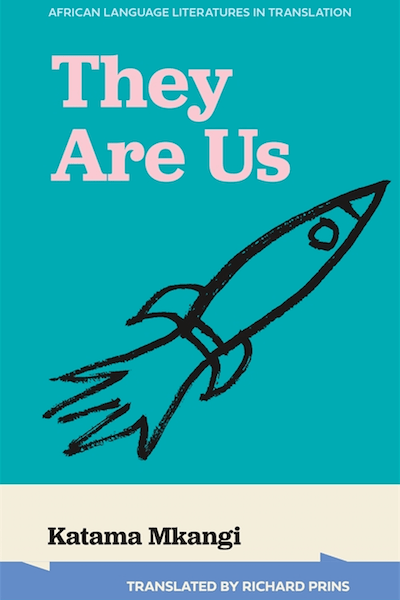
Nate Holly: So, from a philosophical perspective, I’m not a translator, I’m an editor. So, I defer to Alex, Chris, and the translator. I don’t know if this was the plan initially, but it’s become what we do on all these books: we have each translator write a translator’s note that explains the choices they made on this specific question. But also, in one book, They Are Us, a whole section was moved, because it didn’t make sense where it was, and that gets explained. And in one I was looking at today, Swallowers of Bones is the translated title, there’s a lot of poetry in there, and some of the poetry was left out, because the translator couldn’t find a way to translate it and keep the narrative flow and make it make sense. You know what I mean? There are always those challenges that we ask translators to speak to, because that’s part of this too. And when these books hopefully end up in classrooms, that’s a discussion that we envision people having, about what the translation does, and why it does it.
As I alluded to before with The Mad, the translation of The Mad underwent traditional peer review. It went out to two readers, who reviewed the translation. One of the unique things about this one is that Mabasa, the author, was directly involved with the translation. So, it was an authorized translation. But one of the peer reviewers didn’t know that and criticized some of the choices that the translator made but that Mabasa also made and authorized. And, of course, there’s no way the reviewer could have known that (and they also made some suggestions that the translator did make), but we were able to use that internally to make this what we at UGA Press call a “mandated series,” where there’s still outside review, but it’s not the sort of outside review that our faculty editorial board has to approve. A translation like this isn’t scholarship, or it’s not the same kind of scholarship. Translation of fiction is an art. An art that we still have reviewed. But incorporating the suggestions from those reviews is up to the translator and editors in a way that it might not be for traditional scholarship. In most cases so far, those outside reviews have really shaped the “translator’s note” that accompanies each of the published books. So, what we do now is Alex, Chris, and I come up with one outside reader, who is either a writer themselves, or they speak and read both the original language in question and English, and we send them the translation, we send them a PDF of the original, and ask them to review it using specific questions that we want them to answer. And it’s not just to clear hurdles but to make the best translation possible, and make sure the translator has considered these things, and maybe they want to polish some stuff, or revisit, or make sure they address something in their translator’s note. So, just because it’s not formally peer-reviewed doesn’t mean it doesn’t have the usual university press outside reader review. And that’s especially necessary for these sorts of translations. We do other translations at University of Georgia Press, translations of scholarship, and that’s a different process. But this is translated fiction, and that’s a different animal, I think.
Alexander Fyfe: We see the translation as a creative practice, in the same way that the original is. We want the translators to do their thing. And for that to be something that readers will engage with too. That’s why the translator’s note is important, because with that, even someone who doesn’t know the original language can get a sense of the choices that have been made and what might be at stake in them. And that will let them undertake an informed reading of the translation. We put the translators’ names on the covers, and we want their take on the text, and the linguistic choices that they’ve made, to be part of the conversation about these works.
Erik Beranek: That’s fantastic. That was another question I was going to ask, about translators’ prefaces. It seems so important, I would argue it seems so important with basically any text, but, you know, with a language that has less of a history of being translated and thought through into English-language texts, it seems even more important to familiarize readers with some of the challenges that come up during the process. That’s why at Hopscotch, one of our favorite categories of texts that we publish are the unpublished translator’s notes—giving translators the opportunity to write about their work and the difficult and exciting decisions they’ve made, when they weren’t given the space to do so in the published book. So that’s music to my ears—and great also, obviously, that you put the translators’ names on the covers! The translation community thanks you for these great decisions.
I would love to hear more about the plans you have for, as you put it before, creating a sort of feedback effect, and about how you hope that having these translations come out in English here will be able to turn into a positive effect back in the literary communities and the literary markets in Africa. It’s a really important question and great that you’re asking it from the beginning. In The Language of Languages, the book by Ngũgĩ wa Thiong’o, he makes a distinction between enabling and disabling translations when thinking about translating work and thought from marginalized languages into dominant, colonial languages like English or French. A disabling translation might be when a writer or thinker from a marginalized language chooses to translate him or herself into a dominant language. Because doing so might create much greater exposure for that person’s thought, and they might be a great spokesperson for their language and home and history, but in translating themselves into the dominant language, they deprive the marginalized language of an opportunity to grow and live and expand. That aspect was particularly important to Ngũgĩ’s own work. But a translation can also be disabling when it treats the dominant English-language market as the most or only important one, and is just expanding what is on offer for us, getting “world literature” into our market for our pleasure and for our profit. And, of course, on an individual level, an author stands to benefit from being translated into a dominant language, and that can give them the opportunity to be a good spokesperson, but there’s also the question of using a translation into a dominant language to facilitate new connections for the marginalized languages and to create new opportunities of those languages to live and grow. Ngũgĩ mentions using existing English translations of Western classics to translate them into Gĩkũyũ, or using English to enable a conversation between Korean and Gĩkũyũ.
Anyway, I was thinking about that when planning for this discussion, so it was great to hear, right away, before I even got to ask the question, that you’re already thinking of the series in terms of enabling translations, if not in exactly those terms, and that you’re thinking about how these translations might facilitate connections between different languages on the African continent. Would you say a bit more about how you’re thinking about this feedback effect, as you called it, whether more philosophically, so to speak, or just in terms of some concrete plans you have for the series and what you’re hoping to achieve?
Alexander Fyfe: Thanks. That is something we take very seriously, and it is an issue we will be revisiting as we move into the next phase of the series. I think one of the things that I wasn’t necessarily prepared for when we began this was how different each project would be. Every single one involves a different configuration of a translator (or sometimes more than one translator), somebody who holds the rights, maybe an original language edition that was published some time ago, and sometimes another press that’s already involved and wants to publish it in a particular territory. And so, I think it’s in our careful involvement in those processes, without ever wanting to push anybody out, that these things come to the fore. So, we’ve worked… and Nate will have more to say on the nature of our collaborations here, but we’ve worked with amaBooks, which is based in Wales and Zimbabwe. That was on The Mad. And with Mkuki na Nyota, the famous Swahili-language publisher based in Tanzania. And so, it is about listening to who is involved with the text and, as far as possible, pursuing collaborations to make sure that either the translation we’re producing is widely available to as many people as possible, or that we’re also facilitating the creation of other editions. And I think one of the exciting things about The Mad is that there are now two editions of this translation, with different paratexts, circulating in the world. Which I think is relatively unusual, at least recently, for an African language text. And so, embracing the plurality of different editions, and making sure that, as far as possible, our involvement means that Africa-based presses can also be involved in the publication is really important.
Erik Beranek: In addition to the English language versions that you’ll be publishing and trying to get those available globally to the greatest extent possible, are the originals—I mean, I’m sure this is going to be case-by-case too—but are the original language editions available in print, typically? And is there any way in which you’re hoping to, if not now, maybe eventually, try to facilitate the greater availability, maybe over here, or globally more generally, of those texts?
I suppose I’m asking just because of how constantly shocked and dismayed I am by how difficult it is for me to even get a book that was published abroad in a big international literary market, and in a dominant, well-represented language like French or Spanish. It’s hard to get even those. I recently tried to buy a book that was published in France within the past five years, and I was being asked to pay $70 for shipping. And the fact that that’s still the case with the international shipping of books, even between Europe and North America, where there’s such constant shipping and commerce, it’s going to be even harder when you’re thinking about South America or Africa. So, from that perspective, I’m wondering if that, if making African-language original texts available more widely is something that’s on your radar, or even something that’s been talked about or possible?
Alexander Fyfe: That is something we thought about and take very seriously. We don’t pursue translations that aren’t already published in the original language. Sometimes someone will approach us and say, I’ve written this novel in this language, and I want to get it translated and published. But we do not want to create a situation where texts written in African languages are only circulating in English. That said, some of the originals of older works that we’ve translated may not currently be in print. And I hope that as we continue, we can begin to facilitate opportunities for those texts also to circulate in their originals, or at the very least to support that. It will be interesting to see if the interest that’s generated by the translations maybe does encourage the original text to be reprinted or republished. That’s something we’ll be keeping an eye on and adapting our practices accordingly.
Erik Beranek: Nate, I’d like to come back to the university press-specific questions for a second. I’m interested in your thoughts on the place of university presses in publishing literature. As you’ve already alluded to, it falls outside, a little bit outside of the standard operating procedures of a university press, and yet I feel like more and more university presses are turning towards literature in one way or another. Peer review is one thing that sets university presses apart, as you’ve said, but also being mission-driven publishers, right? I’d be interested to hear how, for you, or from the discussions you had leading up to this series for University of Georgia Press, how publishing literature and especially literature in translation fits into your mission.
Nate Holly: Yeah, so, as you might imagine, I have a number of thoughts about this sort of thing. But I think being a mission-driven press—and our mission, by its very nature, is pretty wide-ranging—is about… well, being the University of Georgia Press, it’s about publishing the stories of the people of Georgia and the South, right? But it’s also about partnering with our university community. Partnering with our global research university community, including people like Alex, to do things like this. Things that often are not possible at non-mission-driven presses. There’s a reason why this series didn’t exist until 2020-whatever, right? Well, there are many reasons, but, you know, one of them is that the big trade houses aren’t going to do this, because they’re not going to sell 30,000 copies of The Mad. We know that, we don’t sell 30,000 copies of very much, and that’s okay. That’s more than okay, that’s part of our mission, too. Maybe not specifically University of Georgia Press’s mission, but part of University Press missions more generally, and my mission, is that because we are not driven by profit—which is not to say we don’t need to make a profit, but, you know, it’s not the number one factor—we can do these sorts of things that are important for reasons beyond… capitalism. And that’s the case, whether it’s translation or somebody’s memoir or a creative nonfiction project that maybe twenty years ago would have been firmly on one of the Big Five’s mid-lists, and now they’re not even looking at them because they don’t have enough TikTok followers, or whatever. So, it’s an opportunity for us.
The challenge, especially with this series, is that translations are not cheap. In any way. We have to acquire the rights, which cost money, and cost future money if royalties are part of it. Especially if we’re acquiring the rights from a publishing house. We also want to be fair to the African publishing houses. We don’t just want to take from them, right? I think we’ve only had one case where we negotiated the rights with an author retaining the rights, and that ended up not working out for a bunch of reasons. So, the rights cost money, then paying the translator. Their names are on the cover, but they need more than just a name on the cover. And so we have to be creative. In our case, or in the case of African Language Literatures in Translation, that means making royalties a part of it. That way, translators make more money the more books get sold. So, they’re incentivized to continue to be involved after the book is published.
But also, like any other nonprofit, the way this works, and this is another way we’re able to leverage our mission, is that these books are all supported by donors. People are donating money to the press explicitly for African Language Literatures in Translation. So, I mean, that’s just part of the reality, and part of how we can play with our fine margins enough to publish this [holding up The Mad] and make it available to the English-reading public. And because we’re a university press, we have distributors on every continent, including Africa. Our preference would be for an African publisher, to work with them to get the rights so that they can distribute the book within their networks that we don’t know as well. But they’re going to have to be published first, in most cases, for them to see that as even an option. And I don’t know how that happens without being at a mission-driven press, whether that’s a university press or another sort of independent press.
Erik Beranek: I think it’s really important to talk about the challenges publishers face and about the literary market in general when talking about literary translation. And yeah, the consolidation around the Big Five has created a lot of challenges, for sure. But it’s great to see initiatives like this filling important gaps in the profit-driven model. I mean, there are a ton of really wonderful, wide-ranging, small independent presses out there doing incredible work. I think independent publishing in the United States right now is just a beautiful thing, despite how embattled those presses are. And it’s wonderful to also see more university presses joining into that. Because you’re absolutely right that without indie presses and university presses and other mission-driven, nonprofit publishers, this literature doesn’t get published.
Well, before we sign off, is there anything I missed, anything I didn’t ask about that you’d like to cover? Nate, did you get to tell the story you wanted to tell about The Mad?
Nate Holly: Yeah, it was a little frustrating, but we ended up being able to use the peer review of The Mad to tweak the peer review process a bit and make it more effective for fiction translations. All the sort of stuff that Alex and Chris don’t need to worry about, but that I get paid to worry about. So, yeah, that ended up being good in the end, but it was supremely frustrating. Like, what are we supposed to do with this? And then the other thing, too, is especially with two… at least two of the projects under contract, the authors are dead… they’re not around anymore, right? So, they’re not able to do what Mabasa did with The Mad and quote-unquote authorize the translation. So, what do we do in those cases? You know what I mean? But that’s not particular to this series. That’s the nature of translation.
Erik Beranek: Well, The Mad looks beautiful, and it’s so exciting that it’s coming out in just a matter of days. So, congratulations to you all! I can’t wait to see where the series goes.
One last question before we sign off. Would you mind giving our readers some resources to start exploring and thinking about African literature in the contemporary moment? Maybe some books or articles that have influenced your work? Or links to some of the partners you’ve mentioned here, or to other presses or organizations working in this space? I already mentioned Ngũgĩ wa Thiong’o’s The Language of Languages, published a couple of years ago by Seagull, and I’ll also take the opportunity to shout out Souleymane Bachir Diagne’s From Language to Language, published in English translation this past fall by Other Press. But please feel free to add to the list, books or otherwise—I’m sure our readers would find it really useful.
Alexander Fyfe:
A list of 14 African books published in English translation in 2024:
https://brittlepaper.com/2024/12/14-translated-african-books-that-deserve-all-the-flowers-in-2024/
Wendy Laura Belcher’s list of books published in English-language translations from African languages:
https://wendybelcher.com/african-literature/translated-african-language-novels/
Ruth Bush’s Translation Imperatives: African Literature and the Labour of Translators
Nate Holly:
Here are a few of the African Publishers we’ve worked with so far:
Mkuki Na Nyota: https://mkukinanyota.com/
Jonathan Ball Publishers: https://www.nb.co.za/af/humanrousseau
East African Educational Publishers: http://www.eastafricanpublishers.com/
amaBooks: https://amabooksbyo.blogspot.com/
And here are a couple of examples of other recent UGA Press translations:
Teresa Benguela and Felipa Crioula Were Pregnant: Motherhood and Slavery in Nineteenth-Century Rio de Janeiro by Lorena Féres da Silva Telles (tr. Anthony Doyle)
Feline Cultures: Cats Create Their History by Éric Baratay (tr. Drew S. Burk)
Other university press series related to the translation of African literature:
Global Black Writers in Translation (University of Vanderbilt Press)
The African Poetry Book Series (University of Nebraska Press)
Modern African Writing (Ohio University Press)
CARAF Books (University of Virginia Press)
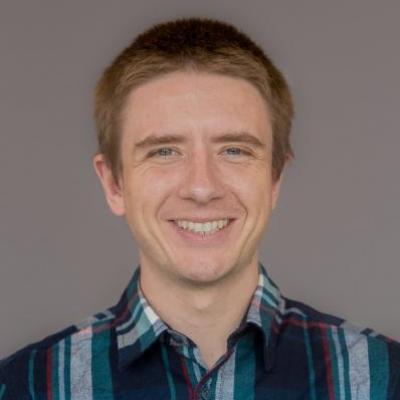
Alexander Fyfe is an assistant professor of Comparative Literature and African Studies at the University of Georgia. His work focuses on the relations between politics and literary form in modern African literatures, and his book, Writing the Noncolonial Self: Modern African Literatures and the Politics of Subjectivity, is forthcoming with the University of Virginia Press in 2026. He co-edits the African Language Literatures in Translation series for University of Georgia Press with Christopher Ouma.
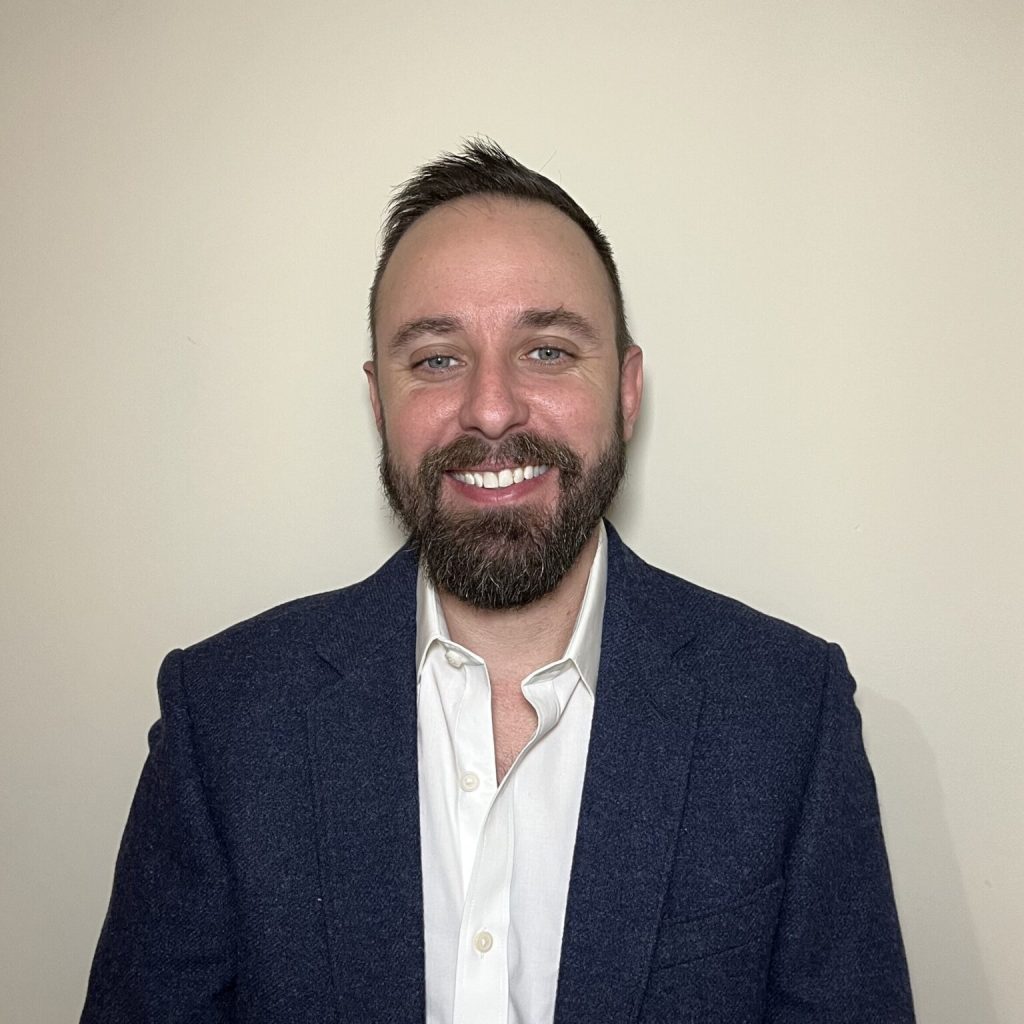
Nathaniel Holly is editor-in-chief of University of Georgia Press, where he acquires books in history, food studies, sport studies, Appalachian studies, and more. He received his PhD from William & Mary, having written a dissertation on the urban lives of Cherokees in early America. His favorite translation is Roadside Picnic by Arkady and Boris Strugatsky (tr. Olena Bormashenko).
Originally published on Hopscotch Translation
Tuesday, March 24, 2026

 hopscotchtranslation.com