
MANIFESTO / O-SE*IN!M
by Matt Reeck
The Translator as Little Hero or Heroine, at Home, or at the Serai, an Argument Searching for the Reasons for the Translator’s Precarity, or an Essay about Dissent
The Image of the Translator: A Problem
Who’s the translator? A simple question without an answer. Or with many.
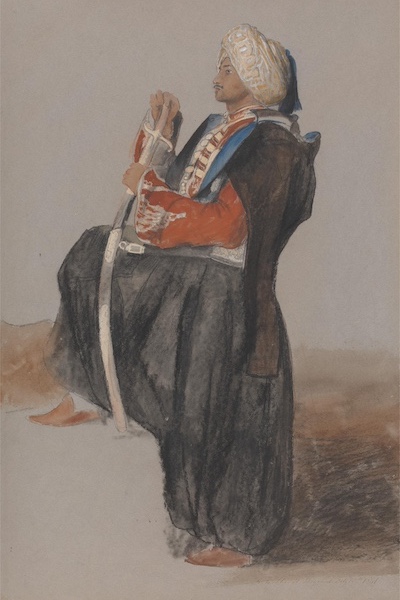
I imagine the dragoman. A boy, an underling, a king’s vassal, a pawn. This figure is transported to Mughal India: at court, low in the prestige pool, a sort of domestic worker, or a local reporter, with a lot of contacts, but bad pay. They eat with the kitchen help after everyone’s done. Others know languages, but the performance of language is left for the dragoman. A jester, a mime. In Mughal India, mutarjim. From tarjumah. Translation.
Or the Victorian British scholar and his wife. Equally, the two, translators. The Life Abroad. Oxbridge, and sherry, and backslapping. The worst class-based society in the world. Then, the wife running off with the author! True Love?
Or the translator as kept woman.
Or the translator as GI. After the war, sticking around. Going home: not that appealing.
Or in the colonies. For the ethnographer, truchement. The “boy” with an ear for languages, picks things up just like that, doesn’t mind a little emolument, dressing up à la française, the blandishments of bosses. But you have to watch out: their “translations” aren’t exactly what was said.
(The distrust of translators is colonial.)
Or the spy. Says he works for the Red Cross, but does he? Here, then there, bags under eyes. A nasty cigarette habit. Eats on the street, knows sex workers of every stripe, unclear moral compass.
Or the émigré. The foreign-born who works at the immigration center, documenting the testimony of refugees. The moral quandary: Which narrative is real? Is it possible to say that there are narratives that are more (or less) real? Is it coaching, or does tragedy arrive en masse?
Or the second-generation American in a Comp Lit Department, that Chaos Factory! The classic immigrant story, the riser. She translates for her mentor, who could translate, he professes, if he had time, which he doesn’t, because he has “better” things to do. So, without a choice, she does it for free. More unpaid labor.
Yet when I read this list to a friend, she says, “When you say translator, all I see in my mind are professors.”
It’s a problem.
Housework & Me, the Househusband
I say this without any irony: I should have been a househusband.
I enjoy all the tasks of homemaking, housekeeping. I enjoy folding my girls’ clothes and rearranging their drawers, I enjoy making beds, tucking the sheet between the mattress and the box spring. I enjoy cooking dinner. I cook a near gourmet dinner every night. Once in a while, I lose my temper and complain, “I make a gourmet meal every night, and yet every night you ask, ‘Dad, what’s for dinner?’”
(Last night was 고추장 chicken and roasted potatoes, carrots, and turnips. Delicious!)
I also enjoy cleaning and scrubbing. I enjoy dusting and vacuuming. I enjoy writing letters and thank you cards and hosting dinner parties. I also enjoy walking my girls to their schools. I’m “Good morning 아버지”, good morning dad, because I say hi to everyone, while holding my little one’s hand!
Also, I enjoy translating.
In capitalism, translating is part of housework.1 In capitalism, much human industry is not considered work. A lot rests on the difference between private and public. Public industry is more often deemed work than private acts. And translation is not a public performance art.
More Image Problems
Part of the problem of translation and money is that people assume that translators are professors who don’t need the money to translate.
Part of the problem is that there is no image for the lay-person intellectual in America. The intellectual proletariat.
Part of the problem is that there’s no sexy image that puts the translator on par with artists. (Say the translator is an artist …) There’s no mytheme. Say writer, and what do you get? A drunk Hemingway standing up at his typewriter? Toni Morrison penning masterpieces on her editing breaks in a big Manhattan publishing house? Say musician, and you get something. Artist. Something. These are mythemes.
Say translator …
Part of the problem is location. Locating the translator as artist. The writer is in the coffeeshop, the artist is in the atelier, the musician is on stage or in the practice room or at the jam house. The ballerina, the playwright … everyone is somewhere.
So where is the translator?
Where is translation housed? It’s interesting that translation doesn’t have one.
Part of the problem of translation and money and recognition as intellectual labor is that translation is private, doesn’t occupy a public space, and that, ontologically, the work itself takes place outside of, between, and together. It has two places where its traces are evident, but where it is never at the same time. In this sense, it is unlocatable.
Part of the problem of translation and money is that it takes place in transitivity. It’s somewhere else. We bring it back to the world when we write down words. We’re already in the aether. We come from the aether, and we return to the aether. We lack an image, and we lack substance.
(Translators are immaterial.)
Our lot is forfeit
It has been spoken for
The happy coincidence is
They will forget to come euthanize us …
Excursus

When I play charades with my daughters, this is what I do for house. It’s a symbolic language. My seven-year-old gets it immediately. She and I play the most, and we do the same clues, except, recently, for some reason, whenever she does any of the animals in the deck, she plops onto the floor like a mermaid stuck in sand and bleats odd sounds, unknown to us, and likely as well to the animals from whose mouths the sounds are supposed to emanate. Her reasoning? She doesn’t want to make it too easy …
(Ah, a brilliant child, wouldn’t you say!)
Here’s what I know about houses.
In Korean, house is 집.
Chib gives a good vibe. But chib also means restaurant. 김밥 집, 설렁탕 집, 부대찌개 집. A kimbap restaurant, an ox bone soup restaurant, an “army stew” restaurant. (I’m thinking of my favorites in Seoul right now!) To do housework, like I like to do, it’s 집안 일 [chib an il]. Work inside the home. A housewife is 집 (있는) 사람 [chib inun saram]. The person at home.
In Hindi-Urdu, house is घर.
A straightforward word. Ghar. But there are related words that give big vibes. घराना, घरेलू. The first is from Indian classical music, where musicians are trained in traditions, related to houses, or families. A house style. (Originally, musicians were hereditary artists in India.) The second means “homely.” In good and bad ways. Then, from Sanskrit, you have गृह. गृहस्थ is being a householder, having a house. गृहिणी means housewife. These get you into gender roles and such from ancient texts. But there’s also मकान. Makan is normal. Just house, no real vibes. Then there’s कुंज. Kunj is nice. A cozy feeling. Homey. Once upon a time, Vasant Kunj was a distant suburb, tucked away from the bustle of Delhi. A nice place to live. Now it’s just another neighborhood in the megapolis, near the airport. In Hindi, to do housework is घर का काम. A housewife is घरवाली. The female at home.
In French, house is maison.
When I teach French to kids, they think I say mansion. I say, no. They say, then what’s mansion. And I say, château. Then some say, oh, and one says, that means castle. And I say, what is a castle but an old-time mansion? Maison, in French, has close to no vibes. For what it’s worth, there’s another word: baraque. That’s nice! That’s a place you would want to go back to, to hang out in. Like here, my apartment. (We try to stay at home as much as possible.) To do housework, like I like to do, it’s “faire le ménage.” Like ménage à trois. Ménage/maison. There’s a link. CNTRL gives the origins as 1160-1674: maisnage … demeure, séjour … Housewife is “la femme au foyer,” which sounds so old timey, and not to be mistaken with “les parents de foyer,” who are foster parents.
The Translator’s Image as Mytheme
Part of the problem is that translation has no location, no home. It’s a homeless art.
Part of the problem is that translation is thought to be a domestic art, like lampshade making, or rice pudding making. It’s a homely art.
For me, if I had to construct a myth, a mytheme, for the translator, it would be someone on the go.
For me, the translator is at the serai. The roadhouse inn in Old Persia. Near the serai, the translator is walking on the dusty road, a cloak hiding their face. Practically a vagabond, a gypsy. Here, there are heroin merchants about, camel herders, knives glinting in waistbands. There is danger. The cloak hides the translator’s face, which shifts in meaning, emphasis, and gender, should one look at it. A cipher.
For me, the translator is walking the road in unknown lands. Anonymous. Blending in. There’s an art in blending in that many can’t learn!
For me, a translator is on the move. That’s how I feel. Mobile. A mobile languagebeauty unit. You never know where I might show up. And, likely, I will go unnoticed. (I take undue pleasure in going unnoticed … in all language environs!) My tongue blends in. My face. My mannerisms. I can puff out my cheeks like the French do when considering something. I can wag my head like an Indian indicating assent. I can say “Inshallah!” like a Pakistani to mean “no” while seeming polite.
The translator shows up late at the serai, anonymous, ushered by the under-page (a boy of twelve or thirteen) to the backroom that is always there, and always theirs, when they show up, unannounced, which is otherwise a storeroom, not something to be rented out to a regular traveler!
The translator is in-and-out, back-and-forth, blending in, anonymous. Maybe there is a way that translators are like tale traders: we transmit a tale, a good tiding from beyond, a tale we have gone to some effort to find (we were in the mountains for weeks), having stepped out of the ordinary, beyond the curbs of the normal.
Today, my friends, I sit in the Forum. The orators are performing their set speeches. I get anxious, start bobbing my leg, glancing at the clock. I wonder: When shall I be released on my own recognizance? When shall I be left to my own devices? When shall I find my place again at the end of the couch translating Khalid Jawed in the early morning lamplight? The final orator is sucking up all the air. Five thousand words when five hundreds would have done. Soon, I shall expire …
The translator: Half at the serai, half at the house. No image. A double image.
A person split in twos, threes, fours …
Translation as Labor
The translator is not paid a living wage for their labor. It’s viewed either as (a) a vanity obsession, born of endless passion, a pet project of a professor who doesn’t need the money (thanks, TIAF-Cref), or (b) domestic (private) labor, gendered female.
The translator is not paid a living wage because the book industry has fixed wages that don’t incorporate the amount of time necessary to do a job well (no union to fight back) because if you’re going to translate well, it’s not an instantaneous thing. Usually, the more time the better.
As a translator, we’re supposed to be okay with our lot because we earn compliments in public (instead of money), with others lauding our humanity, being “good people,” whatever that may mean, though, realistically, it doesn’t mean anything other than the backhanded compliment it is, words instead of money (in a money economy). Last week, I was twice told my contribution to society as a translator was “invaluable.” Meaning? Literally, worth more than money itself!
Ah, the ironies of the world!
Ah, the double standards!
The work of literary translation is idealized. It’s imagined not in historical materialist terms. It’s thought to be in the pursuit of art, an aesthetic endeavor, full of passion and personal commitment. A deeply moral, ethical task, self-chosen, because the translator is moral and ethical. (No one cares if the writer or artist or musician is a “good” person!)
The work of literary translation is idealized. The publishers need to pretend the translation is pure and perfect to fend off those who are wary of doubles, copies, and ruses. It’s imagined that we work in perfect conditions. All the time in the world to make each pertinent, though taxing, decision with a free mind unbothered by any earthly concern, for instance, the pennies we earn for each perfect object, while our betters fleece the nation with impunity!
Reality intervenes.
Reality looks like this: We’re upset about our socio-economic conditions and frazzled so frazzled in fact and often in a bad mood when we sit down to our old laptop whose fan whirrs violently at times spelling imminent doom (the computer merchants tell us, the system is overheating, better back things up now) in a noisy apartment over the weekend while our kids and the cousin from upstairs swarm around us and the cat throws up at our feet not used to his new food while we juggle three other non-living-wage-paid jobs and scrounge for more work and do a couple low-paying side-hustles while we try to smile through it all (we’re good people, remember) concentrating just enough not to misremember where we are which sentence we just read then finding the right words for it just the right words in English …
Yes, the translation, for the book vendor, must be cheap to produce, but it also must be perfect, to be salable, to the consumer, trained to think only of originality as the mark of the master artist, and so skeptical about anything bearing the scent of the copyist.
The question I’m raising is labor. How we’re defining labor. Labor in the house and labor in the street. Where does labor take place, and how do you know, and what would take to change your images in the collective unconscious?
For me, I’m watching. Watching what will happen. Next year. The government has put in work requirements for SNAP. The language of the restriction is that work is “an activity that earns you at least $217.50 a week or 20+ hours a week, the latter being provable by pay stubs, employer letter stating hours and pay, or any document showing your work hours and earnings.” Shall I really write to the publishers to ask them to validate how many hours I have put in to perfection? Would a translator be able to prove employment on these terms?
Dissent
Part of the job of the translator is arguing for translation’s value. Not its cultural value, but its capital value. This isn’t necessarily what translators sign up for, because translators are nerds for words, few are entrepreneurs, and even fewer are activists. But it’s the challenge that must be met.
Or.
Or we could give up.
Faced with capitalism, late capitalism, we could get over ourselves. There are other starving artists, right? Everyone’s got problems to deal with these days. Economy means the enrichment of the strivers and toptop toppers, right? GDP is not median income. Maybe we’re already there. No need to boo at commencement addresses when the CEOs puff out their chests about their AI products. We’re already ruined. We’re already living like dissidents in our own country.
The best we can get is perhaps a pity nod, the “sorry for your troubles” that the sympathetic soul says (a professor), as she slides out the door to her Audi. Or a “good luck, fine lad.” But that’s it.
Being ruined,
Being as good as dead, as the Buddhists say, we could move on. From the ego. From the pocketbook. We could stop trying to win respect. We could stop thinking we can change the world. We could drop out. Drop out of the insanity and ambition and ire and heartbreak and cruelty and hardship and uncertainty.
We could unplug.
Unplugged, we could go on translating anyway. Because when no one cares about you, you can do what you want. (I’m writing this, after all.)
We could translate as rebellion.
We could think of ourselves as little heroes and heroines. It’s not that we’ll be the richer for it, but the ethos will change.
We could turn our backs on the bosses, stop being so damn nice, and noble, and ethical, and heartfelt, and “good,” and accommodating, and we could buy rusty letterpresses and restore them, and in basements print, in dribs and drabs, translated leaflets, chapbooks, and broadsides that late at night or as the tourists pass by on the street, we could sing out loud, loudly, lo-fi, underground, invisible, and insurgent!
We could dissent.
If that is what it means to be a translator, I might like to continue.
- In capitalism, our betters tell us not to begin sentences with the phrase “in capitalism,” which they mean to say is in poor taste, though, you’ll notice, that whenever an athlete or coach is asked a question about their sport, they always begin with the phrase “in this league,” which has the same level of obviousness, and yet no one objects. In capitalism, we’re especially discouraged from beginning sentences with the phrase “in late capitalism,” which seems dubious from the expert point-of-view, because it’s so hard to locate oneself in time, wouldn’t you say? One person’s late is another person’s on-time. Bearing that in mind, I’ve taken the more conservative route above! ↩︎
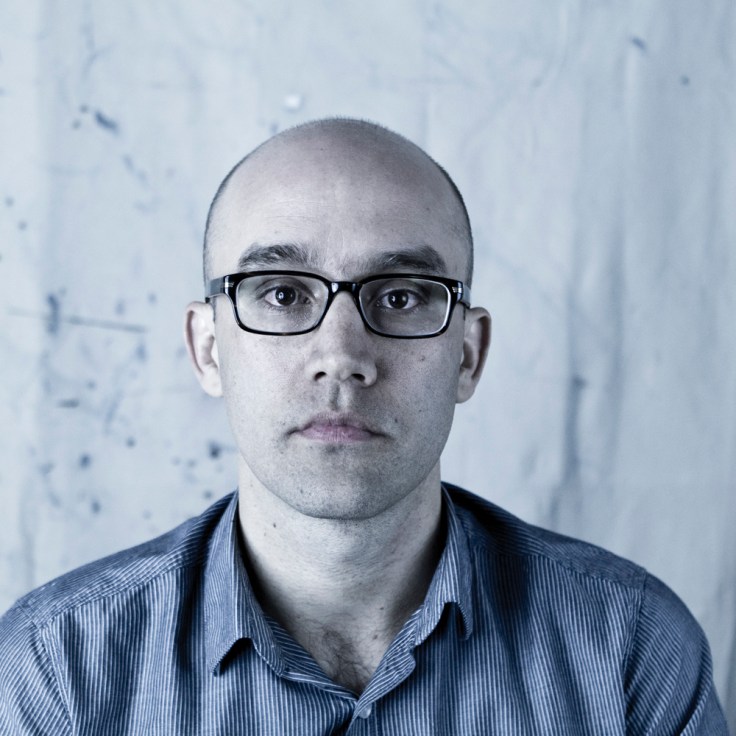
Matt Reeck is a translator, poet, and scholar. A Guggenheim Fellow in translation, he translates from French, Hindi, Urdu and Korean. Forthcoming books in 2027 include A Portrait of the West by Qazi Abdulghaffar (Penguin India), The Dispossessed by Shumona Sinha (Liverpool UP), One-World by Edouard Glissant (University of Nebraska Press/Georgia Review of Books), It’s Still Night by Leeladhar Jagoori (World Poetry Books), and The Little Blue Notebook by Adnan Kafeel Darwesh (Ugly Duckling). More about his work can be found at https://www.mattreeck.com/
Originally published on Hopscotch Translation
Tuesday, June 23, 2026
An earlier version of this piece was presented at Washington University in Saint Louis in the spring of 2026.


