
Why I Am an Activist Translator
by Teresa Villa-Ignacio
What is poetic translation “activating” that no other genre, medium, or action can?

I am often asked how I became a translator of poetry. The question usually comes from people who are not directly involved with the world of literary production, or students who may be aspiring translators themselves. It’s a fair question: most poetry translators whom I know are also poets, who came to translation through their commitments to poetry. (Interestingly, poet-translators never ask me why I translate, because to them it is obvious.) My answer is that I began translating poetry because I was doing scholarly work on a particular set of texts that motivated me to translate them out of sense of activism. When I was researching texts for my dissertation corpus, I read through Abdellatif Laâbi’s poetry, essays, and novels, and came upon the journal Souffles he and other Moroccan writers and artists published in the 1960s. I was astounded when I realized that very few texts from this seminal decolonial review had been translated into English, and felt strongly that they should be available to scholars and students in the Anglophone world. Around that time, I met Olivia Harrison, who was also working on Laâbi and Souffles and who was also of the conviction that the journal should be translated, and our anthology project was born. Since then, as I have continued to translate poetry, and other literary genres, I have prioritized projects that I have come to characterize as activist.
Many translators are engaged in what they call activist translation, which can refer to many kinds of translation and interpreting activities in many contexts, as made clear, for example, in Rebecca Gould and Kayvan Tahmasebian’s 2020 The Routledge Handbook of Translation and Activism. In this moment, I want to think about my work as an activist literary translator in terms of “epistemic justice.” This is a phrase Karen Emmerich used to organize a seminar at the American Comparative Literature Association in Montreal in March 2024 (10-11). The speakers presented a great diversity of projects, from the question of balancing a representation of canonical and non-canonical Arab world intellectual debates to translating minoritized languages such as Nepalbhasa and perspectives that are impossible to recover, such as that of an enslaved person undergoing the Middle Passage. The commonality that seemed to link them all to the idea of epistemic justice, and to one another, was that they were all engaged in reparative work to correct the homogenization of world knowledge by the disproportionately greater number of literary translations out of English rather than into it. Many narratives and perspectives remain inaccessible to us, not because they are less deserving, but because legacies of empire and neo-colonialism, and current strategies of Global North dominance, have pushed them out of the spotlight. Activist translation as epistemic justice begins with what I have called “critical world-revealing” of these inequities and continues with what I have called the “critical world-making” of alternative possibilities (37-38).
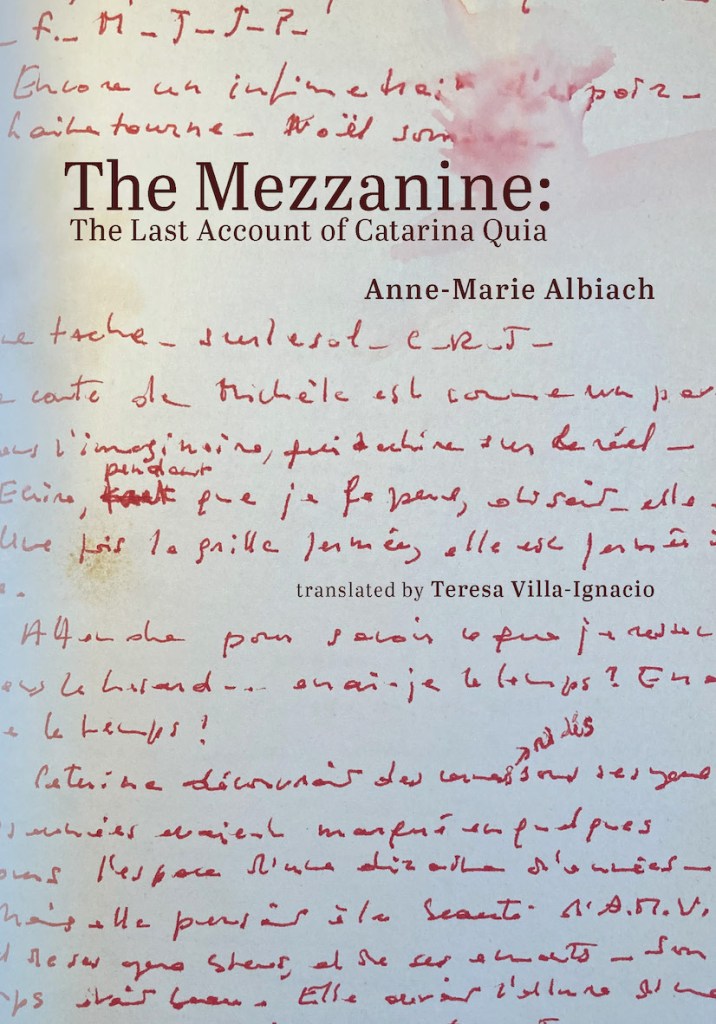
It’s easy to recognize the content of my major translation projects to date as activist, which would perhaps obviously prompt activist translation. I’ll discuss three of them. The first, the Souffles-Anfas anthology, is a selection of texts and artwork from the Moroccan journal of literature, culture, and politics published from 1966-1971. As a movement that began ten years after Morocco’s independence, it addressed the need for cultural self-determination that the founder Laâbi emphasized must go hand-in-hand with political self-determination. He called this work “cultural decolonization,” (62) and the journal quickly reached out beyond Morocco to its North African neighbors, and eventually to many Global South peoples similarly engaged in liberation struggles. After the 1967 Arab-Israeli war, the journal became more outspoken against the neocolonial interests that were keeping Moroccan power and resources out of the hands of the Moroccan people. The second project, Clamor, is an autobiographical prose poem, published in 2018, by the Algerian-born, Paris-based writer Hocine Tandjaoui. This was a co-translation with Olivia Harrison, published by Litmus Press in 2021. It’s a unique and powerful account of a child’s perspective of the Algerian War of Independence, and I’m devastated that every time we are invited to read this text it speaks to a new instance of the victimization of children in wartime. The third project is The Mezzanine: The Last Account of Catarina Quia. This is a posthumous novel written by the French poet Anne-Marie Albiach during the 1980s. She died in 2012 and the novel was published in 2019; the translation will come out from Litmus this fall (2026). It describes a course of treatment in a psychiatric hospital in Paris, where it was partially written. I admire this novel for its audacious vulnerability in destigmatizing disabilities that result from mental illness.

Given their primary concerns – a nation resisting neocolonialism, a child surviving war, a woman surviving mental illness – these texts explicitly communicate the experiences of minoritized, marginalized, oppressed individuals and communities. However, neither poetry nor poetic translation are the most impactful ways to conduct activism for these communities. To be more impactful, one might choose to work with direct aid organizations, or in government, or even as a journalist. So why translate poetry? Does this form of “activist translation” really deserve its name?
Another way to ask this question is: What is poetic translation “activating” that no other genre, medium, or action can? I believe the answer can be found in reflections on what I call “translational priorities,” which are similar to what Lawrence Venuti calls “interpretants”: formal or thematic “factors” that guide the translator’s interpretive choices, whether or not we are conscious of them (36-37, 61). Much of Venuti’s work on interpretants has demonstrated the influence of interpretants where they were not acknowledged before, often, as almost unconscious translator motivations and target culture contexts. As a translation studies scholar, I find this endlessly fascinating, but as a literary translator I need to focus on explicit and intentional priorities I can consciously articulate in the moment of translation, which are usually based on close readings of the text and considerations of the contexts of reception in the source and target cultures.
So, when translating and editing translations of the diverse texts in the Souffles-Anfas anthology, I prioritized the energy that resulted from the authors seizing the unique opportunity they had to shape the future of their culture. For example, when I translated Mohammed Khaïr-Eddine’s poem “Sangs,” or “Bloods,” which was the first poem I’d ever translated in earnest, aiming for a rhythm to match his rhythm felt like running a fever for days on end:
on the scaffold my blood you tremble my blood you consecrate a real evildoer my blood you gun down my blood you have the eye of a terrorist my blood you fled from the protuberance on the bejeweled hand of a master my blood in which clang chains and real palace bells my blood. (35)
When working on the translation of Tandjaoui’s Clamor, the text’s ability to create empathy guided the tone and rhythm of the translation, for example, in passages in the second person that tell you how you feel as a child mourning the death of your mother during a war that is literally taking place on your doorstep:
You howl, you scream, you call out, no one hears you, no one is waiting for you, you cross empty streets, busy streets, you’re hopeful, you imagine that your hands are outstretched to touch feel caress, but your arms are slack, useless, inert, you lose all hope. No one is waiting for you, no one has come looking for you, everyone is in the depths of loss, you are trying to make sense of what is happening to you but you can’t and your despair only grows greater, you are a lost child, you wish you could understand, the light hurts your eyes, the world is indecipherable. (31-32)
Most recently, when I was translating The Mezzanine, even though it’s not a poem, Albiach’s role as a major French poet was a dominant interpretant in my translation. In the novel, she achieves a harmony between the gorgeous rhythm and sound of her prose and the tortured, repetitive expressions of fear and anger of a person whose illness has subjugated her to the indignities of institutional treatment. It was an exciting challenge to create a similar effect in English:
pushed to fearful extremes by producing phantasms that overwhelmed her and tore her apart – Catarina Quia lived in the excessive labor of respiratory syntax. Her territory marked by heat and cold. This liquid encircling of the throat: she was afraid of herself. Where would the limits then make themselves known? An insidious awakening suggested she must flee the extremes she didn’t dare acknowledge. Words turned out to be the parapets of a mute wall – circuit of images. Would a vivid scar be a stopping point?” (174)
The phenomenon of “poetic activation” nuances our understanding of translation as epistemic justice. A poem doesn’t stop at disseminating knowledge about what happened or what’s happening in the world; it offers us a singular way of approaching, witnessing, and remembering lived experience. I would go a step further, guided by Philippe Lacoue-Labarthe’s well-known essay, “Two Poems by Paul Celan,” in Poetry as Experience, in which he argues that poetry’s power lies in its ability to commemorate experience that resists articulation in language (15-21). Activist poetic translation, like activist poetry, activates our ability to know history through the unique embodied, enfleshed, sensual experience of a poem’s sonority, visuality, and the relationship between the two. This is why we hold poetry readings in solidarity with peoples living through conflict. It doesn’t “do anything” for them in an obvious sense, but it’s important for humanity that we absorb this historical knowledge as embodied experience, that it makes its way into our collective memory, that it guide us beyond epistemic injustice and all other forms of injustice.
I recognize that my privilege affords me the time to practice activist literary translation, and the luxury to think about whether or not the practice deserves the name. I’m not a full-time literary translator, I’m a full-time professor of language, literature, cultural studies, and translation, spending most of my time on scholarly research and teaching. I can pick and choose my translation projects according to my own agenda, not according to how much I need to pay the bills on any given month.
Having the time and resources to think about one’s intentions and act on them as a translator is also a privilege. It’s also not a guarantee that the translation will be better; indeed, many translators would balk at the idea that explicit intentions are necessary or even useful for producing meaningful translations. In my practice, however, I believe it will be important to continue choosing projects that are meaningfully related to my values as a scholar and a person.
To close, I want to emphasize that activist poetic translation is a practice of freedom, both freedom of speech, and the freedom to be constantly making new choices, at the level of the word, the page, and the book, and in relationships among translators, authors, editors, and readers.
Works Cited
Albiach, Anne-Marie. The Mezzanine: The Last Account of Catarina Quia. Manuscript translated by Teresa Villa-Ignacio, Litmus Press, 2026.
Emmerich, Karen et al. “Vice-Presidential Seminar: Translation and Epistemic Justice in a Comparative Literature Context.” American Comparative Literature Association, Montreal, March 14-17, 2024. https://www.acla.org/sites/default/files/files/ACLA2024Final.pdf.
Gould, Rebecca and Kayvan Tahmasebian. The Routledge Handbook of Translation and Activism. Routledge, 2020.
Harrison, Olivia and Teresa Villa-Ignacio, eds. Souffles-Anfas: A Critical Anthology from the Moroccan Journal of Culture and Politics. Stanford University Press, 2016.
Khaïr-Eddine, Mohammed. “Bloods.” Translated by Teresa Villa-Ignacio, Souffles-Anfas, 34-36.
Laâbi, Abdellatif. “Realities and Dilemmas of National Culture.” Translated by Olivia Harrison and Teresa Villa-Ignacio, Souffles-Anfas, 61-73.
Lacoue-Labarthe, Philippe. Poetry as Experience. Translated by Andrea Tarnowski, Stanford University Press, 1999.
Tandjaoui, Hocine. Clamor. Translated by Olivia Harrison and Teresa Villa-Ignacio. Litmus Press, 2021.
Venuti, Lawrence. Translation Changes Everything: Theory and Practice, Routledge, 2013.
Villa-Ignacio, Teresa. “Translational Poetics: Our Creative Horizon.” Introduction to a Special Cluster on Translational Poetics. Edited by Karen Elizabeth Bishop and Teresa Villa-Ignacio. Romanic Review, May 2024, 115.1, 35-43.
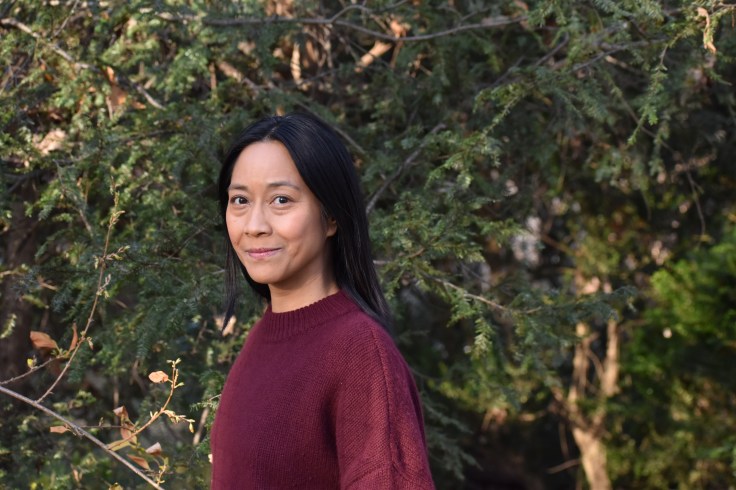
Teresa Villa-Ignacio is a literary translator and scholar whose works include Souffles-Anfas: A Critical Anthology from the Moroccan Journal of Culture and Politics (Stanford University Press, 2016), Hocine Tandjaoui’s Clamor (Litmus, 2021), and Anne-Marie Albiach’s The Mezzanine: The Last Account of Catarina Quia (Litmus, 2026). The recipient of an NEA Literary Translation Fellows Award and an Albertine Translation Fund Grant, she is Associate Professor of French Translation at Kent State University.
Originally published on Hopscotch Translation
Tuesday, July 14, 2026


