
A Hopscotch Homage to David Bellos
Curated by Chris Clarke, with contributions by Shelley Frisch, Paul Fournel, Cecelia Ramsey, Esther Allen, And Chris Clarke
What follows are some reflections on our dear departed fellow translator, David Bellos.
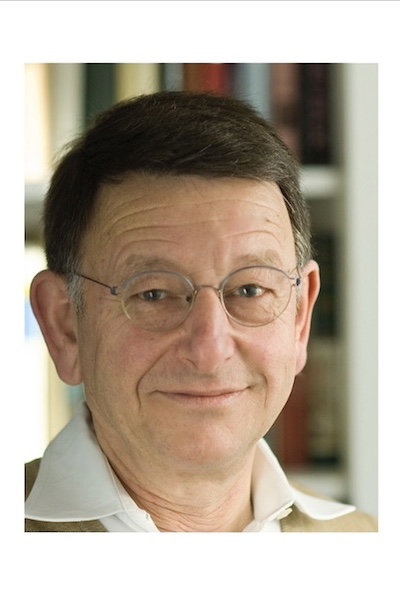
In today’s long-planned and slowly-assembled forum, we add yet another goodbye to one of the luminaries of 20th-21st-century literary translation, David Bellos. Just over a year ago, on October 26th, 2025, Bellos unexpectedly shuffled on from this mortal coil, to the great dismay of many.
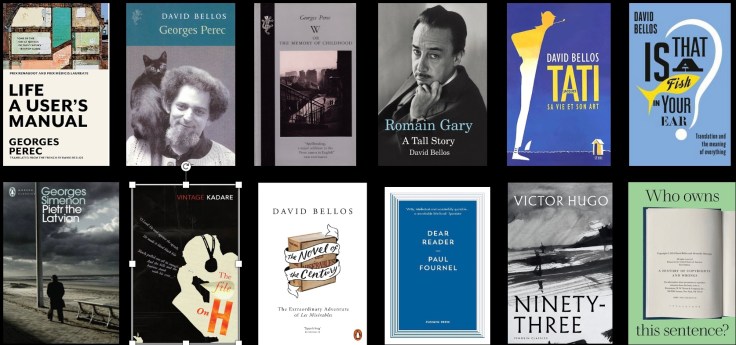
David Bellos was born in Rochford, England, in 1945. He studied French and Russian at Oxford, and then taught French literature and translation studies at Oxford, Edinburgh, Southampton, and Manchester. He joined the faculty of Princeton University in 1997, where he remained the rest of his career. Bellos was a celebrated writer and biographer, and, specific to our focus here at Hopscotch, one of the great literary translators of the last half-century. He was awarded the French-American Foundation Translation Prize for his translation of Georges Perec’s Life: A User’s Manual, the Prix Goncourt for his biography of Perec, the Man Booker International Prize for his translations of Ismail Kadare, and was an Officer of the Ordre des Arts et des Lettres in France.
A prominent writer, translator, and scholar, Bellos’s passing did not go unnoticed. The New York Times ran an obituary in their books section. An event was held to pay tribute to Bellos at Princeton University, his longtime institution and home, on March 24th, 2026. For that memorial, many of David’s colleagues and contemporaries made their way to Princeton to share reminiscences, tributes, and the quirky and often chuckle-filled sort of memories that Bellos inspired. A video record of the service and tribute held at Princeton University is available here. This event, of course, touched on Bellos’s important role as a translator, but also on his impact as a teacher, pedagogue, biographer, and writer.
A few days shy of one year after his passing, and with a particular focus on his impact in our field of literary translation, a panel was held in homage to Bellos at this year’s American Literary Translator’s Association’s annual conference, in Portland, Oregon. While there is no recording of that conversation, or the after-hours gathering and tribute that took place after the off-site readings that night, some of those speakers have shared rewritten versions of their talks for our readers here at Hopscotch, along with others who were not in attendance.
Additionally, if you would like to read a marvelous essay by David Bellos published right here at Hopscotch Translation back in February of 2022, here is an article in which he outlines the premise that would eventually see the light of day as his fascinating book Who Owns This Sentence? A History of Copyrights and Wrongs (2024), which explores the crucial place that literary translation held in the development of the first conceptions of copyright law.
What follows are some reflections on our dear departed fellow translator, David Bellos.
Chris Clarke, November 2026
Shelley Frisch on David Bellos, for Hopscotch
I first met David Bellos back in January 2008, just after he launched a translation lunch series as an extension of the translation certificate program Princeton had recently introduced, both at David’s initiative. He invited me to join the group in a message of classic understatement: “Thank you for your interest in our modest venture.”—And what a venture this town-and-gown gathering turned out to be. Over the years that followed, which now approach two decades, we have pondered issues ranging from ASL to AI, from the specifics of interpreting defendants and prosecutors at war crimes trials to overarching issues of what we translators hope to accomplish in our work, and how we go about getting there. We look at what—and who—gets published, and where this happens, and how the editing process turns completed translations into books for the reading public at large. In short, we delve into the creative act of translation itself and examine how we shape translation, how translation shapes us, and the role of translation on a global scale. As David himself described its pivotal role in a podcast, translation is “a wonderful halfway house between self-expression and scholarship, or creativity and scholarship.”
From the very first talk I attended, it was clear to me that David had crafted a unique forum to explore these kinds of discussions and interactions, and even though David’s invitation to join the group had been worded in modest terms, the series he created was anything but modest. Over the ensuing years, I spoke in this series three times, and have attended nearly every session of the series’ offerings. I also served on two panels moderated by David, one on campus and another at the Princeton Public Library. Three of David’s books—Is That a Fish in Your Ear? Translation and the Meaning of Everything, The Novel of the Century: The Extraordinary Adventure of Les Misérables, and Who Owns This Sentence? A History of Copyrights and Wrongs—now grace our bookshelves, dogeared from multiple readings. David sought my opinion as he chose between two potential publishers—Norton and Basic—for the copyright book, and I was pleased that he was swayed by my decided preference for Norton.
At these sessions I met David’s wife, Pascale Voilley, whom Markus and I are now lucky to call a dear friend. And many in the translation lunch group have become “my people”—people who find discussions of translation issues large and small (right down to quirks of punctuation in different languages) subjects of abiding interest.
Countless students, colleagues, readers, and friends continue to extol David’s remarkable contributions to the field of translation and the study of language and literature: They emphasize the wealth of information he conveyed, always wittily and engagingly, in his twenty-eight book-length translations and nine scholarly books, his decades of teaching and lecturing, his service to readers everywhere, the many well-deserved honors he received, and his generosity in lending his extraordinary expertise to emerging and professional translators and literary scholars and those contemplating an entrance into these fields. The turnout at the memorial service on March 24th at Princeton University, the many deeply moving speeches, and the video collage provided abundant testimony to David’s influence on both town and gown, here on campus and throughout the global community.
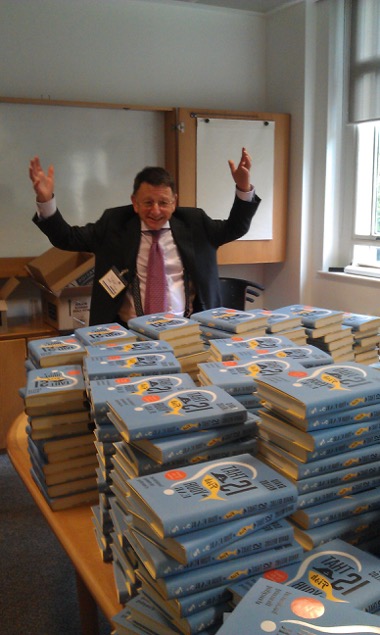
I’ll limit my remaining remarks to a list of things I was treated to and benefited from in my own communications with David:
* his contrarian view on including the word the in “translated from the”—David saw no need for this extraneous word, and he was right, as was his skepticism about the plethora of retranslations when there were so many books in need of a first translation
* his development of a course about “Great Books From Little Languages”—an innovation that merits widespread currency
* his way of forging a community of translators across many disciplines, based on the recognition that translation is something we all engage in
* his joy in delivering delightfully speedy, information-packed, and humorous email responses
* his discussions of translation in jargon-free, down-to-earth language—none of those tired binaries of foreignization vs. domestication or whatever
* his pleasure in attending to voice in translated texts, an emphasis I share in my own work
And I’d be remiss to leave out two culinary delights David introduced me to:
* those little packets of crunchy seaweed snacks
* that ice cream dessert known as affogato: vanilla ice cream “drowned” in espresso (to be had at Mediterra, on Hulfish Street)
Over the decades that I have worked in the field of translation, I have had to bid farewell to three friends who were greats in this field: Anthea Bell, John E. Woods, and now David Bellos. Each of them gave us transcendent renditions of works of foreign literature. David also provided inspiring new insights into the hows and whys of translation in accessible and inviting prose, in his magnum opus on the art of translation, Is That a Fish In Your Ear? From the book’s opening sentence (“Translation is everywhere”) to its bold conclusion (“Translation is another name for the human condition”), we readers are treated to a spellbinding display of translation’s singular significance in our world.
It has been my honor and privilege to call David a friend, to share meals (and seaweed snacks and affogato) with him, at our home on Jefferson Road, at his and Pascale’s home on Maple Street, (can’t omit that Oxford comma!) and at local restaurants, and to muse about all shadings of la condition humaine. I will miss David’s witty, whimsical, winsome, wise, waggish, and winning ways.
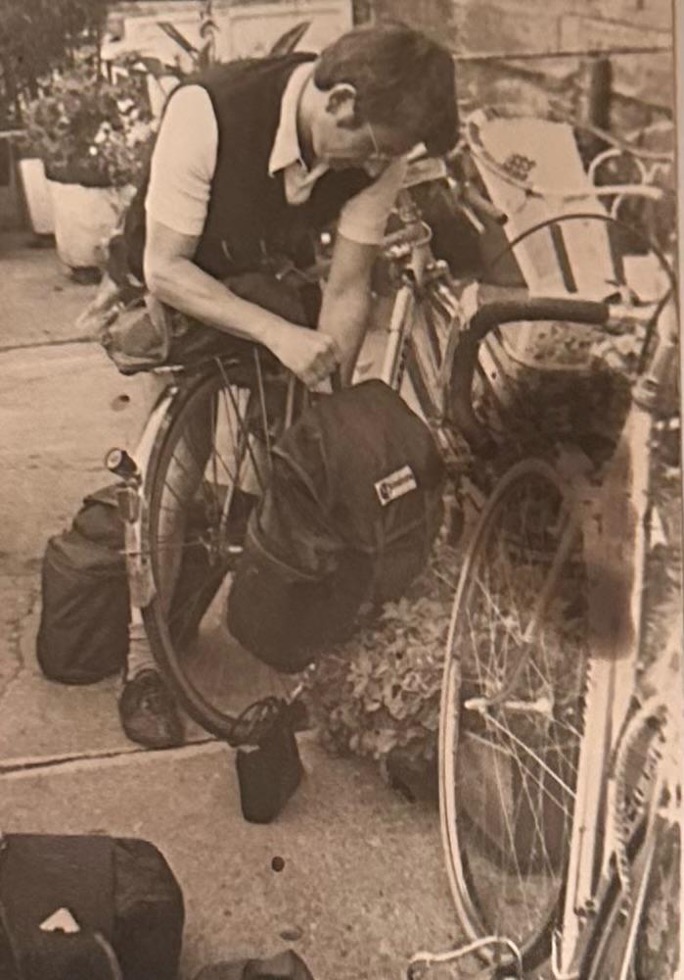
A Note on David Bellos by Paul Fournel
David Bellos was a scholar and a cyclist. It was on his beautiful English touring bike that he made the trek each morning to the East Pyne building at Princeton University, where he taught French, comparative literature, and translation.
Although born an Englishman, he knew French like few do in France, the same way he knew a thousand other languages and topics. He was a professor in all the dignity that the title confers, and as such, he was adored. He was also a biographer, and, in lengthy, well-crafted volumes, he told the life stories of Georges Perec, Jacques Tati, Romain Gary, and Victor Hugo, with even-keeled passion and a keen eye for detail. What’s more, he was a translator. He translated Simenon, Fred Vargas, Hélène Berr, Romain Gary, Frédéric Dard, and Delphine Horvilleur; but the two feathers in his translator’s cap were without question Ismail Kadaré (who he translated from Vrioni’s French into English), and Georges Perec, whose colossal La Vie mode d’emploi he translated as Life: A User’s Manual.
We were friends, we saw each other, we spoke to each other, whether during his trips to Paris or my stays in Princeton. We had plenty to say to each other. I liked his direct manner, his candor, the admirable way he engaged with his various crafts. We enjoyed having a meal together and sharing a conversation. It was nice.
Until the day the English-language publisher who had purchased the rights to my novel La Liseuse had the idea of entrusting David Bellos with its translation. I was proud that the great translator of my Oulipian friend Georges Perec had agreed to translate me, and yet this text presented certain distinctive characteristics and several constraints, and so its translation was not entirely self-evident. At this point, our exchanges grew more frequent: emails, phone calls, questions and answers. “How about this?” became our reoccurring motif.
David’s translation of my text, Dear Reader, was the sort of translation I had been dreaming about, because he put some of himself into it. On many occasions, he was forced to add some of his own English into my novel so as to attain the precise number of characters that the constraint required. He found the experience somewhat traumatic, and so to help relieve the migraine it had brought on, he gave a talk entitled, “Fournel’s Headache,” in which he explained the torments of the translation.
It was a lovely gift.
Our friendship was not altered by this, and it continued on until the night before his death, when we had dinner together, with our wives, in the apartment he was renting in Paris, up among the rooftops, just before he was to leave for Doussard, in the Haute-Savoie, where he was to be abandoned by his overly large heart.
Translated from the French by Chris Clarke

Tribute to DB by Cecelia Ramsey
Like many students of translation, I first learned about David Bellos’s work through Is That a Fish in Your Ear, his book on “translation and the meaning of everything” (that lofty and intriguing subtitle). The book had this unforgettable quality, from its catchy title to its mockery of making Kafka sound German in English. It made me think—as good books do—but it also made me laugh.
Nearly fifteen years later, I was David’s teaching assistant at Princeton for the translation course (TRA200 Thinking Translation) that he originally taught while developing the material for the book. I saved his typed lecture notes, which is why I can now tell you exactly how the award-winning translator, biographer, writer, introduced himself on day one:
I’m DB, and I’ve done a fair bit of translating over the years. I also once wrote a book about the subject, and I’m afraid you’re going to have to read quite a bit of it. But please note: you’ll have to come to all the lectures to find out if I’ve changed my mind.
A fair bit of translating, he said. Indeed. The understatement, humility, and self-deprecation, are all signature Bellos moves. He had a way of prodding a smile by saying the unexpected, turning banal communications (class intros, emails, syllabi) into his own art form. But his final note was sincere; he did not sit back and recycle old material, he was re-thinking his own questions each week, like: What is translation? What is meaning? How does one translate form and when?
For those who have read DB, it will come as no surprise that he argued everything is translatable, that we must believe it to be so or communication would collapse. For those who knew DB as a colleague, it will likewise come as no surprise that he brought in guest lecturers on everything from machine translation to the legal writings of the EU, creating dialogues across disciplines to show translation is everywhere.
To the students’ amazement (or amusement), he demonstrated his ability to compose 60-character verbless sentences on the spot, thanks to his self-imposed training while translating chapter 51 of Georges Perec’s La vie mode d’emploi (if you don’t know the passage, don’t miss the hidden acrostic).
And to the shock of this graduate student, he sat with me over lunch after every class, wanting to debrief the lecture and the students’ reactions, while entertaining my endless questions.
During these conversations, which wandered from translation to, well, the meaning of everything, David seemed to reflect on time, his time left. “I am a man of the 20th century,” he once said, before adding, somewhat forlorn yet proud, “quite possibly of the 19th.” One minute he seemed poised to plan his retirement, and in the very next breath he would brainstorm two new classes that absolutely should be taught, downing his espresso and walking back up to his office to get to work.
Teaching TRA200 in the spring of 2025 would end up being DB’s final semester. In his lecture on the last day of class, he shared a list of topics he would add if he were writing Is That a Fish in Your Ear? again today: translation in war zones, translation in health care, the “galloping proletarianization” of commercial translation and platforms like ProZ. He then took the time to correct a few of his words that he wished had been written clearer (the humility I shared in his earlier intro was not for show).
Lastly, he ended class — now a fitting send-off and invitation for us all — by telling students that even as the world changes, his conclusion has not:
I’ll stick with my conclusion, and I hope you will too: that translation provides incontrovertible evidence of the human capacity to think and to communicate thought. And that we should all do more of it. OK?

Talking with David Bellos by Esther Allen
I wish I could tell David Bellos about the Living Tamil Litfest, held in New York in April of this year, five months after his sudden death. Several dozen writers from Tamil Nadu and other places around the world gathered alongside another hundred-odd Tamil lit enthusiasts, translation activists, and publishing industry people. During the opening event, A. Muttulingam described the Litfest’s goal of creating a global reception for Tamil literature, partly inspired, he said, by Ismail Kadare, who, despite writing in a language spoken by only six million people, managed, via translation, to reach a worldwide audience. David’s name was not mentioned, which probably wouldn’t have bothered him: as a translator and an Oulipian, he knew that the disallowed word, the letter omitted from the text, can have tremendous force. He would have been pleased as punch to learn that his translation of Kadare has been taken up as a cultural dissemination model by the literati of a classical South Asian language spoken by upwards of ninety million people worldwide.
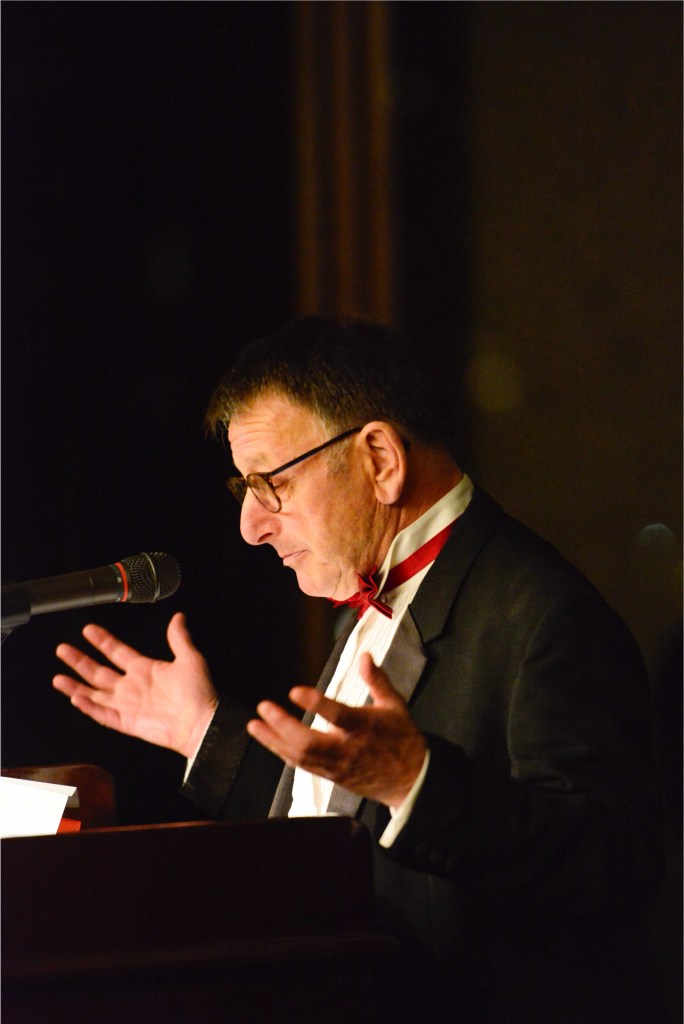
In 2019, Princeton University presented David with the Behrman Award for Distinguished Achievement in the Humanities at a gala event he and his wife Pascale Voilley kindly invited me and my partner Nathaniel Wice to attend. In his speech, David spoke of his childhood in Southend-on-Sea, an Essex town situated at the point where the Thames estuary merges into the English Channel. His father worked in the garment industry, and David reflected, with some melancholy, that the educational opportunities the postwar British welfare state offered him aren’t available there now to children from families like his. He was wearing a tuxedo inherited from his father and during the reception he opened the jacket to show off the tailor’s label: “Sid Muslin,” a friend of his dad’s. We all agreed this would be the perfect pseudonym for a hardboiled novel about the London underworld. Later I searched the internet for “Sid Muslin,” hoping David might actually have published something under it. Nothing has turned up. Yet.

David’s initial interest was in literary reputation, the mysterious process whereby some writers become canonical. His first book (1976) was an academic study of the evolution of Balzac’s literary status following his death. Over the following decade, he made the highly unusual and academically perilous switch from studying canon formation to becoming, himself, a canon-former. His first book-length literary translation was Georges Perec’s Life a User’s Manual (1987). Only two or three brief works by Perec had previously appeared in English, in tiny, obscure editions. While some early reviews were dismissive, David’s translation was recognized by other critics as a revelation. Paul Auster wrote, “It will be impossible for us to think of contemporary French writing in the same way again.” David would go on to translate seven more books by Perec and write a biography that won the Prix Goncourt. Perec is now part of the small canon of 20th-century French writers that literary folk in the US can name.
David did much the same thing for Kadare, against far longer odds. When he first began working on Kadare, he was so eager to learn all he could about Albania that he asked the historian Elidor Mehilli, then a grad student at Princeton, to do a semester-long independent study with him. He travelled to Albania and France to work on the translations with Kadare in person and the two developed a close friendship. When Kadare was awarded the Man Booker International Prize, he insisted David share in it. The Booker website credits that with its subsequent, ongoing practice of sharing the International Booker between author and translator.
Though he belonged to a generation of academics that for the most part discouraged students from doing translation and viewed it as an endeavor inconsistent with the practice of scholarship, David devoted much of his career to it, making twenty-eight translations of works by thirteen writers. His last, of Victor Hugo’s little-known last novel, Ninety-Three, appeared eight months after his death. He also wrote a couple of additional scholarly works on French literature; two more biographies—of Jacques Tati and Romain Gary—and, finally, three nonfiction works for the general reader.
At his memorial service in Princeton this spring, a number of neighbors, who’d been in a book group with David, were in attendance. One had saved his life a few years back when David was out working in his front yard and had a heart attack. These community friends enjoyed David’s pleasure in the books he liked, while appreciating the fact that he never stood on ceremony or pulled professorial rank, though he never pulled any punches, either, when something wasn’t to his taste. There didn’t seem to be any academic colleagues in that book group.
These friends were, I imagine, something like the readers he had in mind for his final three works. Is That a Fish In Your Ear? (2011) explains translation across many fields and permutations and has been an invaluable textbook for the undergraduate students in my Spanish-English literary translation courses at Baruch College, most of them from working-class families like David’s. The Novel of the Century (2017) was built on the previous book’s view of translation as a mode of cultural globalization, and on David’s skills as a biographer, which he applied to Hugo’s Les Misérables and its history of translation and adaptation. Hugo was a key player in the evolution of intellectual property law, which led to what is, for now, his last book, Who Owns this Sentence?, co-written with intellectual property lawyer Alexandre Montague. Published in 2024, it has proven an invaluable guide to much that has happened since it appeared. I’ve recommended it to publishers, nonprofit executive directors, and others navigating the current LLM morass, in which intellectual property law is central.
I first met David when I was teaching a class at Princeton in fall 2008. My first email from him said, “Truly delighted to meet you yesterday and apologies for my behaving like a hassled rabbit.” I responded that he bore no resemblance to the White Rabbit, but that I was finding the campus a somewhat bewildering Wonderland. To my amazement, I soon found myself eating crab cakes at the Faculty Club with the translator of La vie mode d’emploi. His colleague Karen Emmerich said David once memorably described the endless lunches and dinners Princeton faculty are expected to host and attend as “masticatory obligation.” He didn’t seem to view our lunch that way. He was interested in the PEN Translation Fund I’d helped Michael Henry Heim launch some years earlier, and whose selection committee I’d been chairing. David had founded the Princeton Program in Translation and Intercultural Communication the year before. Like Heim, he was keenly aware of the many obstacles and barriers the anglophone world has built up against literary translation; like Heim, he was constantly trying to build infrastructure that would help translation flourish, against the odds.
I invited David to join the selection committee of the PEN Translation Fund (now the PEN/Heim Translation Fund) in 2010. The year he and I served on the committee together makes me understand how he formed such close friendships in his community book group. Our conversations and debates about the more than 100 projects we considered for funding were livelier and more entertaining that year than ever before. When we convened in person over lunch at an Italian restaurant in Chelsea for final decisions, David pulled out an envelope that was a work of art in itself, an intricate, Oulipian puzzle-message he’d received in the mail from France the previous day, and that passed from hand to hand in awe, just one of the many palpable treasures the mailman regularly delivered to him. That was the year we really became friends.
David took delight in many things, he was an inveterate sharer of delightful things, and it was a huge pleasure to draw his attention to things that were likely to delight him. I don’t think I will ever lose the impulse to call or email him about incidents, books, articles, or gossip that I imagine would bring a smile to his face or elicit some irascible declaration. The conversation with David has now become one-sided but it hasn’t ended.
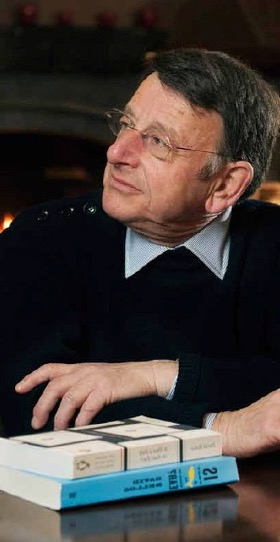
Three important lessons I learned from David Bellos by Chris Clarke
I first met David Bellos in October 2014, at a conference entitled Translating Constrained Literature at Johns Hopkins in Baltimore. One of only a few graduate students invited to speak at this conference, I will admit that my mind was blown to find myself at dinner that evening, seated next to the legendary translator David Bellos and Paul Fournel of the Oulipo. Bellos was a giant in the field, especially for those of us who work with French and/or constrained literature, and I feel very fortunate to have gotten to know him over the years. His passing was a shock to everyone. For me, it was a particularly crushing fall, as two of my translation idols fell in a single month: Ian Monk, poet, translator, and member of the Oulipo on September 19th, and then Bellos, writer, translator, and great translator of Oulipians, some five weeks later. The translation community, and in particular that working from French to English, suffered a devastating blow last fall.
Here are three important lessons that I learned from David Bellos.
One.
Here in 2026, many of you will have heard of or read work by members of the French literary group Oulipo (Ouvroir de littérature potentielle), founded in France in 1960 by François Le Lionnais and Raymond Queneau. In many ways, the fact that we’re aware of this group in the US was the work of David Bellos. Sure, many readers had read members of the group in English prior to Bellos’s translations of Georges Perec in the late 1980s, as Queneau had been translated by the late ‘40s and Calvino by the late ‘50s, but for most, myself included, this was with no awareness of the group’s practices or even its existence.
It would be most importantly Bellos’s landmark translation of Perec’s La vie mode d’emploi (Life: A User’s Manual), first published in English in 1987, that would introduce readers of English to Perec, to the Oulipo, and to their particular brand of constrained writing. Bellos would follow this with two more in rapid succession: W ou le souvenir d’enfance (W, or the Memory of Childhood) in 1988, and a retranslation of Les Choses: Une histoire des années 60 (Things: A Story of the 60s) in 1990. Bellos would translate four further books by Perec in 2009, 2011, and 2014.
Not only was Bellos instrumental in introducing us to the group and their idea of constraint, but from a translation perspective, Bellos was also the translator who dared: he was the one who went first. In translating Life: A User’s Manual, he was in many ways undertaking the impossible. It was a very difficult translation, and the results are nothing short of remarkable. Which, to those of us who are so foolish as to try to translate Oulipian literature and constrained writing in general these days, gave proof to the possibility of the undertaking. Something that seems unlikely or impossible, once it has been accomplished, opens the door for others to jump in knowing that it can be done. I thank him for this, because as always, someone has to go first.
Two.
In an article on his translation of Life: A User’s Manual, Bellos suggested that the act of translation teaches one to write. He says that the need to learn to write like someone else teaches us about how writing works, and provides us with mechanical tools and a better understanding of the material of our language.
His example he provides comes from the 51st chapter, which sits precisely at the midway point, and contains the “great compendium,” functioning as the structural and thematic backbone of the entire book. This chapter features 179 lines engineered under strict Oulipian constraints, each measuring precisely 60 characters and containing a micro-inventory of the apartment building’s stories, objects, and characters. Further to this precise character count, by tracing the diagonals through these perfectly squared blocks of text, hidden acrostics emerge that reflect the soul of the book.
His first step was training himself to write confortably in 60 character lines, which he did for two hours a day for several weeks. As he improved, he learned tricks and methods particular to English which may have differed from how Perec managed it, but that must always be the case–after all, we need to make the language that we are writing in meet our objectives. Having completed his blocks of 60-character lines, Bellos then tweaked and rearranged the lines of his blocks to recreate the acrostics that ran through them.
As he later wrote, “Acquiring a useless mastery is very important to a writer: it’s not the utility, it’s the mastery that counts. I developed mental muscles I didn’t even know existed. I had been obliged by Georges Perec to improve my control of language by paying strict if simple attention to its elementary written units.”
This literary calisthenics-based training resonated deeply with me, and I often think of this when trying to learn how to recreate the writing of a particular prose stylist and coming to terms with how I might best use my tool of English to create an approximation of what that writer has managed with his or her French. Translating constrained writing often involves a lot of preparation, and Bellos suggested that he learned how to do this indirectly from Perec, who compiled what he called “Cahiers de charge” to organize his constraints and forms. I have come to work in this way too, typically doing much of the grunt work for contrained translations in Excel sheets with numerous tabs.
Three.
On “smoothing.” One of the many difficulties of translating Georges Perec is grappling with his use of unmarked citation. In many of his works, especially Life: A User’s Manual, but also Things (Les Choses) and Un homme qui dort (A Man Asleep), Perec had a tendency to incorporate fragments of writings by others directly into his own writing. By all reports, at various intervals during his writing hours, he would get up from his desk, walk over to his bookshelf, take down a book, open it up to a page, and read until he found a sentence or a fragment that could be slid into his own page. No quotation marks, no footnotes. And not just landmark lines and famous passages, but really anything that caught his eye and served his purpose. The danger to the translator in undertaking a translation of the results, as Bellos once explained, is that if the “citation” goes unnoticed and is translated uniformly with the rest of Perec’s prose, there is a smoothing effect wherein the shift in tone resulting from incorporating the prose of another writer into the larger text is lost, and the text and its texture are all the poorer for it. I had read Bellos on this idea, and spoke to him on this a few times, and then encountered a similar issue myself.
In 2016, while living in Princeton, NJ, I was working on a translation of Marcel Schwob’s 1896 collection of fictobiographies, Vies Imaginaires, which would be published in 2018 by Wakefield Press as Imaginary Lives. In this collection of 22 historical portraits, Schwob related the stories of lesser-known characters from history, from the Ancient Greek arsonist Herostratus to Burke and Hare, 19th-century English body snatchers. It became apparent to me that while Schwob was fabulating the information that lay in the gaps of the historical record, the real “details” that had been passed down through the years all had limited and definitive sources.
And so, following in Bellos’s footsteps, I more or less lived in the Princeton University Library that year, tracking down as many of the original source materials as possible, working with a catalog of Schwob’s library, and drawing from French, English, Italian and even Latin sources, as Schwob had done before me. If the source text was French, I could see which words, phrases, or sentences Schwob had preserved. If it was in English or Italian, I could analyse how Schwob had translated it, and act accordingly. It was a painstaking process, and one which left me with two manuscripts: the one that went into the publisher, and one where hundreds of words scattered through the ms. were highlighted in yellow as non-negotiable inclusions that I had incorporated into the text. I suspect that if it hadn’t been for the precedent set by Bellos, I perhaps would have translated everything uniformly, smoothing out these tonal speedbumps, as I like to think of them. And I surely would have had the book done three or four months sooner. In a fine coincidence, I won the French American Foundation Translation Prize for that translation in 2019, the same prize that Bellos won for his translation of Life: A User’s Manual in 1988.
A tip of the hat to David Bellos, who for me, will always be the one who dared to go first.
All photos appear with the kind permission of Pascale Voilley-Bellos unless otherwise indicated.
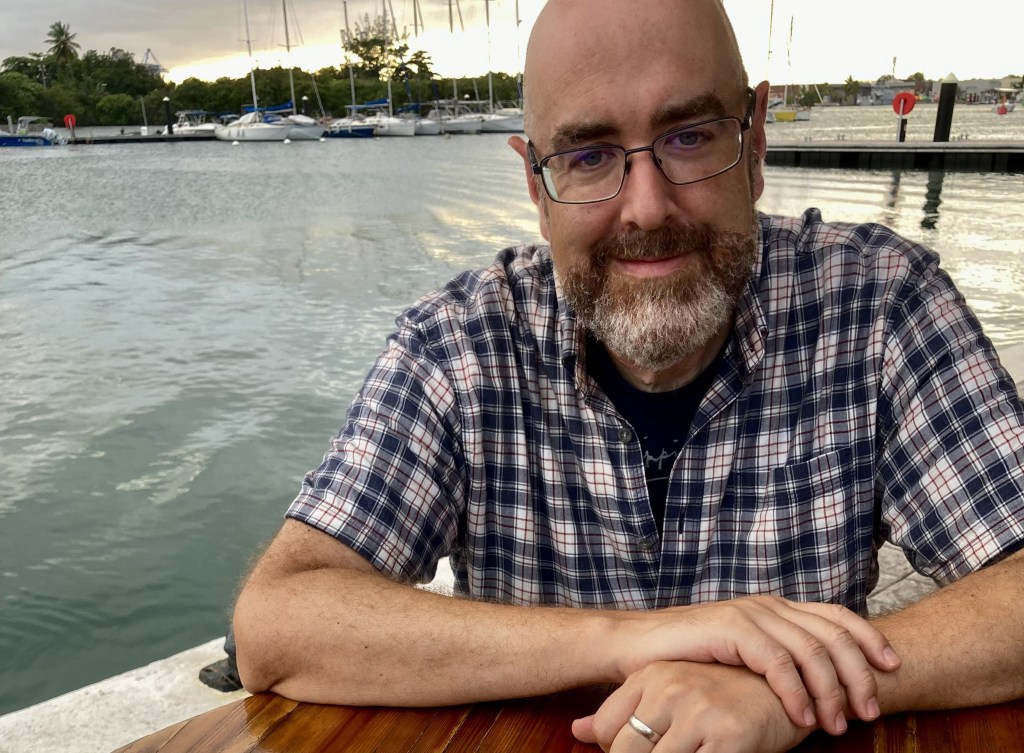
Chris Clarke is a literary translator and scholar. He currently teaches in the French Studies Program at Louisiana State University. His translations include books by Raymond Queneau, Éric Chevillard, Pierre Mac Orlan and Julio Cortázar, among others. He was awarded the French-American Foundation Translation Prize for fiction in 2019 for his translation of Marcel Schwob’s Imaginary Lives, a prize for which he was also a finalist in 2017 for his translation of Nobel Prize winner Patrick Modiano’s In the Café of Lost Youth. He is Editor in Chief of World Poetry Review, and a co-founding editor of Hopscotch Translation.
Shelley Frisch’s translations from German, which include biographies of Friedrich Nietzsche, Albert Einstein, Leonardo da Vinci, Marlene Dietrich/Leni Riefenstahl (dual biography), Hannah Arendt, and Franz Kafka along with many other works of fiction and nonfiction, have been awarded numerous translation prizes. Her translation of Martin Mittelmeier’s Homesick in Paradise: Thomas Mann in California will be published by Princeton University Press in April 2027. Frisch has chaired the Helen and Kurt Wolff Translator’s Prize jury since 2015. She lives in Princeton, where she received a Ph.D. in German in 1981.
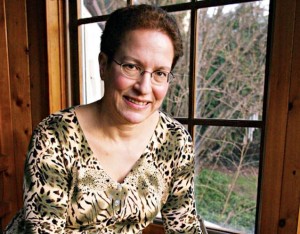

Paul Fournel, born in 1947 at Saint-Etienne, France, is a French writer. He was a longtime editor and publisher (at Ramsay and Seghers, among others). He has been President of the Société des gens de Lettres, Director of the Alliance Française in San Francisco, and cultural attaché to Cairo and London. He now writes full time, and is a cyclist with what remains of his day. During his third full-time, he participates in the work of the literary group Oulipo.
Cecelia Ramsey is a scholar of French literature and translation. She is completing her PhD at Princeton University, where her research connects literary history, translation, and reception studies. Outside of the library, she can be found teaching language and literature to students in liberal arts classrooms and maximum security prisons. Her translations and essays have been published at Asymptote, Exchanges, and the European Review of Books.
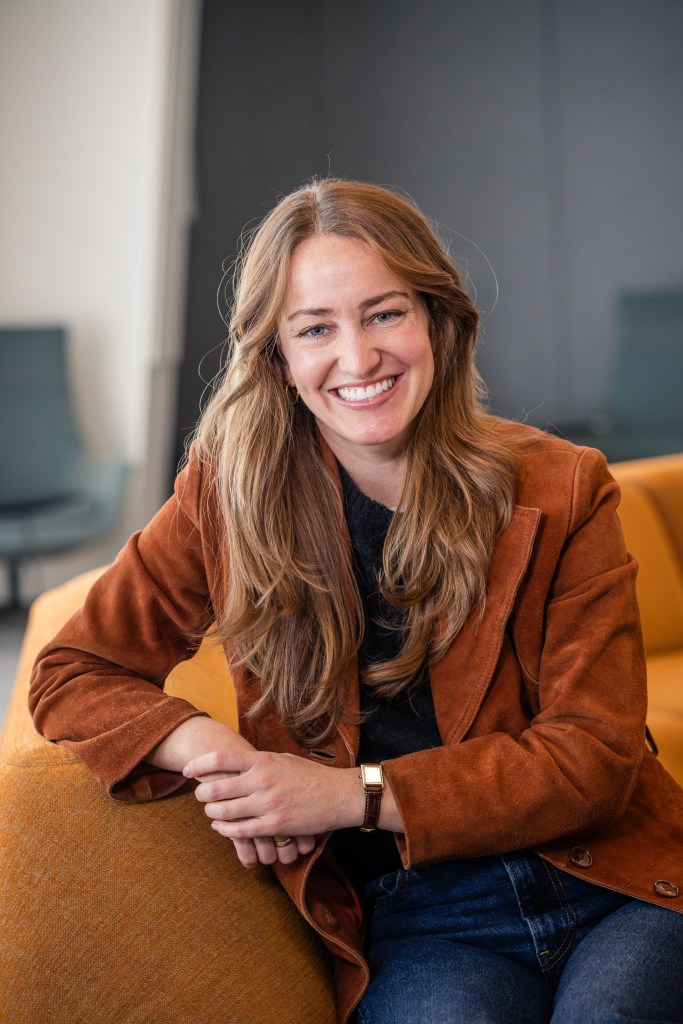
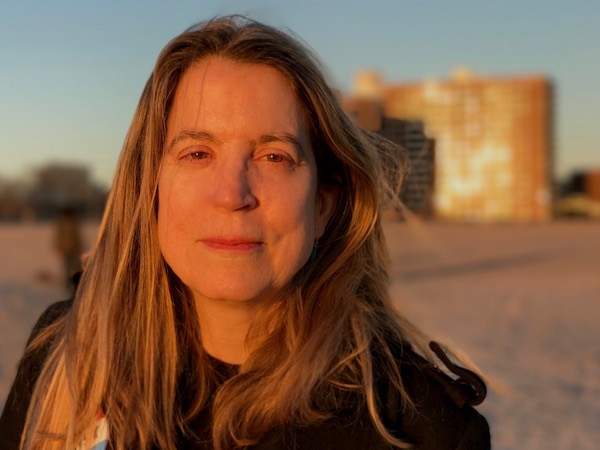
Esther Allen received the 2017 National Translation Award for her translation of Antonio Di Benedetto’s Zama. Co-founder of the PEN World Voices Festival in New York City, she teaches at City University of New York’s Graduate Center and Baruch College. In 2006 the French government named her a Chevalier of the Order of Arts and Letters. Her essays, reviews, and translations have appeared in the New York Review of Books, the Paris Review, Words Without Borders, the Los Angeles Review of Books, Granta, and other publications.
Originally published on Hopscotch Translation
Tuesday, November 24, 2026


