
Translationships 2: Consent, Translation, & Natasha Lehrer’s Unexpected Quartet
by Magdalena Edwards
TRANSLATIONSHIPS is a column by Magdalena Edwards. Magdalena is a writer, actor, and translator born in Santiago, Chile, and based in Los Angeles, California. Magdalena translates from Spanish and Portuguese into English, including the work of Clarice Lispector, Márcia Tiburi, Silviano Santiago, Óscar Contardo, Nicanor Parra, and Raúl Zurita. She is currently translating Julio Cortázar’s Cartas de mamá for Sublunary Press. She is also working on a book-length project titled Translationships. More on Twitter @magda8lena & Instagram @msmagda8lena.
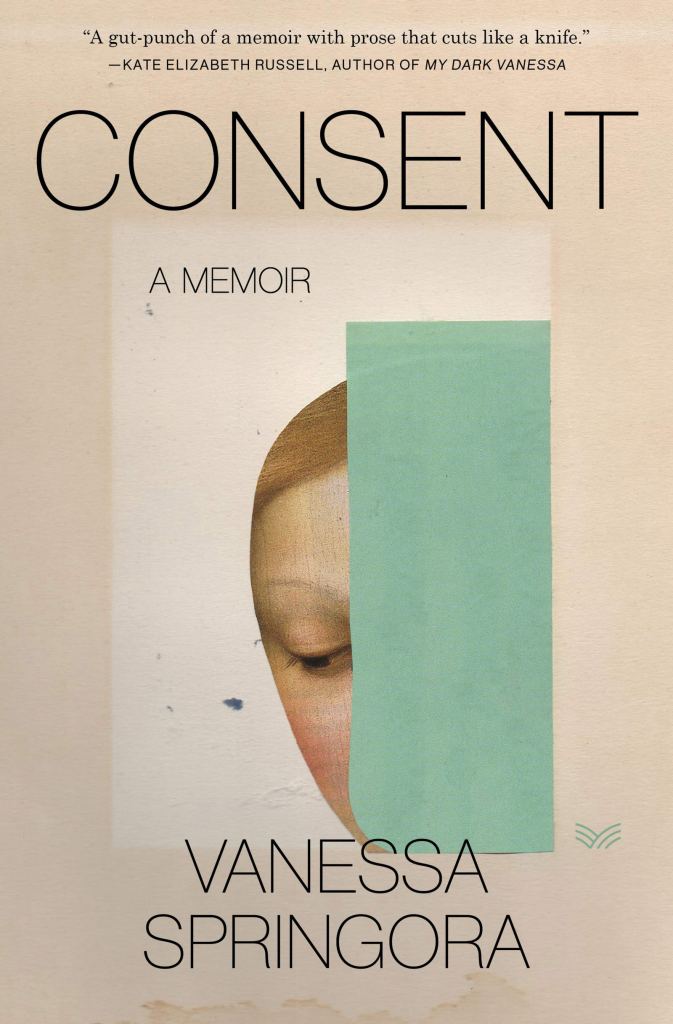
When I first read about Vanessa Springora’s memoir Le Consentement, or Consent, in January 2020, I knew this was a book I would want to immerse myself in…
i.
When I first read about Vanessa Springora’s memoir Le Consentement, or Consent, in January 2020, I knew this was a book I would want to immerse myself in: “The French writer Gabriel Matzneff never hid the fact that he engaged in sex with girls and boys in their early teens or even younger. He wrote countless books detailing his insatiable pursuits and appeared on television boasting about them.” There was something about the story’s quality of not having a big reveal, but rather naming what had always been in plain sight, that felt familiar; and yet I also wondered how this would play out in the French context – in the French language. “But the publication, last Thursday, of an account by one of his victims, Vanessa Springora, has suddenly fueled an intense debate in France over its historically lax attitude toward sex with minors. It has also shone a particularly harsh light on a period during which some of France’s leading literary figures and newspapers – names as big as Foucault, Sartre, Libération and Le Monde – aggressively promoted the practice as a form of human liberation, or at least defended it.”[1]
Springora’s book immediately sold out in bookstores and countless articles followed, which I read over and over as I looked for some clue that could explain how we got here. Matzneff’s devastating abuse of Springora alongside the failure of French society, her society, to intercede on her behalf felt damning. This reminded me of examples in my birth country Chile and the country where I was raised, the United States. I also couldn’t stop thinking about Vladimir Nabokov’s Humbert Humbert, his affinity for catching glimpses everywhere of nymphets combing their “Alice-in-Wonderland hair,” and the fact that Nabokov translated Lewis Carroll’s tale of Alice into Russian, which he published as his first full-length translation and first book publication in 1923. I bring up Lolita and Alice – their stories told by the men enchanted by/enchanting them – because of the opening words of Springora’s account: “Les contes pour enfants…” Fairy tales. Stories told to help children fall asleep. Stories, or cautionary nightmares? Listen, behave, don’t take the wrong turn in the forest, or else.
My knowledge of French would get me by if I wanted to read Springora’s book as soon as possible. But I wanted to read her book in translation, in the language I know best, so as not to miss any key details. I thought about what the translation of Springora’s “Consent” would mean – what kind of process that might be for the translator, what kind of responsibility. Springora’s text surely is a political act, an act of revenge, even a corrective of sorts. “After hesitating for years,” Springora chose “to break her silence after being outraged that a literary prize, the Renaudot, was awarded to Mr. Matzneff in 2013.”[2] Seven years later her book appeared in print in France – and Springora, it should be noted, is the head of the Paris-based publisher Éditions Julliard. If anyone might have access to supportive editors and publishing stewards in this kind of context, it would be someone like her. And yet her road to speaking up, to writing, to sharing her text through publication, was at no point obvious or guaranteed. She makes this abundantly clear in her book.
As I imagined what it would be like to translate Springora into English, which made me think about what it would be like to be Springora and write her text in the first place, I started thinking about consent in the process of writing and in the process of translation as a specific category of writing. Translation is an act of encounter – between the translator and the translated, between the two or more languages at hand, between the source text and the target text – and it is a transgressive act in the sense of breaking borders (linguistic borders, of course, among other things) and in the sense of breaking rules. All translators know that the best solution for certain translation challenges can quite often be not exactly in sync with the source text. As we translate, rules are broken, big and small; boundaries are crossed that shape meaning anew.
Here is a simple example from Springora’s book. The title Le Consentement in French refers to the noun “consent” – the agreement that needs to be attained, presumably, in order to have an ethical sexual encounter. In English the translated title Consent means both the noun, the agreement attained, and the verb “to consent” – the action or process of achieving the agreement or accord – conjugated in affirmative command form. The title Consent pushes beyond the original title’s significance as a noun – it transgresses the noun-ness of the original title with a word that indicates both noun-ness and verb-ness, both thing-hood and action or doing, both stasis and movement or process. And yet, isn’t the title in English not at all a betrayal or over-stepping, but rather a straightforward translation of the original title, and, upon second thought, a potentially evocative and satisfying solution that gives an additional layer of meaning that pushes us to think about Springora’s text in more complex ways? Precisely because Consent speaks to the process – the action – of “giving consent” in addition to the product or outcome, “consent achieved.”


ii.
When I finally found out who would translate Springora’s Consent into English – the award-winning writer, editor, and translator Natasha Lehrer – I was thrilled and knew what I would want to do next. Once I had listened to Springora’s original text as an audiobook and read Lehrer’s graceful, pitch-perfect translation, I reached out to Lehrer to ask if we could have a conversation about her work. Happily for me, and for the readers of this column, she said yes. We spoke for a long time; we could have spoken for days. I had the keen sense that this was someone I would enjoy conversing with over a lifetime – someone who would always have an exciting new project to share, as well as burning bright questions to ask. In her February 2020 essay for The Guardian on “the shift in sex and power sweeping France” Lehrer writes: “It’s a paradox I’ve struggled to understand: how is it that a country that has produced some of the most influential feminist thinkers of the 20th century has a legal system that appears to remain in thrall to the male sexual prerogative?”[3]
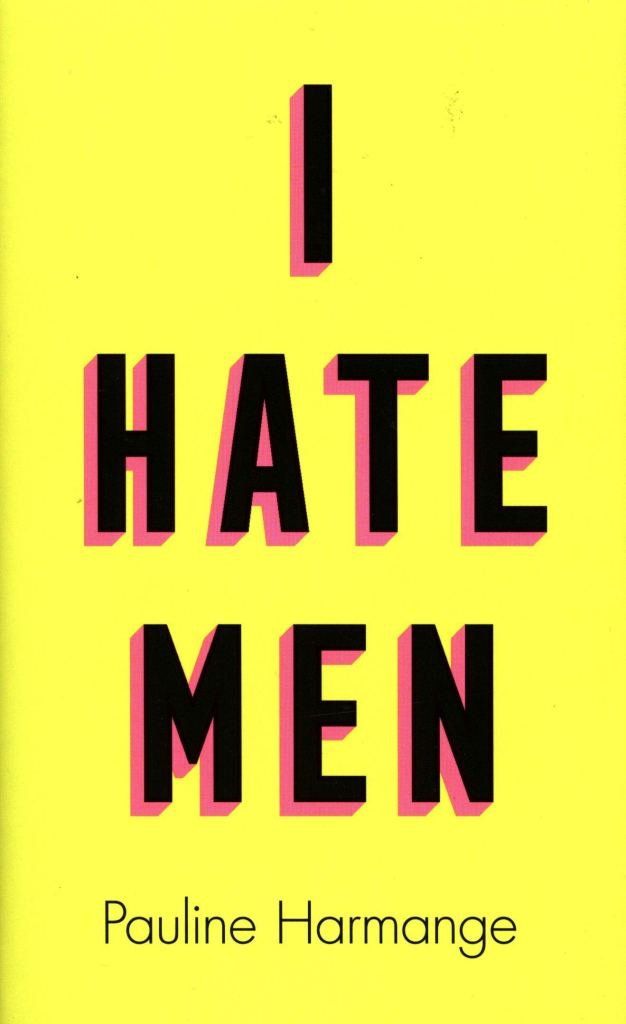
Perhaps as a way of answering her own question, though in purely accidental fashion as it was not planned, it turns out that Lehrer has translated four important feminist books from French into English in 2020, including Springora’s Consent, published by HarperVia in February 2021. The other three are Nathalie Léger’s The White Dress (Dorothy Project), Giulia Mensitieri’s The Most Beautiful Job in the World: Lifting the Veil on the Fashion Industry (Bloomsbury), and Pauline Harmange’s I Hate Men (4th Estate). The four books can be described as two literary non-fiction narratives (Springora and Léger), one academic study (Mensitieri), and one manifesto (Harmange). I read Lehrer’s interview with Elodie Rose Barnes before we spoke and gleaned many insights about how Lehrer tackles translation. Lehrer describes what makes translating literary writing different from other texts: “You not only have the challenge of translating the language, but you have to try and find an equivalent literary voice for it in English. You don’t usually have that with non-fiction books.” Of course, it all depends. The literary complexity of Springora’s memoir involves how delicately the narrative voice shifts between the point of view of Springora as a 14-year-old and Springora as an adult. Léger’s writing, according to Lehrer, “is like packing a suitcase. Some people just throw things in, while others pack incredibly neatly and everything comes out uncreased – Léger does that with a sentence. She packs so much in with so much illusion and uses language in such a rich and complex way, but at the same time it feels limpid.” As for the process of translation itself, for Lehrer, irrespective of genre: “it’s always the same. The first draft is basically a case of getting something down on paper. In the second draft, I look at the English without looking at the French, and then in a third draft I work sentence by sentence with both the French and the English, comparing the two, making sure that I haven’t gone too far. I want to make sure that it’s a translation, not an adaptation.”[4]
What follows are highlights from my conversation with Lehrer, which I hope is the first of many to come.


+
I tell N that I read Springora’s Consent first and then Harmange’s I Hate Men, the manifesto that asks why women define themselves according to the male gaze and how we can combat this through female solidarity. I tell her how the emphasis on sisterhood and solidarity in Harmange’s book resonates with the moment in Consent when Springora has a conversation with a younger woman named Nathalie, her rival/replacement as Matzneff’s new younger lover. Their conversation begins awkwardly as Nathalie is agitated and Springora is on the defensive, but soon enough they are talking together, comparing notes about their experiences with the abusive Matzneff, and then they “began to laugh hysterically.” Springora admits: “We both felt that we had broken a taboo. What was it that linked us, brought us together, deep down? An overwhelming need to confide in someone who would understand. It was a relief as well for me to find myself in solidarity with this girl, who had once been one of my many rivals” (Springora 179). Their “newfound sisterhood” is a phrase that could be used by Harmange, who says: “This priority, to be a trusted friend for women, has become a matter of urgency, not only in the darkest of situations. I have made sisterhood my compass.”
N reflects on the scene between Springora and Nathalie, when they laugh together about Matzneff: “I think that’s one of the most interesting moments, partly because it’s healing though that’s kind of universal, but there is another thing that is so fantastic and French.” She is referring to “the issue of solidarity between women, which I have found very challenging here” – in France. N is British and moved to Paris from London 15 years ago. She continues: “Harmange talks about ‘let’s have solidarity between women…’” Great. But, asks N somewhat incredulously, “why is this a big deal?” She lets the question hang. Because, she says, “this lack of solidarity is deeply ingrained in bourgeois French culture, and though it is definitely beginning to change, there is still a generation of women that seems to be hugely complicit with the patriarchal domination of male/female relationships.” Then she adds, “Most of the women I hang out with here are divorced or widowed.” I laugh because her tone of voice conjures for me a cartoonish scenario where the ex-husbands and dead spouses of said women suddenly arise, exhumed, to warn them against the perils of hanging out in solidarity with N. N and I agree that what makes Harmange’s I Hate Men radical as a manifesto has to do with this book emerging in France in 2020, at a time and place where female solidarity is simply not solidified.
+
I say: “Consent is a translational kind of, maybe, thing… it’s very contextual…”
N says: “Consent is so complicated… Have you read about Katherine Angel’s book? It’s called Tomorrow Sex Will Be Good Again – it’s entirely about this…. that consent isn’t enough if we cannot talk about desire, and until we talk about desire, consent is just a front, and in fact will make it worse if we’re not careful…”
+
I ask N if she knows Cardi B’s song WAP and she’s not sure, so I dive in: “Cardi B, with Megan Thee Stallion, released two versions of WAP simultaneously in August 2020 – it’s a kind of translation moment – one version was released on YouTube as a music video with altered lyrics, because the original lyrics were considered too explicit, which is why we get ‘wet and gushy’ as the hook – and the other is the Apple iTunes version with the full lyrics, which lay out what WAP really stands for – ‘wet ass pussy’ – and what’s interesting to me about this song is that the whole POV is a woman saying, ‘I want you to do this and this to me’ sexually and, honestly, that feels radical right now. It’s amazing to me!”
N says: “You must read Katherine Angel’s first book! She writes about sex, sexuality, desire, and about her own sex life. It’s an extraordinary book. … She’s very clever and a very good writer…”
“And Tomorrow Sex Will Be Good Again… That title is…” as I say this to N, I can’t even finish my sentence, but I know my eyes get wide here.
“That’s Foucault…” says N. And, she adds, in reference to Angel’s work: “Consent is not the whole story. We cannot just end there.”
I ask N if she translated Consent and I Hate Men one after the other.
She says: “I did Consent first, which I did because I kept being asked to write about it and I thought why not translate it instead of writing about it and I contacted the publisher” to see if she could translate it and they said yes. “They asked me to do I Hate Men, but much later.”
+
“Did you speak with Springora when you were doing the translation?” – ME
“No, not until afterwards.” – NL
“…and your intimacy in that way is with the text…” – ME
“with the text… yeah… that’s what I think my job is” – NL
+
“When you translate, sometimes it can seem almost that you know the book, at a sentence level, almost better than the author did. So you might say to them, ‘hang on, what did you mean there,’ and they say, ‘oh no you’re right, good point’… Because you have literally thought about every single word, every single comma… I’m used to this super intimate relationship with all the books I translate. This sort of, you could call it, communion with a text is one of the deep pleasures of translation for me.” – NL
+
“At the end of the day, what makes a good translator is their literary sensibility.” – NL
+
“The French have an incredibly elastic notion of the novel, which you can trace all the way back, I think, to the fact that they call it the roman national so there’s a really self-conscious understanding that when you create a narrative about yourself it can be put to all sorts of uses.” – NL
“… a foundational fiction…” – ME
“It’s not foundational fiction, because that would be way too honest. It is a national narrative.” – NL
+
“Can we call these four books you’ve translated by Springora, Léger, Mensitieri, and Harmange a quartet?” – ME
“It looks like… but it’s just been by chance… because I say yes to everything… I haven’t curated it at all… I’m super happy that it’s come out this way and now I only want to translate, you know, complicated narratives about… well, all sorts of complicated narratives. And now I just want to bring down patriarchy, because that’s just obviously my job!”– NL
+
“How do you say gaslighting in French? There’s no word for it! It reminds of how when I first moved to France there was no term for playground bullying – at the time it was supposed to be because bullying didn’t exist in France. A few years later honesty kicked in and ‘harcèlement scolaire’ became the new buzzword. When there isn’t a word for something it is much harder to talk about it. But it doesn’t mean it doesn’t exist.” – NL
+
“What are you working on next?” – ME
“A memoir about a family that had art looted during the Second World War that’s sort of a mystery – it’s a very interesting story…” – NL
+
N and I spend a lot of time talking about the Amanda Gorman translation debate – which N says is a “hot potato” kind of situation. People fighting over who should be translating any particular text because so many want to translate, that’s ultimately good, isn’t it? Debating how we translate and who we support in publishing, as translators and as writers, is also important. Who are the gatekeepers? Who is offering solidarity to whom and how? Does it seem that the translation community in Europe has responded differently than the translation community in the United States, if we can even speak in such broad strokes? If this is an issue of solidarity, then what kind of solidarity? Is it more meaningful to be someone who advocates for promoting more translators of color on social media or to be someone who tutors inner city kids in writing and translation so that said kids have the tools and encouragement to become translators one day?
We are both excited that the French publisher seems to have got it right: the person who has been chosen to translate Amanda Gorman’s “The Hill We Climb” into French is the musical artist Marie-Pierra Kakoma (aka Lous and The Yakuza). And we can’t wait to hear Lous and The Yakuza perform her translation of Gorman’s poem.
+
I realize, much later, that as N and I are speaking about Amanda Gorman and her translators I’m starting to think about consent in the context of this kind of translation challenge – translation and representation, translation and who gets to be the translator, or mouthpiece, for whom.
I read an article in the Los Angeles Times by Dorany Pineda. She writes: “Typically, foreign rights to a book’s publication are ‘subrights,’ usually owned and sold (as in Gorman’s case) not by the American publisher but the literary agent. The international publisher then decides on the translator in consultation with the author and agent. Sometimes the writer has suggestions. Other times (as in Gorman’s case, according to Dutch publisher Meulenhoff), agents require foreign publishers to hire sensitivity readers tasked with finding biases, racism, stereotypes and misrepresentations in translations. Major authors have some discretion, but many writers are fortunate to be translated at all.”[5]
Are we in the translation community trying to explore and model translation consent? Should an author always have the right to demand that her consent be given before a translation can be assigned or undertaken? In other words, should the author always have veto power when presented with a potential translator? What if the author is no longer alive? How can we ensure that the person who helms her estate, and owns the rights, has the author’s best interest in mind in terms of translation? Does all of this also depend on whether the translation in question is perceived as a commercial venture where considerable (or, more than usual) amounts of money could be made and cultural capital accrued? Is this a productive or interesting way of thinking about this challenge?
Does talking about translation and consent – and, in turn, talking about consensual translationships – put us in the territory of the ethics of translation, and, if so, why does this matter?
[1] “A Victim’s Account Fuels a Reckoning Over Abuse of Children in France” by Norimitsu Onishi (The New York Times)
[2] “A Victim’s Account Fuels a Reckoning Over Abuse of Children in France” by Norimitsu Onishi (The New York Times)
[3] “Ne me touche pas… the shift in sex and power sweeping France” by Natasha Lehrer (The Guardian)
[4] Interview with Natasha Lehrer (Lucy Writers Platform)
[5] “Amanda Gorman brings the representation debate to the small world of book translation” by Dorany Pineda (Los Angeles Times)
Magdalena Edwards writes the Translationships column for Hopscotch. Her translations include the work of Noemi Jaffe, Clarice Lispector, Silviano Santiago, Márcia Tiburi, Óscar Contardo, Nicanor Parra, and Raúl Zurita. She is currently translating Julio Cortázar’s Cartas de mamá for Sublunary Press. Find her on Twitter @magda8lena & Instagram @msmagda8lena.
Originally published on Hopscotch Translation
Tuesday, April 6, 2021

 hopscotchtranslation.com