
Wrong from the Start: Translating and Speaking the Impossible
by Talbot Hook
“What did the translation look like before the source text was written?” – Zen koan
You can’t think your way through literary translation. There isn’t a strict logic to it. You can use whichever syllogism you want, but the premises are all wrong. Or the premises are sound but the conclusion doesn’t somehow follow. Literary translation isn’t entirely logical, and, what’s more, it’s sometimes not even reasonable. Something escapes in the thinking. Many times while translating I’ve written things which were ungoverned by reason, or even, seemingly, by thought. This is good, but how did I get here? What can account for this? Don’t look to me for answers. All I’m trying to say is this: translation is bedeviled, but that’s precisely why we’re so enchanted by it. I’m convinced that humans—when you really get them to tell the truth—don’t want to have all the answers. A fully-derived, fully-parameterized, fully-operationalized world is not something that most people actually want. This seems especially true for translators and other types of artists. So, it’s a good thing there are some human activities still left to the mysteries. Translation just happens to be one of those strange human spheres where clear answers aren’t really the thing sought. A translator cannot arrive at a correct translation any more than the sky can arrive at a correct shade of blue. (If we were to arrive there, we’d probably end up changing it anyway.) And please don’t misunderstand me: I am in no way saying that anything goes in translation. Translations can be good or bad for many reasons, but they can never be decidedly correct (though they may be incorrect—puzzle that out). The key thing I know about translation is this: while translation does have parameters, it also permits of multiple paths. Recently, I’ve come to think of translation as something of a navigation problem. To get us to that headspace, I’ll use a parallel practice in my life to help explain what I mean.
Zen and “Going Beyond Words”
I find my translation practice very similar to my Zen meditation practice: both are deeply complex things, and both drive me a little batty at times. As in Zen, where satori is but the batting of an eye, translation’s inner workings and insights are fleeting. We sit down, either with our computer or pen and paper, and begin the act of translating; our mind goes off in some direction, emotion enters, a memory is tickled awake. We feel something is there, something is “happening,” and then—poof!—gone. We lose the path. When this happens to me, both in Zen and in translation, there is nothing to be done except to drop back into some form of original consciousness—that which exists prior to all conceptualizations and discursive thoughts. A space of noticing the mind’s stirrings. Eventually, oftentimes, I find the path and begin again. A word jumps out at me that didn’t before, revealing itself to be the keystone to a line of poetry. Or some shift in syntax emerges where before I just saw a garbled string of text. Of course, translation is not Zen, and Zen is not translation. The biggest difference is that, while Zen generally eschews words, translation chews on them. The precise purpose of translation is to get something into words, generally from one language into another. The purpose of Zen meditation is to go entirely beyond conceptual, dualistic thinking—beyond words altogether. And Zen is famously hard on what it calls “chasing after words.” At first glance, it seems anything but sympathetic to the plight of a poet or translator. In Sōiku Shigematsu’s English translation of a famous Zen saying:
“A phrase
completely to the point:
The eternal
donkey hitching post.”
Here’s another:
“Open your mouth—
instantly wrong;
“Move your tongue—
against the truth.”
One final saying:
“Words
fail.”
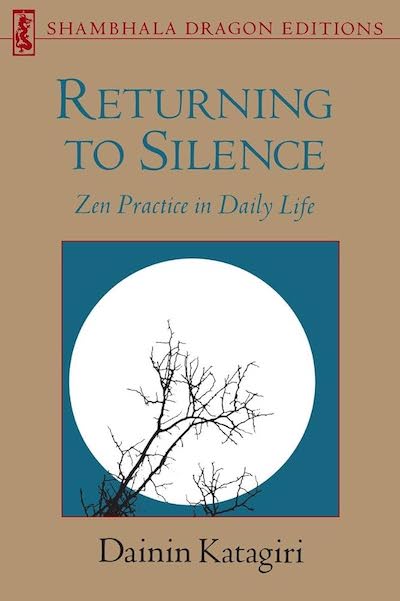
As these three sayings indicate, the more we get tied up by words, the harder time we’re going to have grasping reality. Even the most meticulously-crafted truth, once spoken, becomes nothing more than shackles. This is felt in translation, too, when translators frequently admit that words fail as they move between languages. So, given Zen’s somewhat complicated relationship with words, what insight can it impart to translation? Is there any hope for the literati among the liberated? I think there is, and, what’s more, even Zen admits that there is. The lesson translators can draw from Zen goes something like this: “Consigning experience to words is folly, but you still have to say something.” There is something of the koan to this, which is the point. You can’t walk ten feet in Zen without bonking your head against some inscrutable paradox. When the Japanese priest Dainin Katagiri helped transplant Zen to the American Midwest (which is where I first encountered it), he wrote a book called Returning to Silence. In it, his basic message is that we simply need to sit down in silence. That’s all. Nothing more. Yet, he followed this writing with another book called You Have to Say Something. This book highlights the truth that all teachers face (and we are all teachers, officially or not): if we don’t communicate with others, they will never understand what we need to tell them. This seems very simple, though it is anything but. We all have things to say to each other, but how many times have we been profoundly betrayed by language? So, in the bibliographic koan above, we see an aspect of the translator’s dilemma. Several Big Questions have arisen. How can a translator fully realize—deep, deep in their marrow—the blundering ineptitude of language and still create something beautiful, and, dare I say, necessary? Given the likelihood of our success, is it worth it? What does it even mean to translate well? What comes of learning to say the same thing differently?
These are all fair questions, and these are issues that in no way pertain solely to translators. After all, before something is translatable it must be written down. (Translators work downstream.) But we know that what is written is never enough. The world and our experience of it cannot ever be captured in words or phrases. As I am repeatedly reminded by the famous Zen text, Song of the Jeweled Mirror Awareness: “Just to depict it in literary form is to relegate it to defilement.” We cannot write the world. Nor can we translate it. And when we try, we twist it in some way, constraining it, shrinking it to the size of a word, stanza, or paragraph. But still we say something, because we are moved to. Because, in some sense, we must. When Wang Wei was forced to leave his residence at Wangchuan, he wrote four tender lines:
依迟动车马
惆怅出松萝
忍别青山去
其如绿水何
Though there are many ways you could translate this well, I’ve fallen upon this verse:
Reluctant, tarrying to stir horse and carriage —
Melancholy in leaving the lichened pines.
To endure departing the blue-green mountains,
Go on, just as the emerald waters do.
I cannot imagine Wang Wei not writing this down. He had something to express—something which speaks to a common human sentiment. But what exactly was written down? Not the world in any complete sense. Certainly not. And certainly not the totality of Wang Wei’s feelings in this moment. Language cannot distill the world. But a partial experience was distilled: in this poem, and even in its translation, we intimate pensiveness, the desire to stay, the necessity of going. We get a sense of humanity’s love of home and connection to nature. We feel the indifference of the horse and carriage to Wang Wei’s struggle (though I feel, somehow, that the lichened pines are not unmoved). In reading the Chinese, even so far removed by time and in a modern form somewhat foreign to Wang Wei, I am moved. What moves me? Is it the language? The experience behind the language? Both, or neither? I’m not sure. And how should I go about translating it? Given Wang Wei’s inability to jot down his actual experience and my incapacity to translate his beautiful failing into English, I wonder: how is translation anything but an inadequacy twice removed? And, if so, what’s the point of this whole enterprise?
You Have to Say Something — Or, a Finger Pointing at the Moon
Frustratingly, I’ll answer by way of another constant Zen reminder: “A finger pointing at the moon is not the moon itself.” What does this have to do with anything? The common understanding of this phrase is that we should not mistake discourse—“following after words”—or guidance for reality itself. Reality is something experienced, not something described. Yet the finger is important, because it points at something we desperately need. The moon is enlightenment, and the finger (a teacher, say, or a text) guides us to it. This is why I view translation as something of a navigation problem, as I said up front. In this view, the poet (let us say) presumably has had an experience—some powerful unfolding of the world—and has written it down. Let us assume that they did so to the best of their honest abilities. The result was a poem. And the poem is not simply a recording of the experience—it is also a waypost to the experience. The poem is the finger pointing at the moon. As the Song of the Jeweled Mirror Awareness continues: “The meaning is not in the words, yet it responds to the inquiring impulse.” What we seek is beyond the poem, but, in communing with the poem, we are pointed in the right direction. A translation helps in this way, too. With the original sentiment, thought, conceit, or experience as the intended location—the desired state—our translations become equally important fingers pointing in roughly the same direction. My translations from the Chinese are different from those of Thomas Cleary, Arthur Waley, or Wai-lim Yip—probably their fingers are very different from mine, in color or shape, bearing different scars, or none, perhaps with the slightest bend of age—, yet each translation is an additional, heartening gesture in the right direction. Each attempts to guide us to the experience itself; each points just over the horizon: “There.”
Of course, it is a fair question to ask whether we can ever inhabit someone else’s experience (especially as someone as removed as Wang Wei). My heart tells me that this is possible, but only partially. Broadly, I think the human condition is universal. If I didn’t, I wouldn’t bother to translate, because what would these strange people from other times and places have to say to me? What could I hope to learn from them? What at all would they have to do with my singular, precious experience? Of course, they have everything to do with it. Wang Wei reaches out from the centuries and, as the Chinese say, “breaks my guts.” Go on, just as the emerald waters do. I know the sadness of having to leave a place or person I love, and Wang Wei’s poem aligns with that experience almost perfectly, even if the details are different. So, while I cannot ever experience exactly what Wang Wei felt in that moment, I can approach it. I know this because the poem has done some work on me—work I believe Wang Wei intended to happen. His poem has made me feel, for a moment, the melancholy of an undesired leave-taking. The poem has directed me there, as only it can. I have approached, and perhaps I have arrived. This is my goal in translation: to get the reader as close as I can to what I assume the poet was originally experiencing. Of course, this is somewhat a guessing game, but I hope it’s not a blindfolded one. After all, each poem is a carefully crafted thing, and the more time we spend with a poem, the better we get to know it. Only once we have really come to understand that which resides beyond the poem are we ready to translate. But given the imperfection of words, how should we go about translation, as translate we must?

Translation as a Navigation Problem
If poems are directions to a desired state, if we are trying to get readers to commune with the original poet in a shared experience—or as close as we can hope to get—, how can we best realize our goals? I could say to ignore the words, find the meaning, and then use the target language in such a way that most efficiently gets at the desired state. But in saying this, I would not be fully honest, because the words themselves mean a great deal. It matters that Wang Wei feels sad about leaving lichened pines and not mossy hemlocks. It matters that the mountains were blue-green and not red-brown. I do not want to read this poem rendered for a modern American—Wang Wei paused at the handle to his 2003 Toyota Camry just doesn’t do it for me. I’m not ultimately sure why these small details matter, except that they are what Wang Wei wrote. Presumably, fidelity to these words is important. Presumably, Wang Wei chose them carefully. Presumably, he thought they would convey his message and thereby convey us to the experience behind it. As a translator, I have to trust that he knew what he was doing. I just have to make what he said come alive in a different tongue, and I tend to use the words I was given. Here’s Sōiku Shigematsu again:
“When cold
say cold;
When hot
say hot.”
This is a little coy, because cold in one language isn’t necessarily cold in another. 惆怅 in the poem above isn’t quite melancholy, though I think that word does the job well. It seems best in helping the reader along. So, given my views of a general human condition, I tend to stick close to the original. I trust that readers can get there, even if not all the road signs are familiar. Of course, the farther removed a poem is from modern realities, the more work we are making for our readers. But who said that poetry should be easy? Since when are mysterious things ever simple? This is a matter of great importance to the translator. There is no obvious path through the great divide between domestication and foreignization, and while we cannot create a translation which is entirely unintelligible to the reader, so too should we not strive to make something overly comfortable. The Middle Path is often the correct one, and this means that even though I stick closely to the original (almost as something sacred), I am not held in thrall by grammar, meter, rhyme, or any other aspect of the source text. Some things must inevitably fall away when translating to be replaced by new things. The ground necessarily shifts. But I do believe that we should not change, add, or delete more than is necessary. If we decide to take liberties, we should ask ourselves what this means. When we change a word, as we inevitably will and must (because to translate is to change), where are we leading the reader? Will this alteration help the reader end up in the same place as the author (perhaps) intended? Or will they end up in some nearby parallel universe, one in which things are seen through a warped mirror? If so, are we at peace with this? I leave this to each translator’s conscience. In the end, if we are after the reality beyond a poem, we cannot be too wedded to words, though we must use the words we are given if the author’s meaning is to be felt. A skillful translator will be able to follow the poet’s finger, see the desired state, and render the poem into its new language, all the while attending carefully to the source text. In doing so, the skillful translator raises their finger to the moon, pointing alongside the original poet.
I will leave you with this image, as I find it a very comforting one. Imagine your favorite poet or author for a moment. Would you not want to stand beside them and help lead others to a deeper experience of something wonderful? In truth, I find translation a deeply humbling act. While a translator can be an egoistic hegemon or a woeful sycophant, I prefer to see the translator as an equal to the author—both working together to reach more people than either one could alone. It is this deep spirit of interdependence, spanning centuries and psyches, which drives me to say something, to translate, even if words are ultimately just a donkey hitching post.
References
Katagiri, Dainin. Returning to Silence: Zen Practice in Daily Life. Shambhala, 1988.
Katagiri, Dainin. You Have to Say Something. Shambhala, 2000.
Shigematsu, Sōiku. A Zen Forest: Zen Sayings. White Pine Press, 2004.

Talbot Hook is a PhD student in educational psychology at the University of Connecticut. He is also an occasional writer, poet, and translator from Chinese and Spanish.
Originally published on Hopscotch Translation
Tuesday, August 13, 2024

 hopscotchtranslation.com