
What Brings Us to a Halt: An Ongoing Dialogue about (and because of) Translation
by Franca Mancinelli and John Taylor
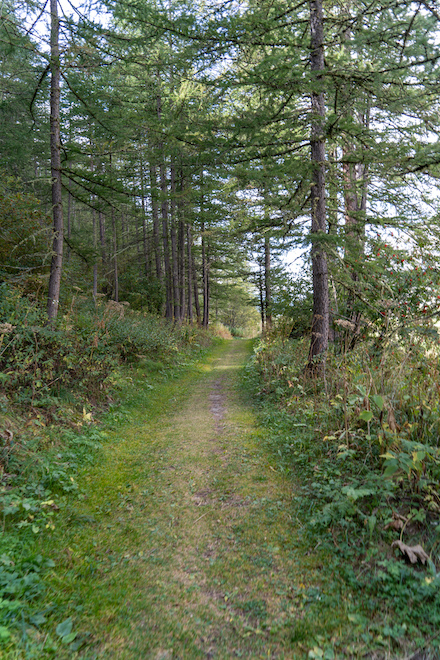
During another stay in Bessans in August 2008, I found myself hiking, not only with the wildflower manual in my backpack, but also with a ballpoint pen and small notebook in the front pocket of my jeans.
The text presented here is the second installment of What Brings Us to a Halt, the latest multilingual exchange between Franca Mancinelli and John Taylor. Hopscotch previously published “Flowers and Hell: On Poetry and Authenticity,” Franca’s essay in John’s translation, on May 27; below is John’s own essay in response.
A Perennial Hereness
by John Taylor
for Franca Mancinelli
As I was reading and then translating your text on authenticity and poetry, I couldn’t help but think of one of my first translations of the work of Philippe Jaccottet. In his “Apparition of Flowers” (Cahier de verdure, 1990), he cites the same haiku by Issa that also captivates you. The three lines bring me to a halt as well. It is as if one were walking down a path and suddenly glimpsed a simple yellow blossom, among the high grasses, that signaled an essential dilemma:
In this world we walk
on hell’s roof,
gazing at the flowers
Although Jaccottet’s comments on Issa’s image differ from yours, he addresses the same underlying concern:
There is perhaps a connection, and not only a contradiction, between hell and flowers. We might well end up making this outrageous statement, which will seem obscene today and has been so in all ages, for whether flowers raise their voices above that of hell or speak of what could finally prevail over both it and themselves, hell has long emerged on the surface of our world.
This is not the only time that Jaccottet, who was too often considered to be the “hermit of Grignan” living in a provincial French village far from the turmoil of the world, evoked the pervasive inferno of human affairs. His constant awareness of this “hell” is visible in his earliest writings. His 1947 long-poem Requiem was inspired by the contrast between the young Swiss poet’s uneasy knowledge of having been sheltered, like all his compatriots, within Swiss borders during the Second World War—living safely among Issa’s “flowers,” as it were—and the shock received when a close friend showed him photos of hostages or maquisards, in Vercors, being tortured and then executed by the Nazis. Such stark contrasts even sometimes paralyzed the pursuit of his deepest literary penchant: questioning how our place in Being and the Cosmos can be explored rigorously and honestly through words, and meditating on those “thresholds” that seem to appear in front of him and to lead, perhaps illusively, to “something else” beyond material reality.
This perception of thresholds is, of course, not all that dissimilar from your flowers capable of “orienting” our path, of giving us “the strength to take the footsteps we are taking above hell.” In both cases, it is a matter of heading elsewhere from, as well as comprehending differently, indeed more deeply and authentically, a sometimes “hellish” here and now in which we increasingly sense ourselves to be constrained and doomed—like that insect, in your book Pasta Madre (2013), which has slipped through a crack, entered the house, and keeps banging against the windowpane in an attempt to fly back outside towards the light. The image reappears in your sequence “A Line is a Lap” (Il cimitero di farfalle / The Butterfly Cemetery, 2022). By the way, at the end of his life, Jaccottet was still grappling with this dilemma. His posthumous La Clarté Notre-Dame (2022) alternates his fundamental poetic quest, punctuated by the sound of a distant monastery vesper bell overheard while walking with friends, and the haunting memory, going back to a television documentary that he had watched, of torture victims screaming in the prisons of Bashar al-Assad’s Syria.
Yet besides these recurrent reminders of human hell, Jaccottet devotes much of his writing to examining how flowers and other “choses vues”—“things seen,” as he simply called them—including streams, birds, trees, and wind, sometimes truly “stand out,” to quote your own striking image (which he himself could have written), “as a signal, a direction towards salvation, enabling us not to fall” and whether “the direction taken by [our] footsteps” can be “determined by the flowers.” This similarity between your quest and his shines forth in his later prose texts. A decade after his remarks about Issa’s poem, he reconsiders the issue in “To Field Bindweed” (Et, néanmoins, 2001), expressing it in the opening sentences which, moreover, are significantly placed in parentheses revealing his persistent doubts about gazing away from the “hell,” at least for a while:
(Again?
Flowers again? Stepping and phrasemaking again around flowers? Moreover, while still taking more or less the same footsteps, and making the same phrases?
Yet I cannot help it: because bindweed flowers were among the most ordinary and the lowliest flowers, simply blooming along the ground, their secret seemed more indecipherable, precious, and necessary than that of other flowers.
So I will begin again because it has begun all over again: the wonder, the astonishment, the bewilderment; the gratitude as well.)
Like you, Jaccottet is profoundly affected by unexpected moments of marvel. And like you, he wonders what this wonder implies. I associate your own marveling (and expressions of gratitude) more with trees because of your resonant sequence “Master Trees” in Tutti gli occhi che ho aperto (2020), not to forget other poems and prose poems in your earlier books. For example, the transformation introduced by leaves in the final prose poem of Libretto di transito (2018):
You’re tired. You’re making the buds break out. The bark is splitting apart, no longer resisting. With closed eyes, you keep fighting. The earth is a rock, crumbling into tiny pieces of gravel. It is a wall and a door. Keep sleeping. The leaves are speaking to each other like brothers. From the heart to the crown of the tree, the leaves are thinking up a sentence for you.
Now, in this new text about authenticity and poetry, you also write movingly of flowers waiting “for each of us [. . .] for the possibility that we have of [. . .] continuing to marvel.”
Whether we adopt Issa’s image or, like Jaccottet, reject it by perceiving hell everywhere on the surface of the world, the question of “how to live” remains. How can we live with hell just below us or in our midst? Arguably, the difference between the images is slight. Walking “above” hell means that it is burning or freezing (to recall Dante’s icy Inferno) the soles of our feet, and perhaps much more. And what is the relationship between writing and this question of “how to live”? In both your case and Jaccottet’s, and let me add my own as well, I am tempted to modify Montaigne’s maxim: “Philosopher, c’est apprendre à mourir.” Writing can also be conceived, and practiced, as “learning how to die.” Poetry can be aimed at exploring overlooked, fundamental, and perhaps urgent reorientations of our being in the world and our vision of the present, “hell,” and death.
The sudden bright yellow of a dandelion, the discovery of a rare orchis mascula in an ordinary front lawn (or an even rarer orchis, the himantoglossum hircinum, the lizard or goat orchid, in land destined to become a housing development), the surprise of some creeping bugleweed, with its delicate upright purple flowers, that no one planted next to the rosebush. . .
If we are in an uncommonly heightened state of awareness—of openness and receptivity—and glimpse a flower from an unexpected angle, our marvel will be unavoidable, inescapable, at least until a distraction turns our eyes elsewhere. “The wonder, the astonishment, the bewilderment; the gratitude as well”—as Jaccottet puts it—all constitute potent emotions of fulfillment which, for as long as they dwell in us, are stronger than any preconceived notion or rational analysis. And stronger than death or hell? Maybe stronger for only a few instants, but stronger.
As you have pointed out, marvel indicates a direction that can lead beyond the boundaries of the self. The confines vanish. Are we thus temporarily one with that which, up to then, has seemed “other,” facing us yet out of reach? Although flowers, from our perspective, belong by definition to this “other”—even as “hell,” however nearby, appears “other”—they nonetheless can suddenly seem to form a bridge beckoning to us, potentially guiding us elsewhere. A bridge that perhaps remains crossable only very briefly, but a bridge. Or does what I am writing here result from wishful thinking? Yet some encounters even with the lowliest natural things—the soothing yellow of St. John’s wort on an afternoon when we needed to be soothed—are so strong and unforgettable that their presence lasts and seems incontestable. This we have seen, this we have fully felt, this we have experienced, this we have known. . . It is a “chose vue,” as Jaccottet would say. We harbor fewer doubts about illusions. . . At least for a while.
St. John’s wort, herbe de Saint-Jean, erba di San Giovanni. The Middle English word “wort” derives from Old English “wyrt,” meaning “root,” “herb,” “plant.” When using this botanical term, it is impossible for me not to hear the German word “Wort,” which means “word.” The Gospel of St. John, “In the beginning was the Word.”
Writing as seeking beginnings, origins, roots, seeds. The roots and seeds of flowers, whatever we consider the flowers to be at a given moment in our lives.
As it happens, when I met with Jaccottet at his home in Grignan on 2 November 2017 (a few weeks before I would meet you for the first time, in Ljubljana), we discussed haiku. I avowed that I was on a “haiku cure” in the hopes of relearning to form images more concisely, to be less abstract in my writing, to re-situate myself at the right level of experience, of existence. He said that he had gone through similar periods in which he had read, and sometimes translated into French by using R. H. Blyth’s English versions as a crib, lots of haiku. (Some of these translations were published in his Haiku, 2010.) I then asked him if the haiku form in itself engaged him, given that some of his poems are quite short and that his poetic prose texts, like “Apparition of Flowers” and “To Field Bindweed,” tend to be structured around a series of short fragments. He replied that it was the scope, the potential (of transforming our vision), and the “validity” of haiku imagery that preoccupied him. Although we did not evoke Issa’s lines about flowers and hell, what he underscored that afternoon about valid imagery provides an insight into his analysis of those lines and into his lifelong search to better grasp, through the task of writing, “how to live” (and thus “how to die”). Perhaps a valid image would trace out a threshold, a direction, a way to live.
For decades now, one of the rare activities that relaxes me is hiking in the French Alps. Although I have enjoyed short stays in other Alpine villages, I am thinking of the village of Bessans in the uppermost valley of Haute Maurienne. It is not entirely the physical effort—which combines fatigue and elation in a unique way—of walking across meadows, through larch forests, and up and down (not too steep) slopes that takes my mind off the self, but also identifying and, when I forget their names, re-identifying the wild flowers that I come across “on the edge of the path” (to recall your own words). With my Delachaux & Niestlé Guide complet des fleurs de montagne in hand, I stop and gaze at the flowers, as in Issa’s haiku, and then examine them more closely. I learn or re-learn their French names. A few days later, when I drive up to the Franco-Italian botanical garden at the Mont Cenis Pass, I jot down their Italian names as well. I look up their English names on the internet. There are usually four or five common terms, depending on the exact sub-species, country, and continent. (May I add that translating the names of European flora and fauna from one language to another, even between two Romance languages like French and Italian, is rarely a straightforward exercise?)
For almost thirty years, during these two- or three-week summer sojourns in the Alpine village, hiking along beloved paths and identifying flowers sufficed for revitalizing my energy and imagining a new “direction” that I might be able to follow afterwards, in the fall, once I was back home on the other side of France. With occasional exceptions, I felt little urge to describe the flowers in my writings, nor the trails that had brought me alongside them. Moreover, I had come to know those trails by heart. I was able to anticipate at which bend I would come across the same salsifi des prés (goat’s-beard, jack-go-to-bed-at-noon) or silène enflé (maidenstears, bladder campion) that had always grown there, later lost its leaves, sunk into the ground or become a skeleton of twigs, and then resprouted and flourished at exactly that spot along the Arc. Sometimes, in the rented apartment, after the daily hike, I would even write about completely different subject matter. Stories in my first book, The Presence of Things Past, about growing up in Des Moines in the 1950s and 1960s, were written in that same village in the early 1980s.
I began translating books by Pierre-Albert Jourdan and then by Philippe Jaccottet in 2008. I was stimulated by their reflections on landscape and overlooked elements of nature, such as Jaccottet’s “field bindweed” or, to cite a single example among countless others in Jourdan’s books, the intention to write “as one prunes olive trees in order to aerate them and make sure that all their branches can be reached by ladders.” During another stay in Bessans in August 2008, I found myself hiking, not only with the wildflower manual in my backpack, but also with a ballpoint pen and small notebook in the front pocket of my jeans. Sometimes, while walking by a favorite flower, such as a whole expanse of delicate linaigrettes (cottongrass) greeting me in a watershed near the Col de la Vanoise, I would come to a halt and jot down the words, phrases, sentences or short poems that came to mind almost as if they were emanating from the flower itself. Poems, prose fragments, and ultimately books slowly grew out of these hikes.
(And now I know well that when, out of eagerness and impatience, I write something down in my notebook without waiting for the words to bloom from the buds or from whatever element of reality has caught my eye, then, as you say, I “take off from mere words,” not from reality. “No previous descent has taken place.”)
There is no single solution to Issa’s equation. But as you show so well, authenticity in writing demands fully taking into account those flowers growing next to hell or above it. We seek this authenticity of vision, we sometimes must remind ourselves to seek it, remind ourselves to “stay on the path,” to persist on our iter inceptum, as Petrarch phrased it, “the path begun, undertaken on our own initiative,” “the chosen path,” and also remember to be receptive, to empty ourselves and thus open ourselves up to what this path might offer, yes, at dawn, while walking across a late-summer meadow full of stubble and resprouting yarrows, as the sun ascends the hidden face of the Ouille Allegra.
Your words: “In the composition of a text, the work consists in giving ourselves over to the flow of images, in making ourselves as empty as possible and therefore capacious towards the widest scope of vision. We must make ourselves able to contain, to be receptive, and at the same time to comprehend, as the Latin verb cápere suggests. More than rational understanding, this in fact involves a disposition towards openness.”
A path. What might we find today along its edge? Marvel, as you say, and wonder, wonder about the wonder, perhaps some wishful thinking (thresholds? bridges?), but once again, and more simply, literally down-to-earth, rising from the ground where the flowers are, “the astonishment, the bewilderment, the gratitude”. . . and then, if we empty ourselves and open ourselves up still further (through no overexertion of the will), if the boundaries start fading away (but we will no longer sense this through language), if the flowers place a small leaf or fragile petal on our shoulder that gently pushes us to the left or to the right (or, more likely, in a direction for which there is no word), perhaps the path itself will also be in metamorphosis, heading elsewhere before we realize that we are still moving forward on it, footstep by footstep. . . perhaps now being led into an unfamiliar hereness, a hereness surging forth (as in a haiku), a perennial hereness. . . and then, if only for a few instants but maybe for more than a few, the same clump of serpolet—serpillo—up the trail will be where it has always been, along the tumbled-over drystone wall and across the path from the larch wounded by lightning, but, like us, it will no longer be the same.
Note: The English translation of Issa’s haiku is based on Philippe Jaccottet’s French version in “Apparition of Flowers”: “En ce monde nous marchons / sur le toit de l’enfer / et regardons les fleurs.” The French poet vividly transforms the “above hell” used by most literal translations of the Japanese poem into the concrete image of “hell’s roof.” The poems, prose texts and other quotations cited above are taken from the following translations by John Taylor:
Philippe Jacccottet:
And Nonetheless: Selected Prose and Poetry 1990-2009, Chelsea Editions, 2011.
La Clarté Notre-Dame & The Last Book of the Madrigals, Seagull Books, 2022.
Pierre-Albert Jourdan:
The Straw Sandals: Selected Prose and Poetry, Chelsea Editions, 2011.
Franca Mancinelli:
The Little Book of Passage, The Bitter Oleander Press, 2018.
At an Hour’s Sleep from Here, The Bitter Oleander Press, 2019.
The Butterfly Cemetery: Selected Prose (2008-2021), The Bitter Oleander Press, 2022.
All the Eyes that I Have Opened, Black Square Editions, 2023.
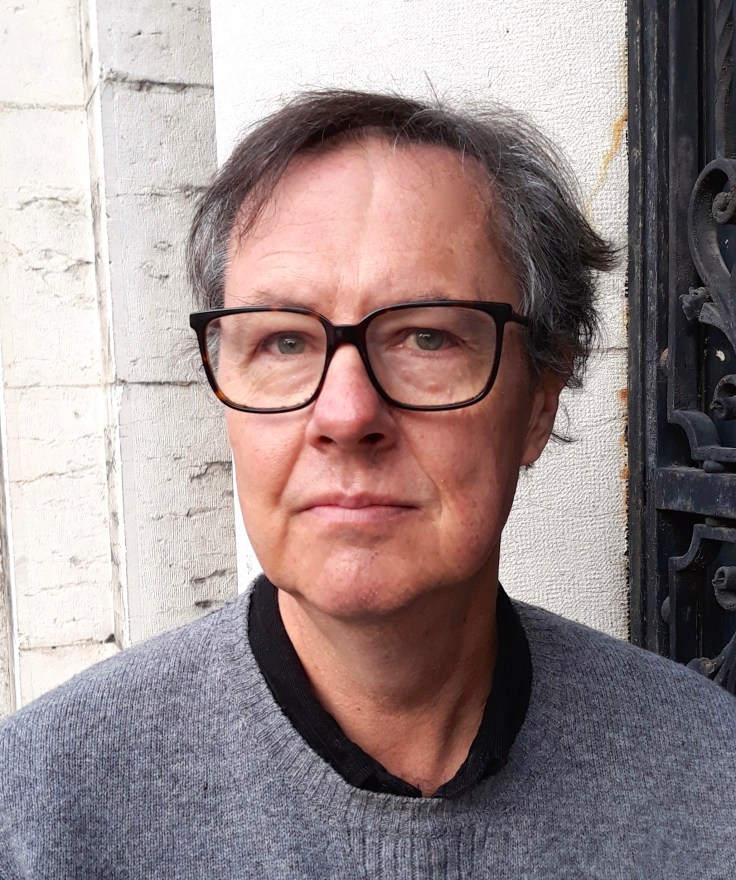
John Taylor (b. 1952) is an American writer, poet, critic, and translator who has long lived in France. As a translator from French, Italian, and Modern Greek, he has brought the work of several European poets into English for the first time. His most recent translations include books by Pascal Quignard, Philippe Jaccottet, Béatrice Douvre, Charline Lambert, Veroniki Dalakoura, and Elias Petropoulos. His own volumes of poetry and poetic prose include Remembrance of Water & Twenty-Five Trees, A Notebook of Clouds & A Notebook of Ridges, which is a “double book” co-authored with the Swiss poet Pierre Chappuis, and What Comes from the Night.
Franca Mancinelli (b. 1981), one of the most important poetic voices in Italian poetry, has won several national prizes for her books. Her entire published oeuvre is also available in English. Excerpts from her dialogues with John Taylor have appeared in The Bitter Oleander, Hopscotch Translation, Hammerklavier, and Eurolitkrant. A bilingual dialogue in verse has also appeared in two successive issues of the journal Traduzionetradizione (Nos. 20 and 21, 2022-2023). Mancinelli lives in Fano, Italy.

Originally published on Hopscotch Translation
Tuesday, June 10, 2025

 hopscotchtranslation.com