
The Public Privacy of the Early Turkish Republic in One Thousand and One Kisses
by Doğa Ayar
By emphasizing repeatability, print capitalism transformed reading practices, and erotica was integrated into nationalistic literacy projects.
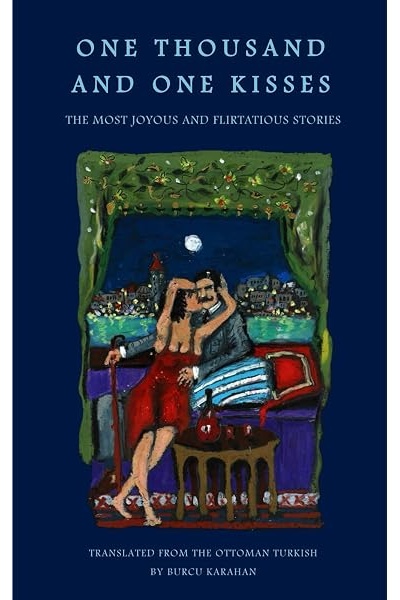
When early twentieth-century literature, once excluded from the national canon, resurfaced for Turkish readers in the early 2000s, many were “amazed to find that their generation did not ‘invent’ erotica after all,” discovering that sexually explicit writing not only existed previously but sometimes did so more prominently than in their own era (Schick 2004). This reaction to the mores at the onset of modernization and the emergence of a new national literary consciousness highlights a perceived rupture between the past and the present. Burcu Karahan’s recent English translation of One Thousand and One Kisses, released in September 2025 by Translation Attached, an up-and-coming publishing house dedicated exclusively to making Turkish literature accessible to English-language readers, revives this dynamic of delayed recognition in a new context. What Turkish readers encountered as a challenge to presumptions about the early Republic now extends, in a similar encounter, to an Anglophone audience, where what appears culturally “foreign” is in fact familiar but displaced.
Erotica existed long before late Ottoman modernization, even though the Republic excluded it from national literary history. It was viewed as a sign of decadence. As one writer stated in 1927: “Our people today thirst for progress and wisdom… it would be absolutely unacceptable to present them with filth that excites their crude and esoteric feelings and directs the center of their entire life to that front” (Mes’ûd, “Muzır Neşriyyât,” Hayat, no. 9, 1927). Seeing how underground interest persisted and grew despite overt reprimands, the modern Turkish translation has sought to restore historical balance. It suggests that societies do not move linearly from “repressed” to “free.” Still, to many readers, these works appeared “foreign,” while their source material was perceived as borrowed. Readers often expressed disbelief at what their predecessors at the empire’s edge engaged with, such as cuckolding, lesbianism, impotence, and nymphomania. This made the text seem inherently derivative. Consequently, translating these works into modern Turkish and, more recently, into English raises questions about belonging and progress.
The problem of estrangement in translation is usefully framed through Lawrence Venuti’s concepts of domestication and foreignization. Should a text be read as if it belonged naturally to the target culture, smoothing over differences? Or should those differences be retained and even amplified so that readers remain aware of the text’s distance from their own context? The recent translation of One Thousand and One Kisses offers a compelling case for examining this tension. This collection of novellas, with an additional series of stories, narrates encounters through highly aestheticized, indirect language and metaphors such as flowers, breath, and silk. Most were written anonymously or under pseudonyms, though the first series is attributed to Mehmet Rauf (Schick 2005, 17). Although Rauf appears to be a pioneer, the stories are little more than a notch above the stale jokes exchanged among men in the social circles of the 1920s. As the editor notes, many of the texts were translated from French sources. Still, the stories’ audience paradoxically developed a foreignizing attitude toward what was an attempt at domestication.
In the Ottoman Empire, erotic works appeared in diverse forms: poetry, prose, and medical-sexual manuals known as “bahnâme.” These were primarily translations from Arabic, Persian, and Indian sources. As Schick notes, “it is not surprising that many of the erotic works written in Turkish are partially or entirely translations, because Arabic literature, which is extremely rich in terms of sexuality, has constituted an inexhaustible source for translators” (Schick 2005). Rauf himself admitted to producing both original works and translations. Building on this, Burcu Karahan Richardson, who has translated the book into English, argues that Bir Zambak’ın Hikâyesi [A Lily Story] was a free translation of Marquise Mannoury Ectot. In this text, Mehmet Rauf transformed a French decadent novel written from a female perspective on lesbian love into a Constitution-era erotic text that celebrates male sexual power (Karahan 2012). While One Thousand and One Kisses shows greater variety, it is considered a continuation of A Lily Story. Both works explore themes of extramarital sex and adultery, depicting women as hedonistic as men. These stories are set in salons, tea parties, recreational areas, parlors, and public transport, thereby connecting them to new patterns of consumption in the public imagination. Ultimately, the tendency to translate, adapt, and reinterpret rather than censor indicates intellectual openness.
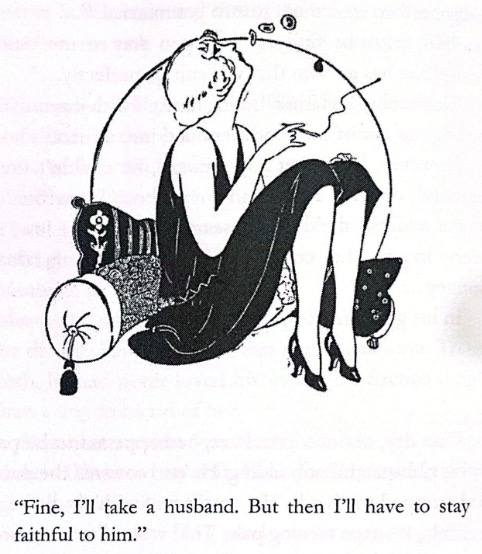
Immediately after the fall of the empire, erotic narratives circulating in the young republic were often framed as evidence of an inevitable surrender to corrupting Western moral influence. However, the discourse parallels that of modernization and the urgent dissemination of easily consumed literature. By emphasizing repeatability, print capitalism transformed reading practices, and erotica was integrated into nationalistic literacy projects. Furthermore, as it increasingly reflected urban life where “articles adapted from French publications [were] featured especially on the first pages; in later issues, however, works reflecting Istanbul of the 1920s [were] more prevalent” (Schick 2005, 20), “localness” was part of an imagination already unfamiliar to contemporary readers. “Domestication” functioned as “foreignness.”
The sense of foreignness in One Thousand and One Kisses arises from a misrecognition of what is historically familiar. In these stories, heroines who dominate passionate men symbolically integrate women into the social world of print culture, even if women themselves remained excluded from that sphere in everyday life. Typically, many stories start on the street: a man notices a woman and begins following her. The first sentence of the story “A Lesson of Love” states: “For the past three weeks, Ferit Hazım Bey, renowned among women for his boundless accomplishments, has been pursuing Dilber İclal Hanım” (Karahan 2025, 12). Consent here is ambiguous and seemingly inevitable: the woman eventually accepts, yet this acquiescence appears as an overwhelming feeling rather than the result of coercion. The characters’ decisions depend on sudden environmental changes, as though they were drawn into the scene rather than making an active choice. They move rapidly to private spaces, using short, direct sentences. Desire is depicted as an inevitable conquest, initiated before contact by imagination, with language combining accident, free will, and military imagery.
The sudden shift in pacing, which mimics the urgency of desire, is exemplified in “Waiting for the Rendezvous.” For example: “Everyone is out on the streets today, women, men, everyone…On days like these, the more beautiful women one encounters, the better” is quickly followed by dialogue that ends with the characters entering an apartment (29). Here, the bodies are described as both wealth and ornament, an aesthetic object. Sensory excess frames climax as a loss of individual boundaries. In “Putting out the Flames,” a hotel owner flees his room as it burns down, while “his wife responds to the ‘flames’ of another man’s passion.” The story ends with the young woman declaring to Namık: “How much better it would have been if it were you who had set the fire!” (70). The strangeness of these short stories lies not so much in what they depict, but in how that depiction shifts between registers. In these stories, the public sphere is distant, constantly changing, and unpredictable. The private sphere, by contrast, is immersive and gratifying. Although this may appear hubristic to a contemporary audience, the material conditions of the text’s production and circulation help explain the erosion of boundaries, both between people and between the spaces they inhabit.
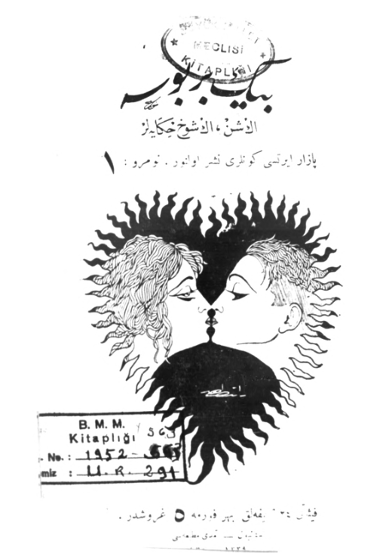
A different dichotomy, one beyond the foreign and the domestic, becomes important in situating these texts in the national imaginary: the private/public distinction in how attachment is reorganized. Rauf started writing erotica after his novel failed to gain enough traction to turn a profit. In One Thousand and One Kisses, understatement, euphemism, and private recognition are at once circulated publicly. There are “respectable” love stories, overly sentimental prose, and openly erotic narrative, suggesting a deliberate editorial strategy to reach a broader readership. Owing to their easy underground dissemination, each pamphlet went through several printings and circulated in the same cultural ecosystem as other mass publications, from hand to hand, encouraging literacy after Turkey’s adoption of the Latin alphabet in 1928. Written in 1927, One Thousand and One Kisses is thus a prescient response to urbanization, modernization, and the collapse of imperialism, in which eroticism processes anxiety, allowing the reader to explore contemporary identities one three- to four-page story at a time. Sexuality is discursively produced: with repetition and circulation, the stories name, organize, and give form to intimacy, rendering it recognizable.
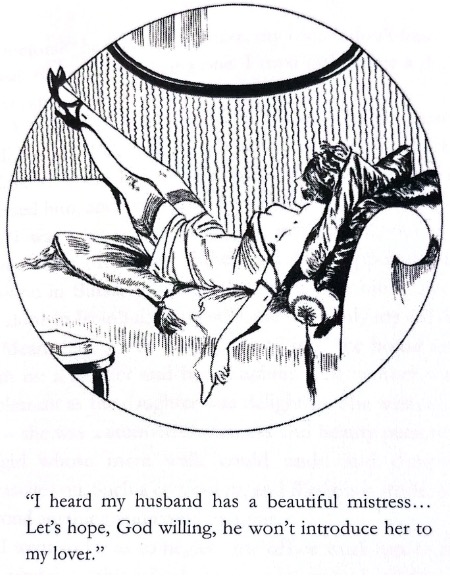
As Walter Benjamin notes, mechanical reproduction detaches the work from tradition, replaces unique existence, and brings art to the viewer in their own environment, changing its context. This contextual shift burdens the authors of the original with the challenge of recreating emotional and cultural affect; Karahan and Schick faced the same pressures in their translations. In response, to avoid legal issues, the stories employ wordplay, humor, French vocabulary, and unusual syntax. Schick elaborates that “foreign sources were also important… translations were seldom faithful… translators often freely expanded and embroidered upon them” (Schick 2004, 85). The book’s openness allowed eroticism to emerge gradually, giving desire an increasingly immersive quality. Additionally, the rapid circulation of the stories created a sense of simultaneity among readers, reinforced by the use of anonymous addresses. Thus, despite stories being anonymous and obviously inspired by Western sources, if not plagiarized, One Thousand and One Kisses succeeded as an immersive externalization of various fantasies.
This success is attributable both to the reduction of women into tropes and to the stories’ comic staging of false modernization, which released readers from ethical tension through laughter before ultimately returning them to a rapidly changing social reality in which such extramarital relationships remained impossible. Over time, the stories increasingly reflected metropolitan life in Istanbul, konak culture—large, extended-family residences associated with Ottoman elites—and urban leisure spaces (Schick 2005, 20).
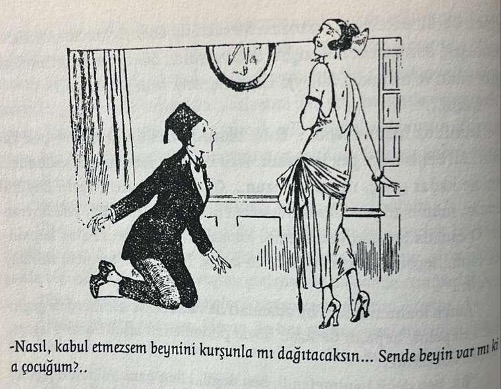
“A Lesson of Love” is one of the stories that demonstrate the genre’s dependence on urban interiority. The story unfolds during afternoon tea in a salon, where gossip circulates before the characters can do so in person. Long, ornate sentences, Ottoman politesse, and references to surveillance through words like rivayetler (“rumors”) and takibat (“proceedings”) create an atmosphere in which language itself feels socially monitored. Because salon etiquette already appears historically distant to modern readers, the characters begin speaking about repetition and the limits of expression itself. When İclal mocks Ferid’s declarations — “I love you; I adore you; burn for you… These are the verses you recite repeatedly!” — the Ottoman word neşide, meaning refrain or verse, turns the exchange into a meta-poetic joke. Rendered too literally in English, however, the line risks sounding excessively ironic and historically implausible. Karahan translates the punchline-based humor while retaining the sense that what İclal mocks is not simply emotion but the insufficiency of language itself.
In a reflection on her translation, Karahan focuses on the word merkez (“center”), which acquires an erotic meaning despite not being inherently sexual in Ottoman Turkish, French, or English. Ordinarily, the word refers to a literal center, a hub of authority, or even a police station. Yet within the flirtatious logic of the story, it becomes euphemistic. A line such as “I have a tongue, hanımefendi (madame), and it is ever ready to serve the [merkez] of all things” depends on implication rather than declaration. Karahan links this usage to Mehmet Rauf’s earlier metaphor in A Lily Story, where female genitalia is “the thing around which the world revolves,” an image that resonates with Gustave Courbet’s painting L’Origine du monde, commissioned by the Ottoman collector Halil Bey and auctioned to Jacques Lacan in 1955. Rather than translating merkez as “center” or “origin,” both of which flatten the ambiguity, Karahan chooses “core,” preserving both centrality and innuendo without making the metaphor explicit.
The word itself already carries layers of historical movement. Derived from the Arabic markaz, from the root rkz (“to plant,” “fix,” or “erect”), merkez was never entirely “native” to Ottoman Turkish in the first place. In late Ottoman erotica, differences between foreign and domestic influences do not function primarily as cultural otherness. The context is produced through shifting boundaries between public and private speech. The erotic meaning of merkez is only activated contextually, through laughter, hesitation, and negotiation. Karahan’s translation into the highly idiomatic “core” appears a domesticating choice on the surface, yet it preserves precisely this unstable, knowing-without-saying dynamic. The reader understands the implication while remaining unable to fully name it. Another important example of this dynamic is the way the stories normalize women as participants in debates over marriage, labor, and modernity, while also continually signaling to male readers through homosocial humor and conspiratorial intimacy. Near the end of the story “Ahiretliğe Mücazat” (“The Punishment of the Maid”), the narrator directly addresses readers by insisting that the protagonist “did exactly what any one of you in his place might have done” (199). The second-person address collapses the distance between narration and reader, forcing participation while simultaneously diffusing responsibility. Humor becomes a mechanism of moral deflection.
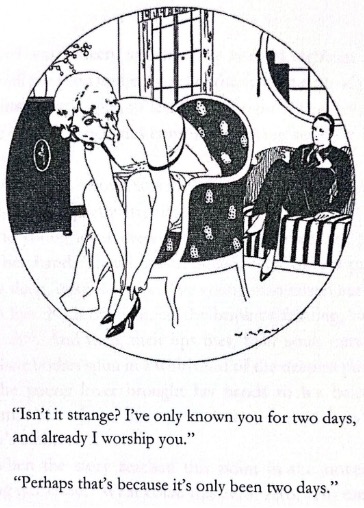
This indirection also allows retreat without denial. During a time of heavy censorship, metaphors must remain abstract even as they convey familiarity. Readers are pulled inward by suggestion while simultaneously held at a distance through artifice and euphemism. In this sense, merkez becomes not only a metaphor for erotic proximity but also for the reader’s relationship to the text itself. This dynamic mirrors the way print transformed private experience into public discourse, rendering sexuality legible through repetition without fully exposing it. Since pamphlets circulated through decentralized printing networks that responded to demand rather than monopoly control, even imported motifs that remained visibly “foreign” acquired local functions through repetition.
Karahan’s translation preserves this market-aware gendered address. Expressions such as “porcelain-like knees” make the text immediately legible, compensating for the loss of Ottoman linguistic delay through tonal exaggeration and wit. The translation thus retains the original oscillation between intimacy and distance. Each pamphlet, each act of reading, reactivates the same structure of implication, recognition, and retreat. The excessive artificiality and homosocial theatricality of the prose push the reader back out. For modern Turkish readers, recognition that one’s ancestors also desired creates a form of genealogical intimacy even as the language of old Istanbul feels strange; for English readers, borrowed symbolisms and unstable metaphors recreate that same experience of partial recognition. Both are attempts to invite readers to reconsider what is “modern” and “traditional.” Translation, then, is not the preservation of foreignness so much as the restoration of legibility to forms of intimacy that history has rendered strange.
Works Cited
Karahan, Burcu. “Repressed in Translation: Representation of Female Sexuality in Ottoman Erotica.” Journal of Turkish Literature, vol. 9, 2012.
Schick, İrvin Cemil. “Print Capitalism and Women’s Sexual Agency in the Late Ottoman Empire.” Comparative Studies of South Asia, Africa and the Middle East, vol. 31, no. 1, 1 May 2011, pp. 196–216, https://doi.org/10.1215/1089201X-2010-067.
Schick, Irvin Cemil. “Representation of gender and sexuality in Ottoman and Turkish erotic literature.” The Turkish Studies Association Journal, vol. 28, no. 1/2, 2004, pp. 81-103.
Rauf, Mehmet. Bin bir buse: 1923-24 İstanbul’undan erotik bir dergi. Translated by İrvin Cemil Schick and Ömer Türkoğlu. Kitap Yayınevi, 2005.
Rauf, Mehmet. One Thousand and One Kisses: The Most Joyous and Flirtatious Stories. Translated by Burcu Karahan. Translation Attached, 2025.
Venuti, Lawrence. The Scandals of Translation: Towards an Ethics of Difference. Routledge, 1998.

Raised in Istanbul, Doğa Ayar studied Philosophy and French at Reed College. She is currently pursuing an MFA in Literary Translation at the University of Iowa, translating between Turkish, English, and French. Her work focuses on voice, perception, memory, and displacement. She is currently translating a poetry collection by Lale Müldür and Mikel Dufrenne’s “L’œil et l’oreille.”
Originally published on Hopscotch Translation
Tuesday, September 8, 2026


