
The Silent Unraveling of the World: A Conversation with Fernanda Trías
by Miaad Banki
Ever since I was a child, when I began to read, I felt that books were marvelous, magical artifacts that allowed you to travel through time and space.

Introduction
She writes of solitude, of the silent unraveling of the world, and of complex human relationships. Fernanda Trías, the prominent Uruguayan author, with a piercing gaze and a beautiful yet unadorned language, writes of afflictions that affect not only the body but the soul. Trías is one of those writers who breaks the boundary between truth and imagination, between living and destruction. In the acclaimed novel Pink Slime, she depicts a world in decline that, despite its darkness, is a mirror of our present: a world buried under the debris of environmental crises, hunger, and emotional isolation. Her prose is biting and poetic, without exaggeration or ceremony. Every sentence is a wound that opens to reveal something, allowing a pain—even if indistinct—to find its space. In her works, from The Rooftop to her latest novel El monte de las furias, for which she was recently awarded the prestigious 2025 Sor Juana Inés de la Cruz Prize, Trías always faces a fundamental question: How does a human endure amidst the destruction of the world and the destruction within? A writer rooted in Latin America and yet a migrant, Trías has lived in France, Germany, and the United States, and now resides in Bogotá, Colombia. This displacement and placelessness have manifested in her language and writing. In a world where women writers must still struggle to be heard, Fernanda Trías, with a calm yet unique tone, narrates human solitude and transforms pain into words that cannot be ignored. In this conversation, we spoke of writing, translation, and much more.
The Conversation
Miaad Banki: Your novels, The Rooftop and Pink Slime, create intense worlds filled with dark atmospheres and human crisis. Are these worlds inspired by your own life experiences, or are they born more from imagination?
Fernanda Trías: I truly believe that imagination is nourished by experience and that the two are virtually inseparable. Of course, the events I narrate in these novels are by no means autobiographical; however, I could say that the emotions are. What matters, I think, is not the events themselves but the soul of the events.
Banki: Your writing style is known for being very precise and poetic. How conscious are you of the sound and rhythm of your sentences as you write? Is finding the perfect word a painstaking process for you?
Trías: I firmly believe that literature is not just the story, not even the theme. Literature is, above all, language. And not just the meaning of words, but also the music of language—the sound of words, the rhythm of sentences, and, of course, precision. Precision is essential to good storytelling, and precision is something we learn from poetry. I learn a great deal from poetry as a fiction writer. I work very carefully on the language of my texts. I read aloud and compose with a sense of musicality as well. I wouldn’t say it’s painful or unpleasant work, but it is labor-intensive, and that means it takes time—many revisions and a slow process. It’s not something that can be done quickly, and that runs counter to the speed-driven demands of modern life. But a kind of work like this simply can’t be done at high speed.
Banki: Many of your characters seem trapped in inescapable situations. Is writing a way for you to explore personal or social darkness, or is it more a reflection of a world where redemption is no longer possible?
Trías: I’m particularly interested in exploring those dark places within the human soul and psyche, but also within the social body—as a living being that exists collectively and is shaped by collective experience. I’ve always been fascinated by character-driven literature, the kind that delves deeply into the construction of a character who is far from simple, someone with many layers of complexity—just like I believe human beings are. I think we tend to simplify ourselves, but if we’re 100% honest, we’ll find countless contradictions, emotions that are far from noble. I like to create characters who inhabit those shades of gray, yet dare to look directly into the abyss of their own personality.
Banki: Writers from smaller nations—like Uruguay, whose literature often lies outside the global spotlight—frequently experience a tension between rootedness and displacement, between writing in a mother tongue and addressing a wider world. How has this sense of in-betweenness shaped your relationship with language and storytelling?
Trías: What a great question. It is a tension I have to navigate with every book, and there’s no simple answer or solution. But I find it interesting that the place I write from—as you rightly point out—automatically positions me on the periphery. And so I’m very aware that I write from a peripheral place. That periphery is double or even triple-layered. It comes not only from being born in a small country that is certainly not at the center of global attention, but also from being a woman who writes, from writing in Spanish, which is not a hegemonic language at the moment, and so on. Writing from that peripheral position has also given me a certain kind of freedom that I truly value. Of course, it comes with its own challenges—challenges related to access: reaching a larger audience, getting translated, being read. But it also gives me the freedom to write without the constraints imposed by the demands of the mainstream market. That freedom allows me to experiment, to keep writing books in which language remains at the center.
Banki: Has there ever been a book you’ve read and thought, “I wish I had written this”?
Trías: Yes—many, countless, really. From books of poetry like “Altazor, or a Voyage in a Parachute” by the Chilean poet Vicente Huidobro—which I’m not sure has been translated into Persian, but it’s a marvel—to a wonderful trilogy like “The Notebook” by Agota Kristof. I also deeply admire “Everything I Own I Carry With Me” by Herta Müller. And without a doubt, if I started thinking about the classics, I’d find many more I wish I had written.
Banki: Both The Rooftop and Pink Slime have found a passionate readership in Iran. What does it feel like to know your stories are being absorbed by a culture and in a language so different from your own?
Trías: Yes, it moves me deeply. It always feels like a small miracle that a book translated into such a distant language can reach the hearts and minds of readers in that place, in that culture. It renews my belief that literature can cross barriers—linguistic, cultural, or otherwise. Ever since I was a child, when I began to read, I felt that books were marvelous, magical artifacts that allowed you to travel through time and space. Isn’t it magnificent to be able to read the words of someone who hasn’t inhabited this world for a long time? Literature transcends borders, and even the borders of time.
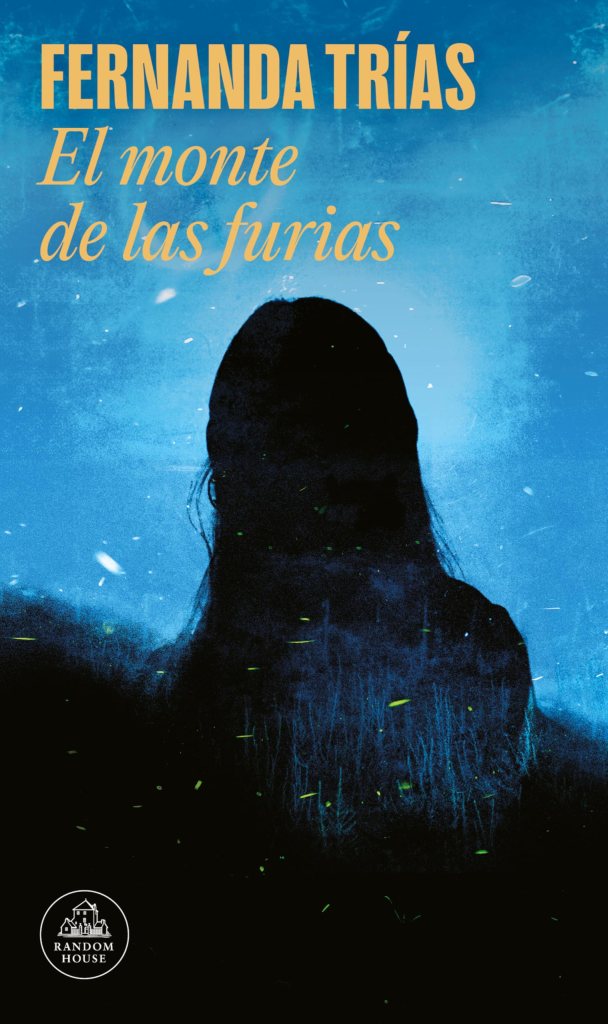
Banki: Your latest novel, El monte de las furias, is more intricate and poetic than your earlier work. As its translator, I found it extraordinarily challenging. Your insistence on language’s failure to fully convey meaning raises essential questions about the limits of expression; at times, the nuance of a single word can shift the entire tone of a sentence. We see a similar atmospheric intensity and sense of crisis in your previous work. Could you trace this back and talk about the origins, atmosphere, and thematic concerns of Pink Slime?
Trías: Yes, that’s true—and I think my latest novel, which recently released in Iran, is even more challenging in terms of language. At this stage, I’m very interested in exploring and pushing the boundaries of language, and in searching within the layers of poetic language for the variety of nuances you mentioned. Pink Slime was born out of my personal concern with the global climate crisis. I became interested in imagining how a potential environmental and climate catastrophe could alter our lives—not just on a broad scale, reshaping society and the organization of our cities, but also on the most intimate level: how it could affect and transform a single life, like that of the woman in the novel who cares for a child. The atmosphere is oppressive, something I often explore in my novels, and there’s a dreamlike quality brought on by the constant fog that blurs the shapes and edges of things. Above all, I wanted to explore the question of beginnings and endings, because I’ve often wondered whether what we call “the end of the world” might have already started in a much quieter way, and we simply haven’t realized it yet. My question is whether we still have time to stop a deeper climate crisis. At the same time, I believe that if the world changes in unimaginable ways, into a world we no longer recognize, then we—as individuals and as a collective—will have to go through a profound mourning process. An ultimate loss: the loss of the world as we knew it, as it begins to operate under entirely new rules. And this would require a collective grief, which is what the novel is ultimately about: the mourning of a way of life that no longer exists, alongside the personal grief the protagonist experiences through her own losses—and how that personal mourning fits within the larger, collective one.
Banki: Your novels often have a very unique structure—you play with time or the way dialogue is presented. How do you decide on the right structure for a story? Is the way a story is told as important to you as the story itself? How much does translatability matter to you? When writing, do you ever think about how your work might be received in other languages?
Trías: What a great question! That is the small tragedy of the writer—to know that the only thing we have at our disposal is a flawed language, an insufficient tool. And yet, it is precisely that insufficiency that makes it possible to reach unexpected places. What I find powerful and necessary is the search itself: the act of plunging into language, into its folds, in pursuit of nuance—to convey meanings that can only be found in those hidden layers of expression.
Banki: You often leave things unsaid in your stories. Do you intentionally invite your readers to read between the lines and find their own meaning in the silence?
Trías: Yes, because I deeply believe that reading is a creative act, and that it completes what the author began on the blank page. Just as the author writes between the lines—through silences and what remains unsaid—the reader reads between the lines, deciphers those silences, and fills what is unspoken with meaning. In this way, reading and writing complement each other and form a collaborative, creative, and active process. That’s why reading can be so stimulating. When a text doesn’t demand that effort from the reader—when everything is handed over fully digested—it often becomes a passive act.
Banki: Finally, a more personal question. Your depiction of death in El monte de las furias is incredibly powerful. As I translated it, I felt it was the heart of the book. What does death mean to you, and how present is it in your imagination when you write?
Trías: For me, death is the final question, the ultimate mystery, the last and most thrilling adventure of being human. But that’s what I think when I reflect on death as something natural, as a peaceful passing. However, here on my continent—and surely in other countries and regions that would relate—we are still grappling with the darkest and most terrible aspects of death: massacres, wars, disappearances. All of this forms a harsh legacy that must be processed through historical and collective memory if we are to imagine a better world. So, my novels always arise from some kind of personal pain. As I said in response to your first question, the soul of the events is autobiographical. And the theme of death is deeply tied to this ever-present trauma in many Latin American countries. Still, in that novel, I hope I managed to take away some of the darkness from those moments through the presence of care—a theme that matters deeply to me—and how it is still possible to care for one another, even in the face of death.
Click HERE to read the full conversation in Spanish (page opens in new tab).
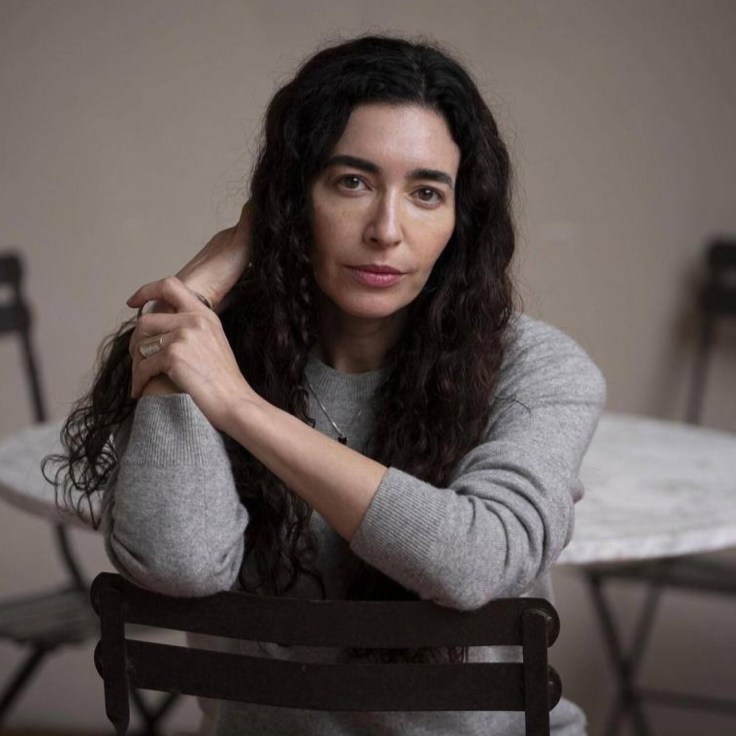
Fernanda Trías (b. 1976, Uruguay) is a novelist and translator whose work has redefined contemporary Latin American fiction. Her novel Pink Slime (Mugre rosa) won the prestigious Sor Juana Inés de la Cruz Prize (2021) and was a Finalist for the 2024 National Book Award. In 2025, she was awarded the Sor Juana Inés de la Cruz Prize for the second time for her latest novel, El monte de las furias, making her one of the few authors in history to receive this honor twice. Her works have been translated into over fifteen languages. She currently resides in Bogotá, Colombia, where she teaches creative writing at the National University of Colombia.
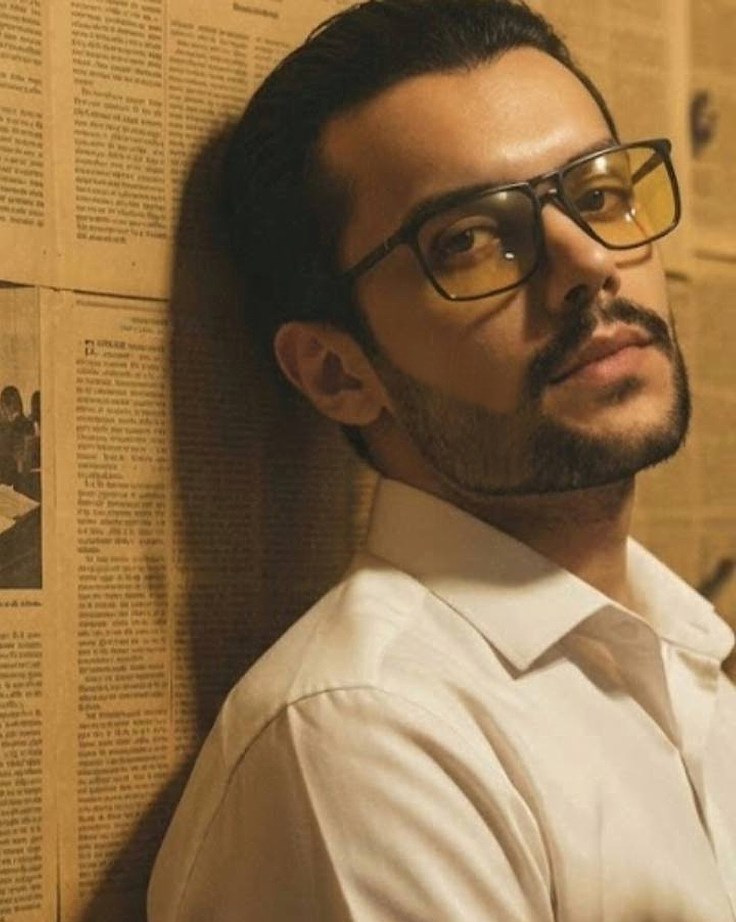
Miaad Banki (PhD) is a literary translator and university lecturer based in Tehran. He specializes in contemporary Spanish and English-language fiction and narrative non-fiction, with a particular focus on “non-domesticated” and subversive voices. As the authorized Persian translator for Fernanda Trías, Brenda Navarro, and Ariana Harwicz, he is committed to bridging the gap between international avant-garde literature and Persian readers. His writing and interviews have appeared in Asymptote, Full Stop, and Public Books, with forthcoming work in Latin American Literature Today (LALT). More of his work can be found at miaadbanki.carrd.co/.
Originally published on Hopscotch Translation
Tuesday, April 14, 2026


