
“We begin, necessarily, with the words”: Katherine M. Hedeen and Víctor Rodríguez Núñez on their co-translation of Rolando Kattan’s Bullet-Proof Vest
Katherine M. Hedeen and Víctor Rodríguez Núñez interviewed by Michelle Mirabella
Amid the violence in Honduras, in Palestine, in Cuba, in the U.S., poetry protects us. That is a very powerful metaphor.
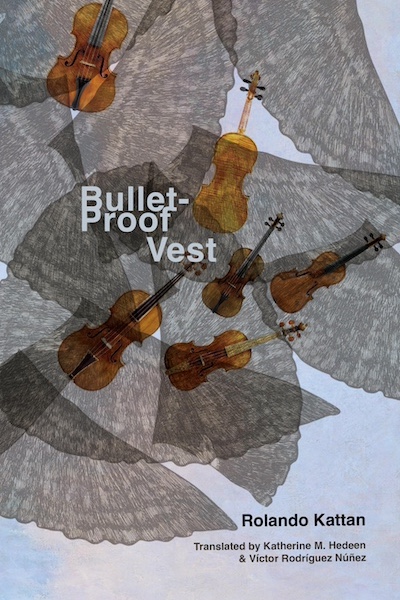
Throughout the months of May and June, Hopscotch Editor-at-large Michelle Mirabella corresponded with translators Katherine M. Hedeen and Víctor Rodríguez Núñez to discuss their co-translation of Bullet-Proof Vest, Honduran poet Rolando Kattan’s English-language debut published in April 2026 by Eulalia Books.
Michelle Mirabella: How did the two of you come to Rolando Kattan’s work? What drew you to translate it and why now?
Víctor Rodríguez Núñez: I first met Rolando in 2014 at a poetry festival in Zacatecas, Mexico. I was immediately drawn to his work. To give some context, Latin America has an impressive network of poetry festivals which nourishes a vibrant community of poets, allowing us to establish and sustain relationships through poetry beyond national borders. Honduras has not been well-represented at these festivals. In fact, most Latin American poets would be hard-pressed to name a Honduran poet. It has not been a country associated with a great poetic tradition, though this is not true at all, it has simply been silenced. As the Colombian poet Jorge Zalamea said, “In poetry, there are no under-developed countries.” So, as a result, I was thrilled to meet a young Honduran poet, to discover his work, and to hear him read—he’s a very compelling reader. We became fast friends. When he handed me an anthology of contemporary Honduran poetry that he had selected, it became clear that he was not only interested in his own work, but in a much larger project: putting contemporary Honduran poetry on the map. Happily, the situation is changing and one of the best international poetry festivals in Latin America, Festival Internacional de Poesía Los Confines, takes place in Gracias, Honduras.
Katherine M. Hedeen: I got to know Rolando’s work thanks to Víctor. I first met him in 2017 when he invited me to Tegucigalpa to lead a series of translation workshops. His generous recognition of translation as an artistic endeavor made a lasting impression on me. He understands on a very deep level the importance of translation as a way of circulating ideas. Now that I have known him for almost ten years, it makes sense why he would support translation as he does. He is a bibliophile and antiquarian, and has what is, quite possibly, the best private library in Honduras.
As for what drew me to translating his work, Víctor noted above that most Latin Americans would find it challenging to name a Honduran poet (Rolando has changed that, I should add). Imagine the case in the U.S., where Honduras simply doesn’t exist for readers beyond, perhaps, a sticker on a banana, a tag on a shirt, or a headline about a corrupt government. A major part of my work as a translator is bringing under-represented voices from the Spanish-speaking world into English. I am also very keen on challenging the small but influential canon of Spanish-language poetry in English translation. Rolando’s poetry does so quite effectively.
MM: Before we dive into Bullet-Proof Vest, let’s talk more about the Honduran poetry scene. Kate, in your Translator’s Note you name a number of Honduran poets1 and mention that Bullet-Proof Vest is “Kattan’s first book to appear in English and only the second by a Honduran poet” (13). Kattan, and now the two of you, have been a part of putting contemporary Honduran poetry on the map. What in the landscape has changed and why now?
KMH: In a broad sense, the landscape of how Latin American poetry circulates has changed. Over the past thirty years there has been a significant increase in poetry festivals, online poetry journals, and small poetry presses throughout the region. Poetry has always held a very privileged place in Latin America, but these festivals, for example, take it to the next level. This is activism: poetry is in the streets, in marginalized city neighborhoods, in high schools, in the countryside. It is more accessible than ever. Honduras is no exception, thanks to folks like Rolando, who runs two small publishing houses in Honduras (Mano Nostra and Cisne Negro) and like the cultural promotor, translator, and small press publisher Frances Simán. Another is Salvador Madrid, who organizes the Confines International Poetry Festival in Gracias, Honduras. They are doing incredible work. 40 to 50 poets participate each year (from Honduras and around the world) and the festival publishes a book by each of them and makes them available to Honduran readers and beyond.
What unites all these projects is the belief that poetry is a lifeline and during moments of crisis is when it thrives. Likewise, there is great openness and a genuine interest in translation.
VRN: Kate is absolutely right. The circulation of poetry in Latin America has never been stronger. I’ll briefly add that I have helped organize many of these festivals and have participated in many more. I can attest to their impact in both the poetry world and the wider community.

MM: How did Rolando Kattan’s Bullet-Proof Vest come to be in its current form? This collection of poems, in co-translation by you two, from Eulalia books.
VRN: Bullet-Proof Vest is a culmination of a project that has been gradually evolving since 2017, when we first began translating Rolando’s poetry. It represents a succinct overview of his work and includes poems from all of his books, and, of course, our favorites.
KMH: In addition to bringing Honduran poetry to a wider audience, we have felt compelled to translate Bullet-Proof Vest because of Rolando’s Palestinian heritage. His work belongs to an under-studied tradition within Latin American poetry written by descendants of Arab immigrants, like Jorgenrique Adoum (Ecuador), Fayad Jamís (Cuba), and Raúl Gómez Jattin (Colombia), whom we have also translated ourselves or co-translated.
The generational effects of exile and displacement is a theme that emerges in Kattan’s collection, like in the opening poem “The Pineapple Tree.”
MM: The words “tierra” (land) and “país” (country) appear throughout this collection, and they particularly caught my attention in the poems referencing Palestine and Kattan’s heritage. I noticed you did not choose a consistent translation solution, sometimes even translating “tierra” as country and “país” as land. Deciding what we translate and then how we translate it is a political act. How did you approach these translation decisions?
KMH: That’s a great question. You’re right that the decisions we make when we write have political implications, and translation is not separate from any other kind of writing. For us, there are undoubtedly aesthetic concerns (which are also political) that inform what words we choose. This is particularly true in the case of poetry. It matters to us greatly how a poem sounds, for example. While consistency can be important to maintain, it really depends. What works for one verse or poem might not work for another. The word “land” is more expansive and I think in general we prefer it, but in a few cases “country” seemed to fit better.
MM: I’d love to hear more about capturing the aesthetics of Kattan’s poetry, specifically how you approached this as a collaborative translation. Do you have examples you can share that would demonstrate the co-translation process?
VRN: Kate and I have worked collaboratively for the past thirty years. We translate from Spanish as well as from English. When translating from the Spanish, Kate does the bulk of the work and when it’s from the English, I do. We’ve translated many kinds of poetry and each poet requires a different process. In this case, Kate did a very clean first draft and then we went over it together. She had a list of questions for me about clarifying specific words or phrases in Spanish. Once we covered those, we did a reading out loud. This is perhaps the most important part of our process because that’s when we hear beyond language. Because my first language is not English, I can turn comprehension off a bit more than Kate can and be more attuned to the sound of the poem. I think this is quite apparent throughout the book. It explains a bit more what Kate discusses above with regard to word choice. When she says, for example, that the word “country…seemed to fit better,” that’s what she’s referring to. The sound and diction of the poem.
KMH: I speak a bit about what it means to capture the aesthetics of Rolando’s poetry in the translator note. I’m very interested in the reception of Latin American poetry in English translation, the expectations surrounding it, and the role of translators in forming a canon of these works or resisting it. We are drawn to Rolando’s poetry precisely because it challenges expectations of how a Latin American poet should write. In fact, U.S. readers don’t even know what to expect from a Honduran writer. How could they? This is the only book in English translation in print. But, this, of course, is also a challenge for us as translators, too. In the final section of the note, I mention the great Spanish poet Antonio Gamoneda’s notion of poetry’s reality. Here he affirms that language comes first and then thought. He states, “my language, my own language, is the creator of consciousness and knowledge.” This approach lends itself very well to translation. We always begin with the words.
MM: The title of the collection, Bullet-Proof Vest, is pulled from “The Polish Poets” on page 107, and I’m curious about the process of selecting the book’s title. How was the title decided?
VRN: While it might not seem like it from the title, “The Polish Poets” is an ars poetica. The poem addresses coming to the knowledge that poetry is a shield, a safe space, and ultimately, a way home. We were drawn to the idea of poetry being, as Rolando states, “more reliable than a bullet-proof vest.” Amid the violence in Honduras, in Palestine, in Cuba, in the U.S., poetry protects us. That is a very powerful metaphor.
MM: To circle back to “The Pineapple Tree,” which Kate mentioned earlier, part III of that opening poem references “flocks of violins flapping their wings” (23). The image of winged violins on the cover of a book titled Bullet-Proof Vest makes for an intriguing juxtaposition. What work do you feel the title and the cover image are doing together to frame the poetry within?
KMH: First off, a shout out to Tyler Friend, Eulalia’s designer. They were the one who pulled this image from the book and suggested it for the cover. All of us, including Rolando, loved it from the start and think it works really well. The image of violins flapping their wings expands upon the idea that I’ve mentioned above with regard to what we expect as readers from a book of Honduran poetry and, likewise, it honors the work: it is strange and beautiful.
MM: Looking forward, what can we expect to see next from your collaboration as translators?
VRN: We always have many collaborative projects. In the case of Spanish into English, some of what we do depends on publishing opportunities, which have improved in the U.S. but are still limited. Two that we are particularly excited about are a third volume of Gamoneda’s poetry and a book by the Argentinian poet, Daniel Calabrase. We also translate from English into Spanish, most recently titles by Sharon Olds and Johannes Görannson, and there are quite a few more opportunities to publish, but we want to keep a balance between the two.
Lastly, we want to thank you for taking the time to speak with us about our work!
- Juan Ramón Molina, Jaime Fontana, Roberto Sosa, Edilberto Cartona Bulnes, Rigoberto Paredes, José Luis Quesada, José González, Leonel Alvardo, Mayra Oyuela, Salvador Madrid, Carlos Ordóñez, and Iveth Vega ↩︎
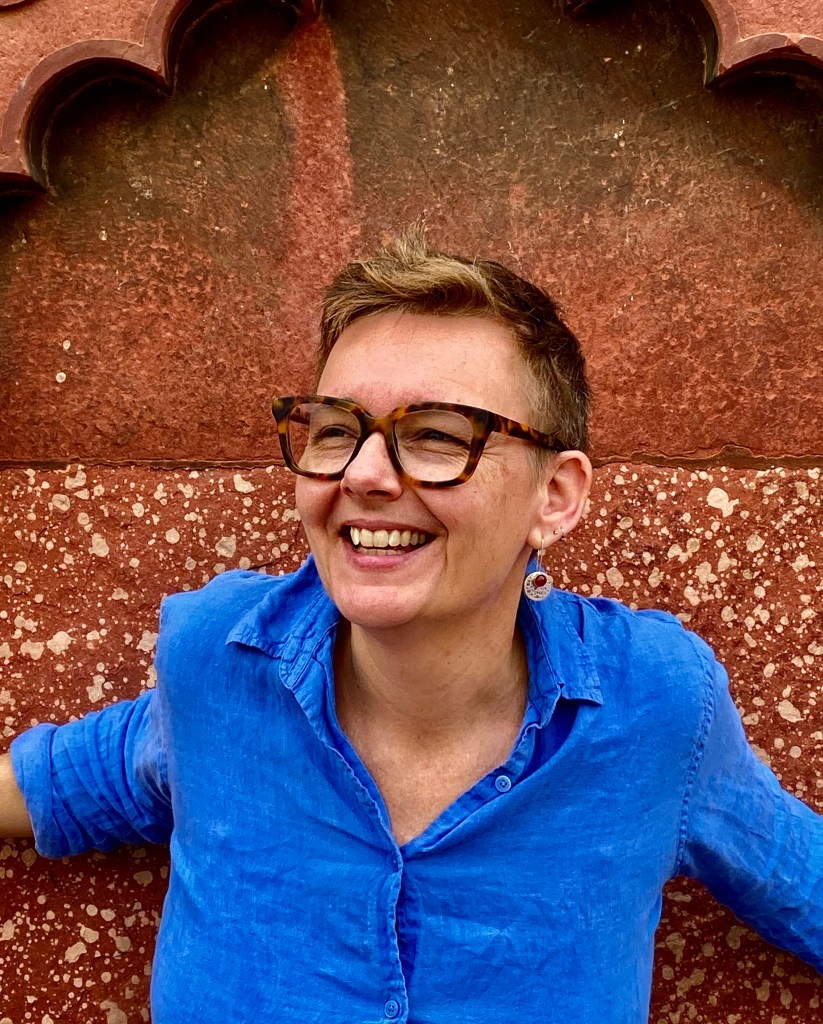
Katherine M. Hedeen is an award-winning translator of Latin American poetry. She has translated over thirty books of some of the most respected voices from the region into English. Her work has been a finalist for both the Best Translated Book Award and the National Translation Award. She is a recipient of the University of Wisconsin’s inaugural Poetry in Translation Prize, two NEA Translation Grants, and a PEN Translates award in the UK. She is an editor of the transnational and translational press, Action Books. She resides in Ohio, where she is Professor of Spanish at Kenyon College, and Havana, Cuba. www.katherinemhedeen.com
Víctor Rodríguez Núñez (Havana, 1955) is a poet, journalist, essayist, translator, and university professor, with over one hundred editions of his poetry published throughout the world. He has been the recipient of major awards in the Spanish-speaking region, including Spain’s coveted Loewe Prize. His selected poems have been translated into nineteen languages and he has read his poetry in more than fifty countries. He divides his time between Gambier, Ohio, where he is Professor Emeritus of Spanish at Kenyon College, and Havana, Cuba. www.victorrodrigueznunez.com

Originally published on Hopscotch Translation
Tuesday, July 28, 2026


