
There’s A Worm In Our Mouth […wriggling missives from a shared subsoil…]
by kathy wu and Ryan Greene
We feel indebted to many poet-translators who shift our focus from pre-emptively grieving what is “lost” in translation toward celebrating the poetic and political possibilities of indeterminacy.


read: humus
Yaxkin Melchy
[tr. Alice Whitmore]
Reticular adjectives abound for subterranean networked meshiness—rhizomatic, mycorrhizal, mycelial, etc. We (kathy + Ryan) have been in an extended hyphal conversation that has made worms of us as we sift and stir through a rich mix of word dirt, tracing filamentous connections and symbiotic entanglements.

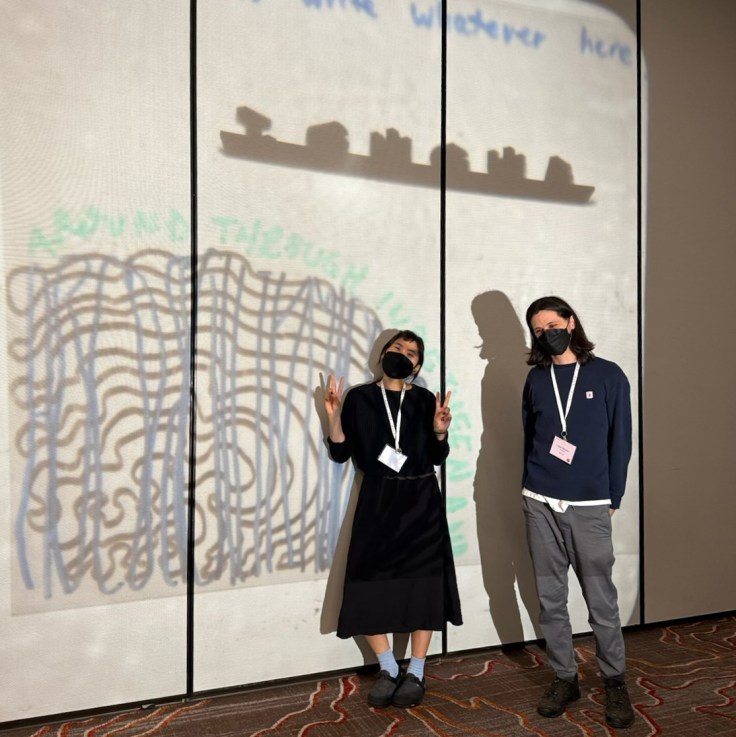
Writing to you now, from our respective homes (Ryan in Phoenix [Akimel O’odham/Pee-posh lands] and kathy in Providence [Narragansett lands]), we’re excited to invite you into our thought-churn on multilingual design, bookmaking, creative coding, and translation. Our many vermi-hearts have been yearning for multilingual reading/writing beyond the book spread—beyond binaries such as verso (left) and recto (right), beyond the tidy splits of “origin” and “destination” language, and beyond the partition of “physical” and “digital.” Here, for example, is a webpage for a tongue-twisty workshop we co-facilitated last year at the American Literary Translator’s Conference.
Across our (still unfurling) conversations we’ve been circling (like an asymptotic dog about to sit but never quite sitting) a series of questions about how languages can co-habit space in multilingual texts. We’ve inherited certain choices as “correct” or “default”—we’re curious about how to make these defaults visible as choices while also imagining what other possibilities might exist. Of course, there is no single answer, but rather many, many answers, some which offer new questions.
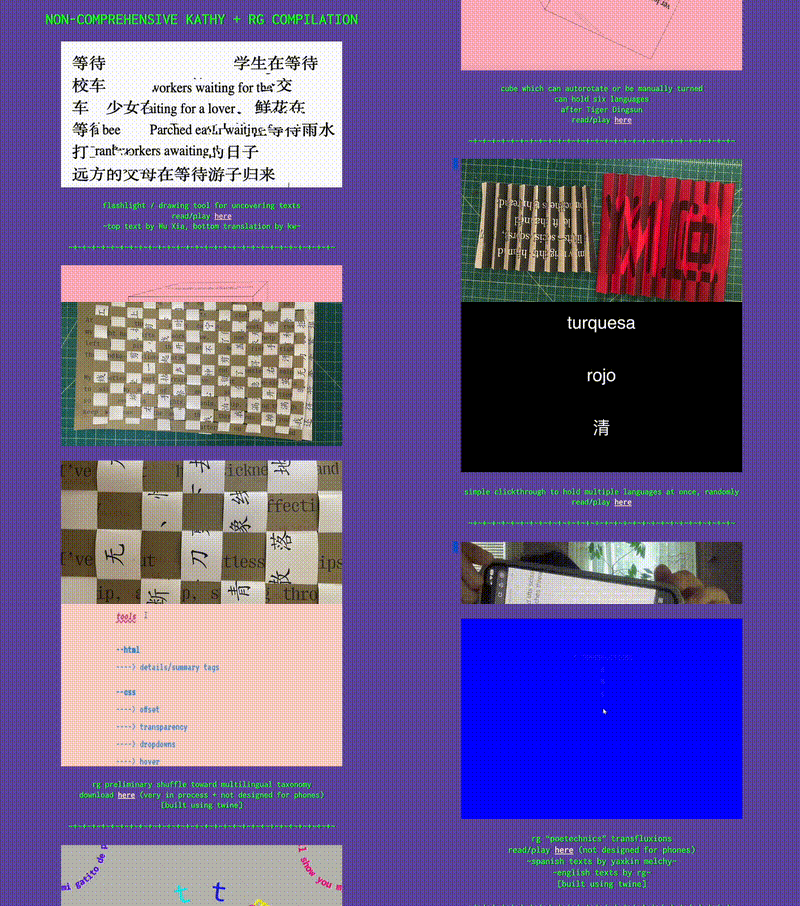
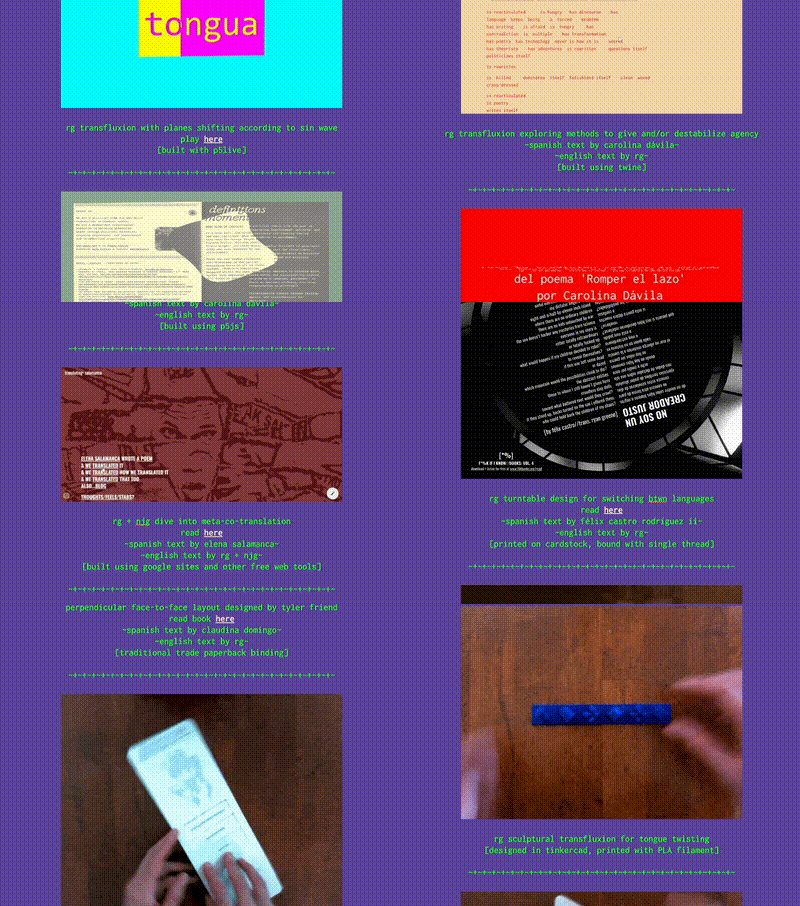
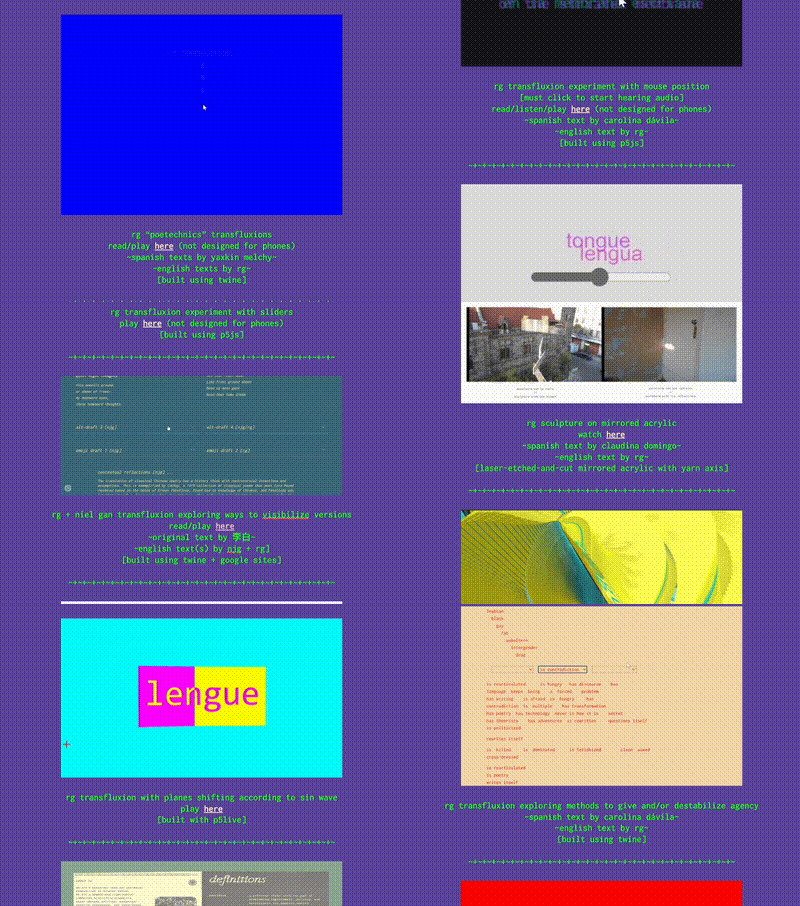
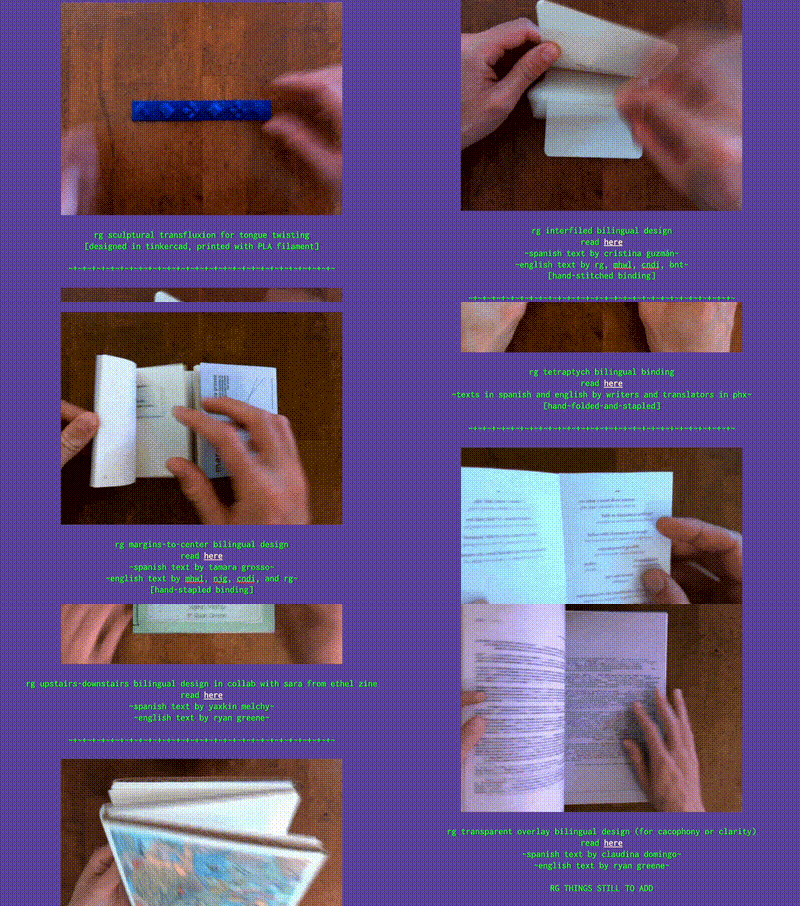
In this spirit, we want to share some examples to grow into broader questions around an ethos of making and co-making, translating and co-translating. In the swirl of our co-laboration(s), we’ve also found ourselves playing in new fluencies—using and “mis” using tools with an always-beginner approach. We hope that our learning in public can, in turn, be pedagogical, inviting others to learn alongside us.
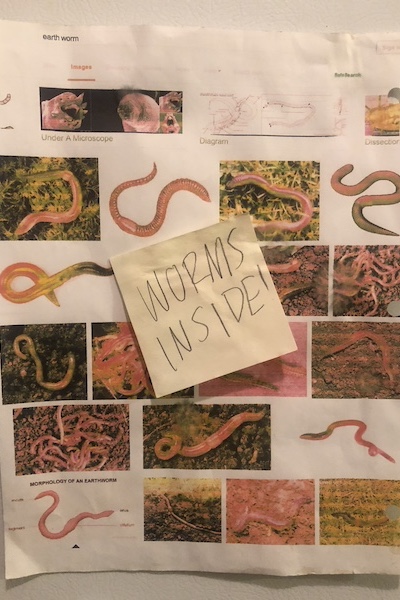
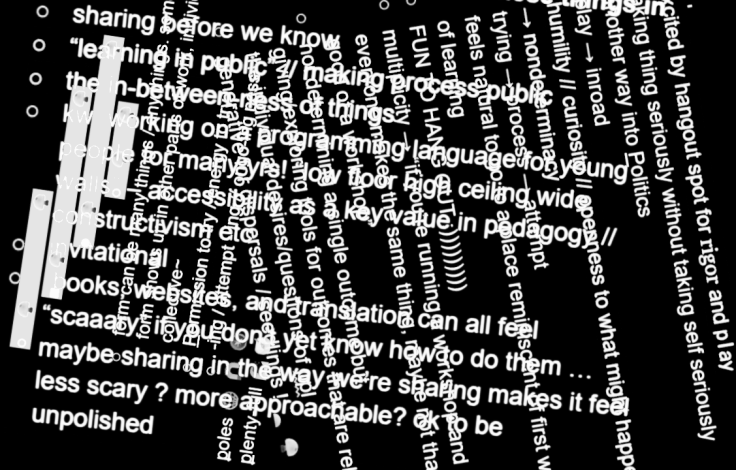
But before we dive in, we’d like to offer a detritivoracious accompaniment to your reading. You can click HERE to crawl through a subterranean swirl of text taken from our various drafts and brainstorming in preparation for this “essay,” including screenshot-ed comments, handwritten notes, and wriggling musings. We worms recommend opening in another browser window so you can burrow onwards in the text with our collage as loamy ambience (thinking of Chia Amisola) in the background (or alongside in split screen)…


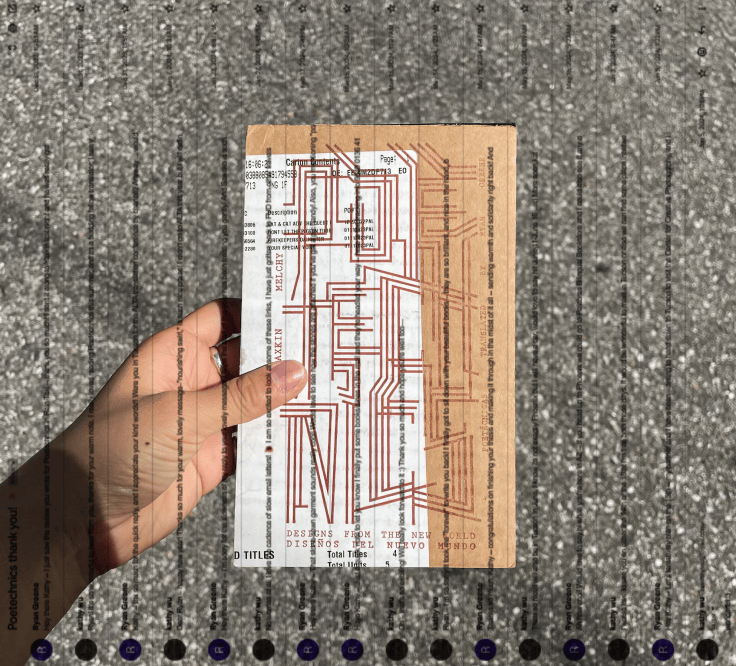
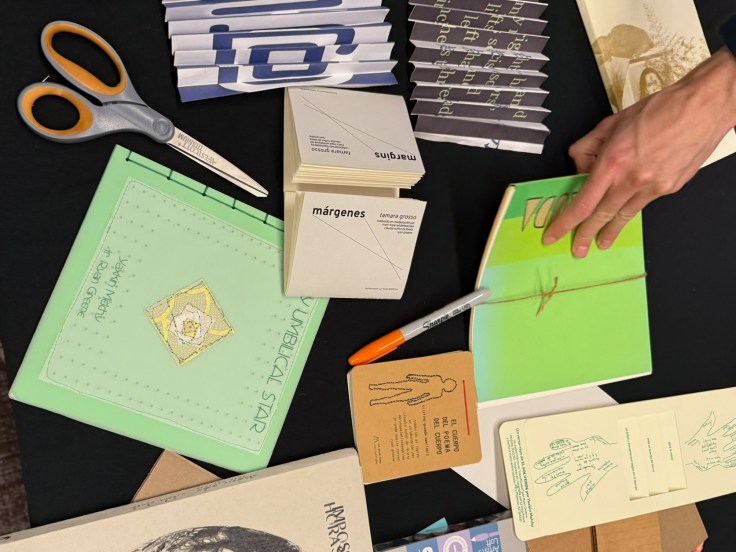
In 2023, Cardboard House Press published a cartonera (communally handmade, cardboard-covered) chapbook called Poetechnics by Yaxkin Melchy, translated by Ryan with some accompanying transfluxions. A few months later, kathy wrote a review of the poems, and Ryan sent an email of thanks. This email thread became a seed-space for initial inspirations and wonderings related to “expansive texts” and “strangeness.” In the time since, we’ve had the chance to hang out in person and to collaborate in earnest from afar. A throughline that has emerged along the way is that we are both interested in poetry as a lens through which to actively re-think what else a “book,” a “website,” and a “translation,” might be.
In the world of the book…
we’ve been inspired by people and projects that move away from the “book” as a singular, static container, instead imagining it as a manifold constellation of interactions, iterations, and forms that actively participate in the poetics of the text. Yaxkin Melchy, for instance, imagines his multi-part project EL NUEVO MUNDO // THE NEW WORLD as a “cell-book, constellation-book, or choreography-book” unfurling across individual “books” in nearly ten countries over the course of a decade. We’re also drawn to Amy Suo Wu’s steganographic work that intertangles web-based and postal infrastructure to position readers as co-conspirators in the transmission of surreptitious texts. Collier Nogues’ project The Ground I Stand On Is Not My Ground has been another reference point for ways physical and digital iterations of books can extend, rather than replicate or replace, one another.
In the world of the website…
we’re interested in multilingual, pixel-based poetics which exist on their own terms—digital spaces which aren’t trying to reproduce the logic of paper, or behave as a skeuomorphic augmentation to the codex. For us, the “grain” of the web as material asks questions about materiality, accessibility, and embodiment. We pay special attention to interfaces and infrastructures, and acknowledge the internet as a seemingly ethereal thing predicated on labor and land. We’re inspired by Bojana Coklyat and Finnegan Shannon’s Alt Text as Poetry as an ethos of web poetics which moves beyond compliance, and expands possibilities of expression within existing net infrastructures—alt text—while advocating for web accessibility. Chia Amisola is another such person who works within the internet’s architecture; in working with the material of browser windows, they ask hypertextual and spatial questions that a page in a book might struggle to. Then there’s folks working explicitly within translated web projects and in a dreamy vision of anthologized, collective poetry—our friends at Oral.pub have built such a container and ethos for helping poets find coding and translating support, so to realize their vision for poetics in the browser.
In the world of translation…
we feel indebted to many poet-translators who shift our focus from pre-emptively grieving what is “lost” in translation toward celebrating the poetic and political possibilities of indeterminacy. For example, Sawako Nakayasu’s assertion/declaration, Say Translation is Art (it is!) energizes us towards multiple modes of translation—not just linguistic, but material—as well as invites a queer and anticolonial read of translation’s possibilities. Her work offers capaciousness away from binaries of “destination” and “origin” language—in Mouth Eats Color, Nakayasu’s translations of Chika Sagawa, she plays deftly with versioning, with what happens in-between multiple languages. In this same vein, we’re inspired by Antena Aire, Eleana Hofer and Jadine Pluecker’s “language justice and language experimentation collaborative” which ran from 2010–2020. We’re especially grateful for their concept of ultratranslation, their commitment to communal practice, their interest in performance, and their embrace of mess and “failure”. Each of their individual work beyond Antena Aire has also provided a model for writing that destabilizes any notion of language as singular, uncontested, or fixed. Lastly, we have both been longtime fans of Kameelah Janan Rasheed’s work, particularly her attention towards language’s porosity and “leakiness,” as well as her way of describing her multidisciplinary work as “text-saturated.” While not translating explicitly between English and/or other languages, Rasheed inspires us towards learning and un-learning in public, and shows us how to hold a text as alive and everchanging. As Julia Sanches put it (see here and here), perhaps translation in all its modes can be an ever-incomplete act of “againing.”



To lace our inspirations together, we’ve noticed that across each of these three worlds—books, websites, and translation—we’re drawn toward people who nudge us into a less-smooth, less-certain, less-immediately-legible, and perhaps more-honest space. And, maybe too wondering, what does all this look like in the realm of publishing/sharing? We look to people and projects who model new/additional approaches to publishing that celebrate indeterminacy, combine ethics and aesthetics, engage embodiment and materiality, prioritize collaboration (and often play!), disrupt our notions of duration and ephemerality, and remind us that it’s within our power to try things we haven’t seen before.
A quick list of some such inspirations would include: the cartonera movement at large, Taller Leñateros, La Impresora, Cardboard House Press, Interference Archive, If, Then: Technology and Poetics, Accent Accent, Many Folds Press, Half Letter Press/Temporary Services, Biblioteca Popular Bruce Lee, Contaminación Cruzada, etc., etc.
Of course, the list goes on…

R.G.: In your writing elsewhere, I admire the way you think about listening as a poetic mode (e.g. your interest in Pauline Oliveros, your workshop/zine “Erotic Event Listeners,” etc.). I’d love to hear how listening has been guiding your choices/instincts as we’ve experimented with making interactive texts in multiple languages together.
k.w.:
I think one reason it’s easier for an entire codex of translated text to be published in a standard form (other than of course, very important factors of time, labor, costs!) is also because tending to specifically new form requires responding to specific voices/subjects/metaphors in the text. Small scale transfluxions at the scale of single poems or lines or even words can sometimes offer more specificity—for example, the paper play I did with Wu Xia’s writings and my translations of her were responding to her life as a garment worker: I immediately wanted to experiment with tactility, with strips of paper that could be woven like fiber. This ended up compromising legibility, which might be more right for some texts than others! I also played with lenticulars, which encourages the reader to tilt the text left or right. I think the lenticular came intuitively from reading her poem, “Woman Worker Cutting Thread,” where she writes about tirelessly switching between her right and left hand, pinching and cutting thread. In the digital space, I really enjoyed making Erotic Event Listeners as a speculative workshop—this was also tending to that specific terminology in javaScript, of an EventListener: something which “listens” for user interaction, whether it’s a click or hover or keypress… This became a playful way for me to introduce bodily gestures and user interaction in the context of “listening” with code.
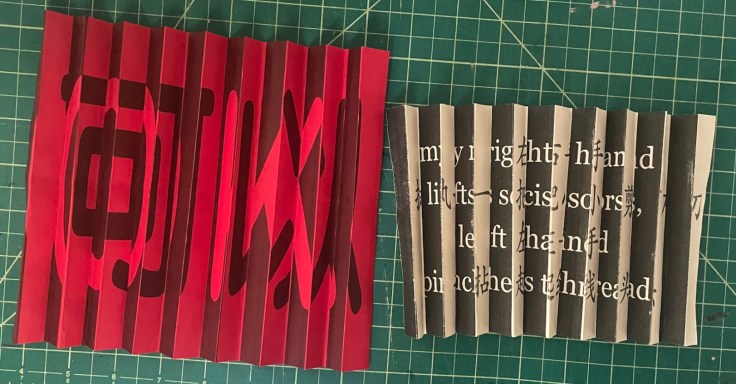
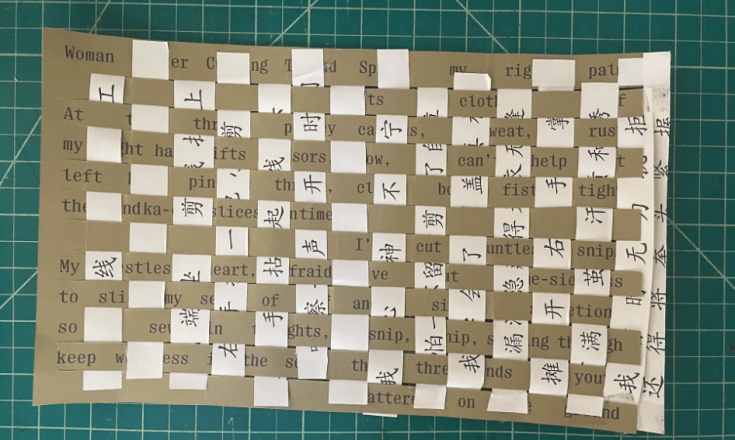
~Chinese text by Wu Xia / 邬霞~
~English text by k.w.~
k.w.: Hi Ryan! I was smiling again at your recent project with Tilted House Press, The Name That’s Felt Alive So Far… and its corresponding website. There’s a joyful permission in making something which is already crumpled! You write about trash and circulation with this work—describing it as maybe a “cast-off poem draft mid-air on its way to the recycling bin.” You also write about it in the context of your recent morphing show, PAPER BABY. I’m curious to hear your thoughts about the birth/life/decay of a published object, as it relates to our detritivorous conversation or otherwise! ❤
R.G.:
Ooh I like this question and I love this little crumpled meditation on transfluxions with Tilted House 🙂 It’s true—trash has been on my mind! And it feels like fertile ground for things to grow. I think part of my interest in trash as a material/medium/lens for my writing and art-making is that it allows me to transform my/our assumptions about what is “useful” and what should be “visible.” When it comes to translation, I think about the ways we’re encouraged to polish a text through rounds of revision until it reaches a point when it’s appropriate to share. All the drafts are proverbially “crumpled up” and tossed away until the “final” version emerges. What ends up entering the world is A version that often pretends to be THE version.
Part of what’s been fun about our tongue-twisty collaboration is that we’re experimenting with ways of sharing texts that are flexible enough to allow for multiple versions to co-exist. I think a lot of the anxieties around “correctness” in the context of translation are connected to the cost of paper and printing. If we publish a physical book and it’s expensive to change anything, of course we’ll worry about “getting it right.” But if we design books that hold space for multiple readings or have accompanying web-projects that can continue to shift and change, perhaps some of these anxieties recede and we begin to let go of the idea that a “right” version exists. And then, perhaps, we can find ways to revel in the “cluttered” parts of our process that are otherwise hidden away from view. This feels like a generative zone of vulnerability and connection. An invitation to rummage through the trash and the scraps of our translations, co-celebrating the texture of the mess. One relevant example is a transfluxion I made of “El poema es un bot // The poem is a bot” by Carolina Dávila, published in the inaugural issue of the Chaski Review. Here, rather than throwing out possible readings and misreadings, I allowed them to co-exist, flickering, unstable.
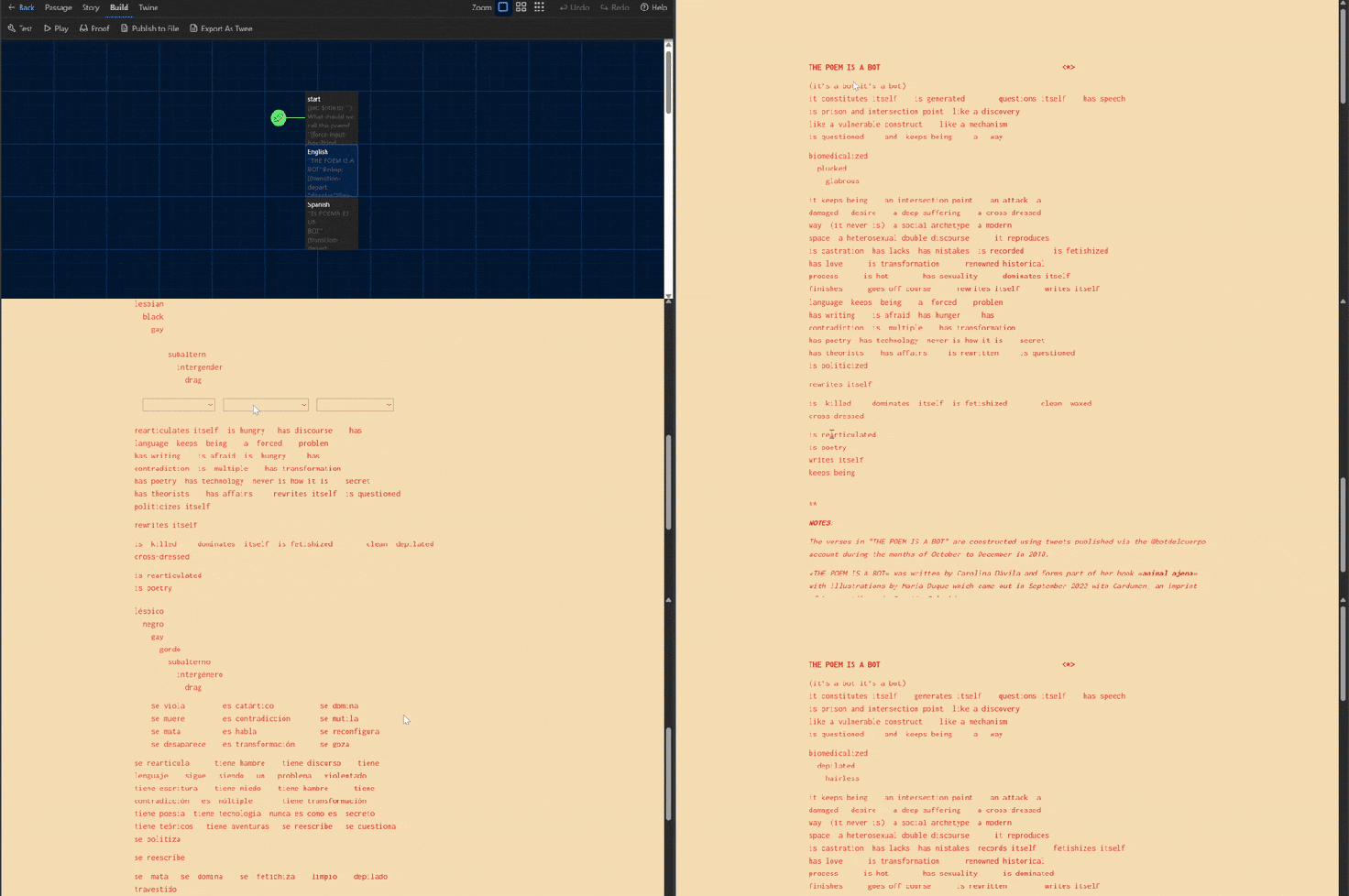
~Spanish text by Carolina Dávila~
~English text by R.G.~
[built using twine]
R.k.G.W.: Three “p” words—pedagogy, play, process—seem to be triplicate poles of our joint thinking. Where/when do we feel like we started noticing an orientation toward these things in our own work?
k.R.w.G.:
Our answer to this question, too, is going to be a kind of translation—of oral dialogue transcribed into notes and translated into sentences! Other than being a fan of alliteration, we think of pedagogy, play, and process as generating a space of curiosity and openness. An important part of this is an act of “learning in public,” or making our process visible. It’s okay and even exciting to present the in-between tissue of works. This triplicate ethos offers a sense of “?” and indeterminacy where anything can happen in the space of the attempt. And the attempt—more so than expertise or “mastery”—feels important! We both have experiences working in learning spaces which must and should accommodate all learners, which value accessibility in a broad sense (as well as with an attention to disability justice). Mediums like books, websites, and translation, can all feel a bit scary if you’ve never done them! We feel that these things should be for everyone who wants to participate. In our pedagogy and process, we think of knowledge as a co-built, non-hierarchical, shared thing. In terms of play—we value a play in which rigor and non-seriousness co-exist, in which we still tend carefully and thoughtfully to the politics and contexts of each work. Play is about humility, a surrender to whatever may happen! A surrender to trying and trying and attempting the thing again—while hanging out and having fun also.
R.G.: In our conversations we’ve talked a fair bit about “embodiment”—can you share some ways that you imagine people using their bodies when reading some of the tongue-twisty experiments you’ve/we’ve been making?
k.w.:
Yeah! Well, my instinct to answer this is to first address digital interaction, since the ways we read often feel so disembodied: neck craned, back hurting. In teaching, I always nag my students to think about the computer or phone or television as its own specific object, not just a rectangular container for light. I’m inspired by Yehwan Song’s work with “anti-friendly” user interfaces, which make digital typography for slowness or wandering or confusion rather than efficiency. This obviously isn’t the right approach for a lot of texts, but I do find ample joy in remembering the possibilities beyond Silicon Valley UI defaults. Song pours water on an iPad as a way to “click it”—immediately we’re reminded about water’s conductivity alongside our own! The MaKey MaKey is one of my favorite tools, too, for teaching and learning; it’s a beginner friendly hardware tool which augments the keyboard with any conductive object—even bananas! There’s a magic that happens when we can compute with our bodies, and even more excitement when we can read and write media physically together—like high-fiving to close a circuit and complete a sound effect. I’m totally fine with an atomized, private reading experience, but what excites me about more embodied interfaces is their increased potential for reading and writing together.
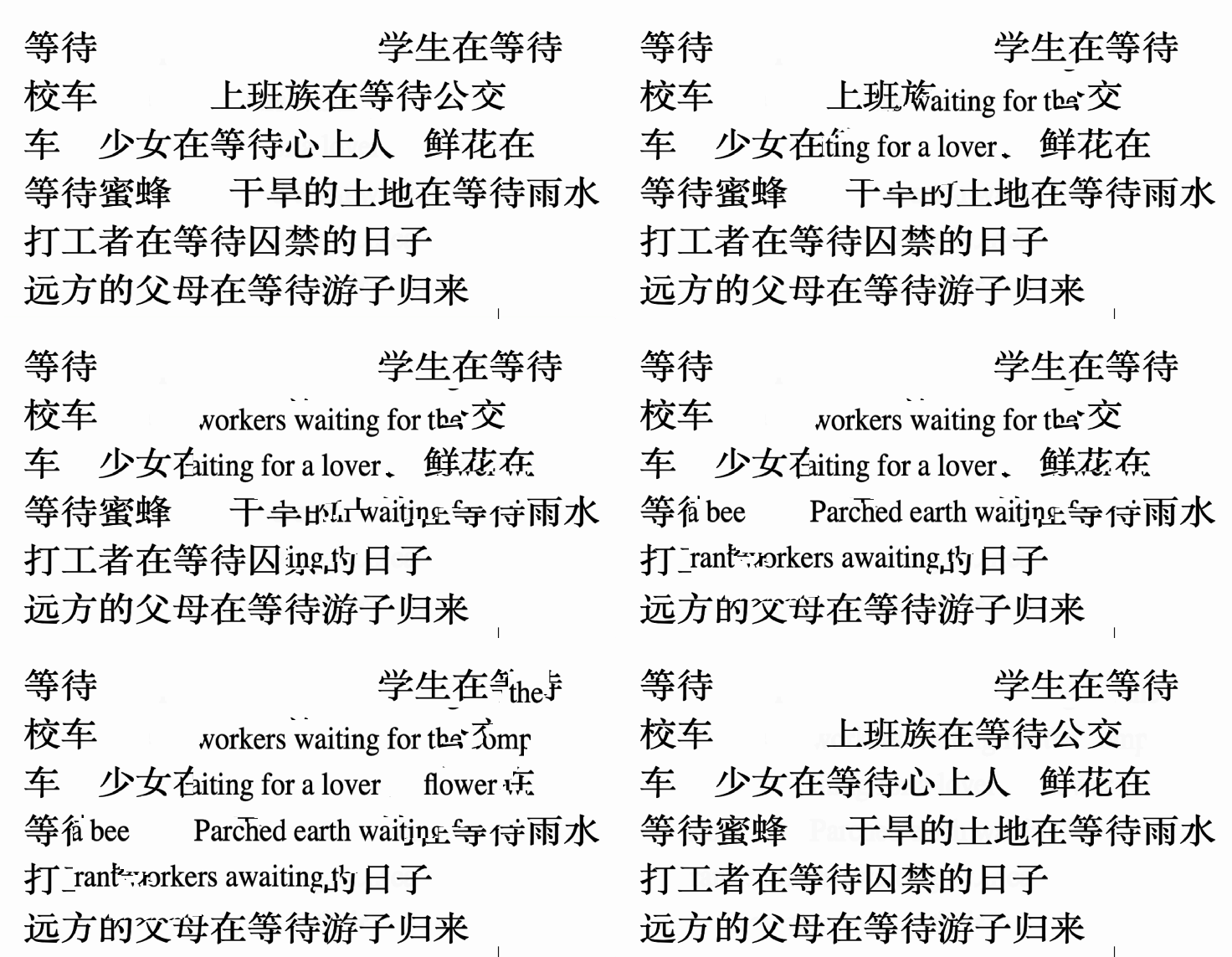
read/play here
~Chinese text by Wu Xia / 邬霞~
~English text by k.w.~
[built in p5.js]
k.w.: I’ve just come from reading your reflections on your recent show, PAPER BABY, which are so generous and inviting. I have loved following the updates as they trickle in—to see the show shift and move (and fall off the ceiling) and spin, quite literally. I love the “learning in public” and the endless versioning—maybe even againing!—that happens in that visible shifting! Are there any ideal “containers” for making learning public—whether it’s this show, or a web site, or photographs of such things? What are the affordances or limits of each?
R.G.:
I feel like rather than looking for an ideal “container,” I’m interested in finding ways to work with multiple containers simultaneously. For instance, in PAPER BABY, there’s the room where the physical show exists, there’s an online portal with various digital components, and there have been a couple in-person events where we’ve made art together in the gallery. I think the interplay of these containers (show + web world + events) has given me space to think about the different aspects of my process I’m able to share in each context and the ways they each might afford different modes of access. It’s also taken some of the pressure off any single container to hold all the things.
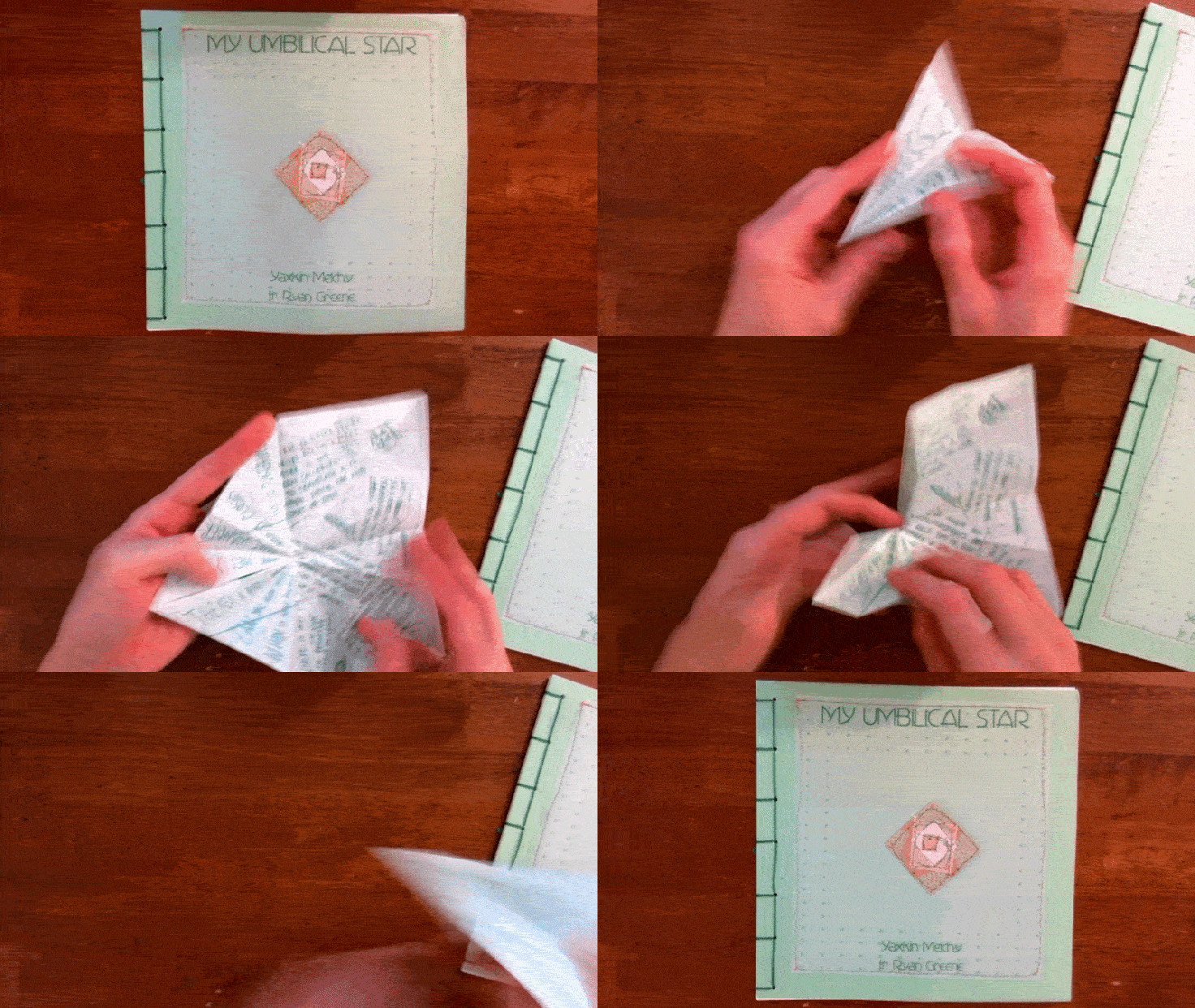
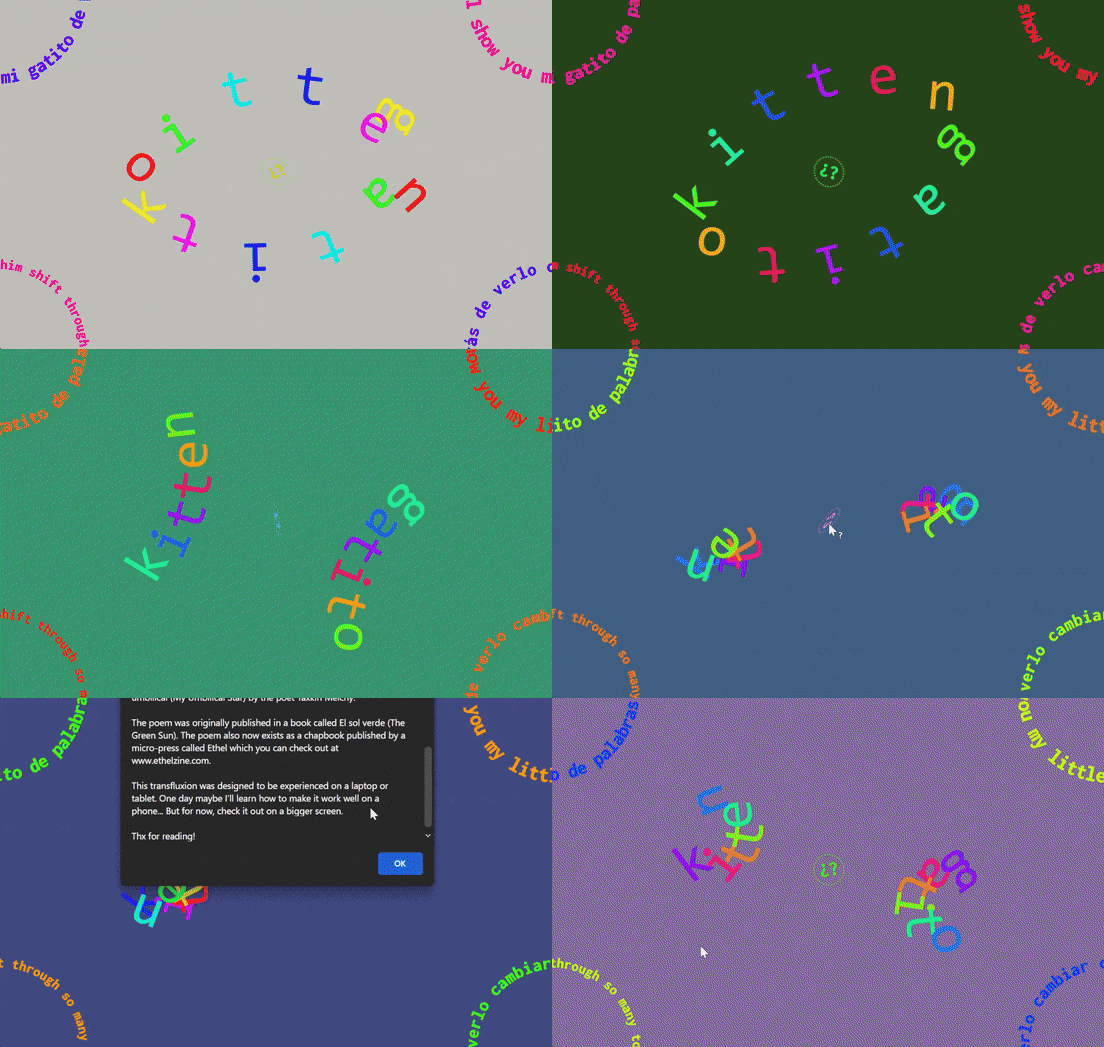
In the context of the thinking you and I have been doing together, we keep coming back to the idea that the physical and digital can be extensions of each other rather than simply replicas or replacements. In other words, we’re trying to move away from an orientation of “equivalence” towards one of “correspondence” or maybe even “corresponDANCE.” How can the versions of texts that we’re making be in some sort of choreographic relationship to one another while also each performing their own dance? An example would be the transfluxion I made to accompany the chapbook Mi estrella umbilical // My Umbilical Star which came out with Ethel last year. The physical chapbook contains a poem sequence from Yaxkin Melchy’s book El sol verde // The Green Sun as well as a translator’s note that is a paper airplane. On the webpage for the chapbook there’s a link to a transfluxion that animates a moment of the poem. Here I was thinking about the relationship of the English and Spanish as being in a mutual orbit, like binary stars.
read/play here (not designed for phones)
~Spanish text by Yaxkin Melchy~
~English text by R.G.~
[built using p5js]
k.R.w.G.: Most of our experiments so far have played around at a fairly small scale (individual words, phrases, verses, etc.). What dreams/strategies do we have in mind for tongue-twisted versions of larger units of texts?
R.k.G.w.:
Hmmm … it’s true that most of our experiments have taken a single, more contained piece of text and “listened” somehow to what it seems to be yearning for in the way of movement or interaction. When thinking at a bigger scale (like a many-line poem or group of poems), it seems that maybe this same impulse toward “listening” will be applied, but we may find ourselves reaching for different types of movement or interaction. For example, many of our experiments so far have focused on rotation as a form of toggling between languages. At a larger scale, we’ll likely be asking questions about navigation (linear or otherwise), where the interest is shifted toward how readers move “through” a text rather than how a text itself moves. We’ll also, I imagine, be wondering how to create structures at a larger scale that can hold a diverse range of smaller scale experiments (like this webpage Ryan made which provides a single unified home for three very different transfluxions of poems by Yaxkin Melchy). Perhaps, then, it becomes a sort of fractal attention toward animation and agency, asking ourselves at each scale, how can we allow the text to perform its own poetics in the way it moves and the way it invites readers to move? This feels tied in some way to our interest in hand-making books and hand-coding web projects. In both cases, we’re reminded that a book or a website (and a translation, too, for that matter) is the result of an accretion of small choices (i.e. what typeface to use, what direction to orient the text, etc.). If we treat each of these choices with a spirit of openness, they escape the realm of tedious logistics and enter a zone of generative expansion.


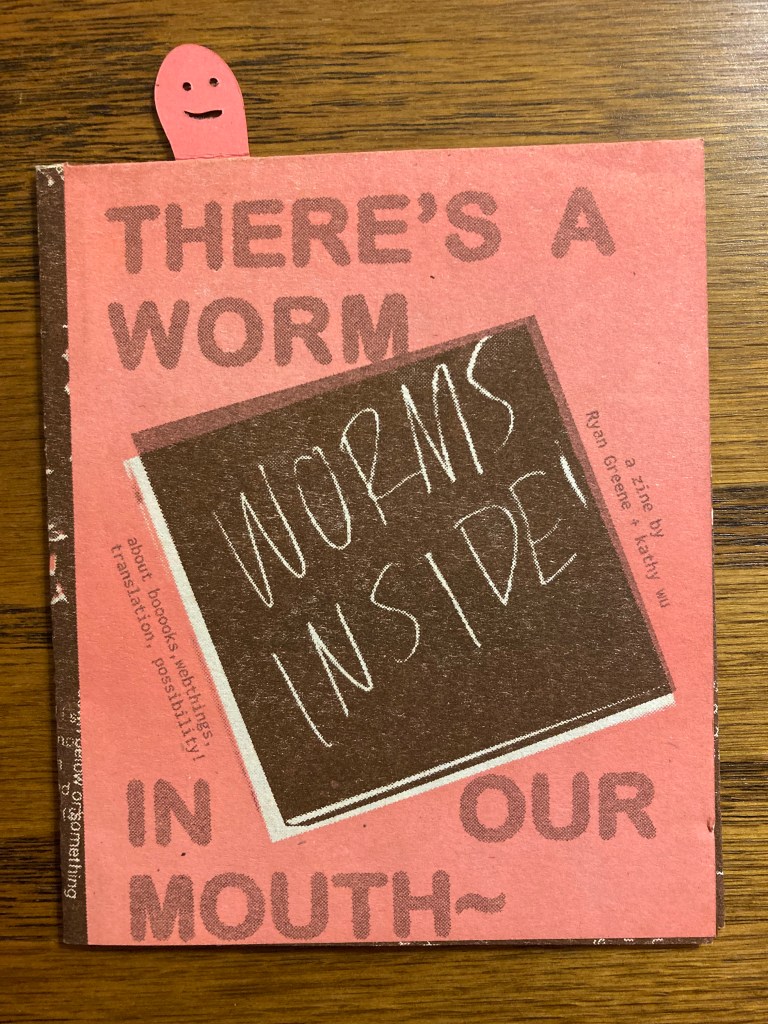
Healthy soil depends on resource cycling, bioturbation, and interconnection. In our work, individually and collectively, we’re interested in learning from life that exists in this zone of exchange, transformation, and mutual dependence. Like worms, we hope to immerse ourselves in what nourishes and moves us. To let it move through us, and to then let that reciprocal movement yield opportunities for those around us to be nourished in turn. Though it’s time to end this particular “essay,” we hope our sharing can serve as a beginning to new experiments, collaborations, and correspondences. If you’d like to be in touch, feel free to reach out by email at not-a-press@proton.me. Plus, if you include your address, we can try to mail you an annelidian micro-zine. Looking forward to seeing who and what squirms into our inbox.
Until then,
kRaYtAhNy
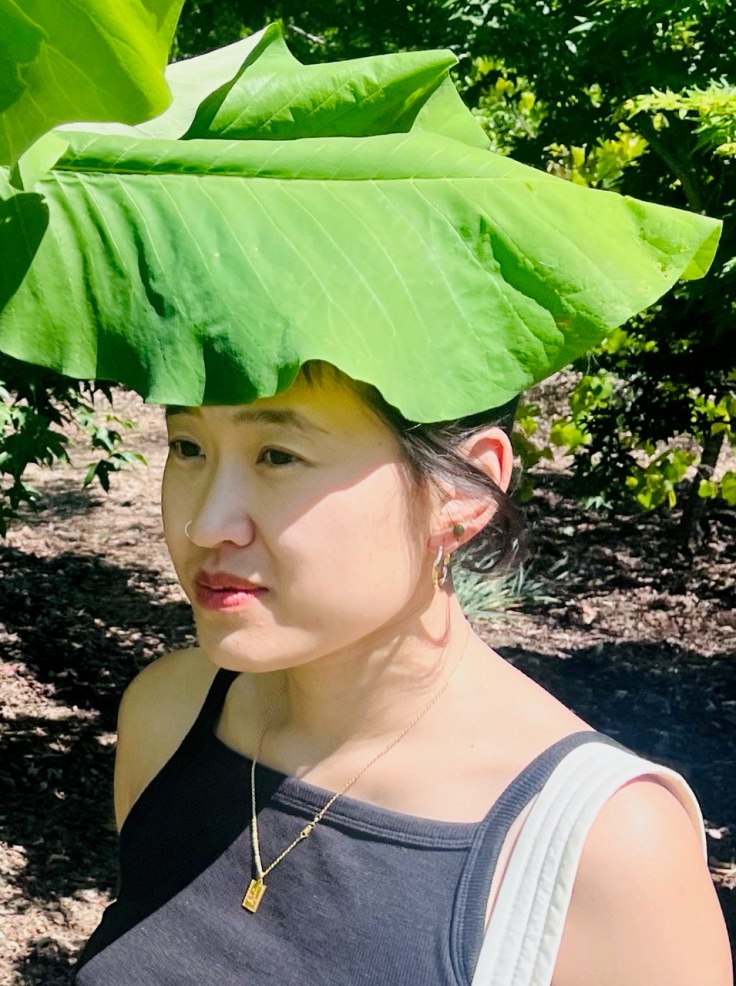
kathy wu is an artist, poet, translator working across language, computation, books, fiber. They teach typography, bookmaking, and digital mediums at RISD Graphic Design and are passionate about non-institutional pedagogy and collective learning and teaching. They are working on a book-length translation of migrant worker Wu Xia’s poems.
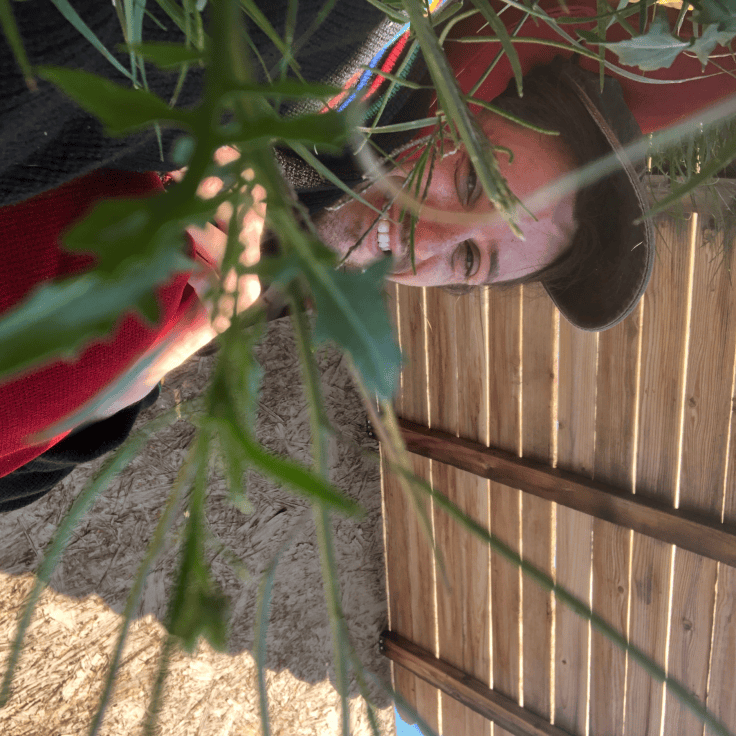
Ryan Greene writes, translates, makes, and caretakes books in “Phoenix, Arizona,” the city where he grew up. His most recent translations include projects with Carolina Dávila, Elena Salamanca, Claudina Domingo, Ana Belén López, Yaxkin Melchy, and Giancarlo Huapaya. He’s learning.
Originally published on Hopscotch Translation
Tuesday, October 27, 2026


